Lakshmanrao Upadhyayula
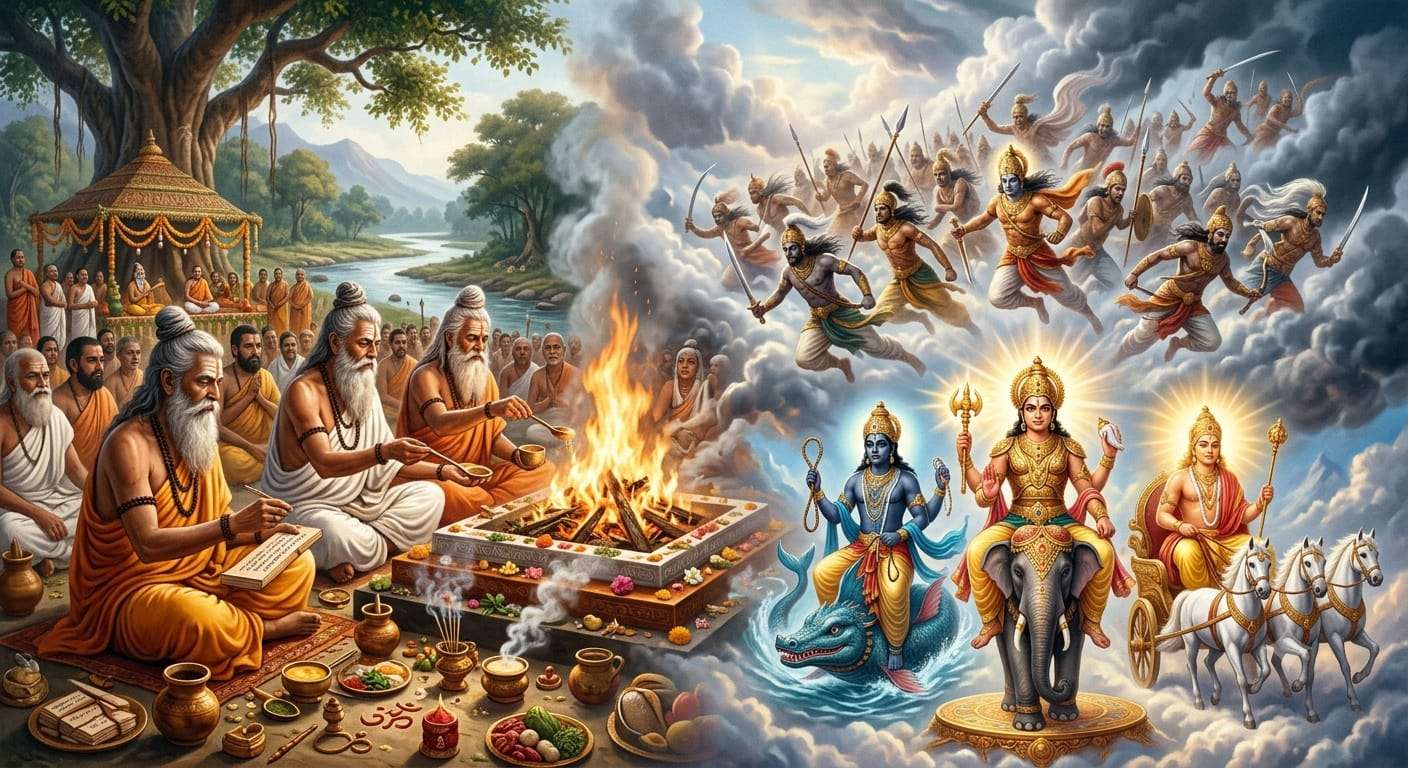
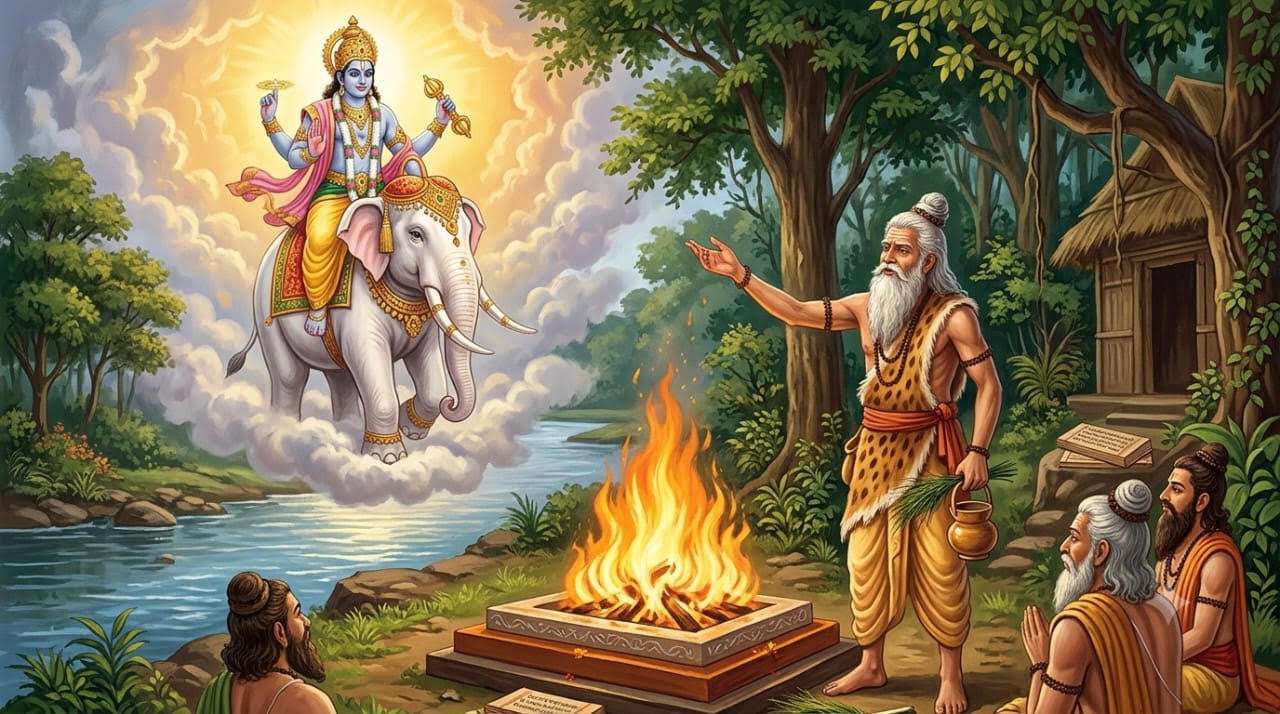
The venerable seer Shaunaka Grutsamada, immersed in the विराट vision of cosmic consciousness, raised his voice in the majestic cadence of the त्रिष्टुप् metre of the Rigveda and invoked the mighty Indra with profound devotion and philosophical insight. His hymns were not mere invocations uttered for material gain, but living currents of consciousness arising from the intimate union between humanity and the cosmic forces governing existence. The sage implored Indra to listen attentively to the prayers of the seekers and not reject those who had become worthy through sacrifice, discipline, and spiritual aspiration. The offerings poured into the sacred fire flowed like rivers descending from mountains, carrying within them the yearning of humanity for prosperity, harmony, courage, and divine protection. In the Vedic understanding, oblations were not symbolic gestures alone; they represented the transformation of human effort into cosmic participation, where the visible and invisible worlds interacted through sacred law.
Indra was praised as the supreme warrior who released the imprisoned waters restrained by the formidable demon Vṛtra. In the spiritual vision of the Vedas, Vṛtra signifies obstruction, inertia, ignorance, drought, and every force that suppresses the free movement of life and consciousness. The battle between Indra and Vṛtra therefore transcends mythology and becomes a profound allegory of cosmic and psychological struggle. The seers perceived that just as thunderstorms release rain after atmospheric tension, the awakened mind destroys the barriers that confine knowledge and vitality. The hymns declare that Vṛtra, intoxicated by arrogance, considered himself immortal and invincible, yet the strength of Indra increased through the power of sacred chants, disciplined thought, and collective devotion. This reflects the remarkable scientific temperament of the Vedic sages, who recognised the influence of sound, rhythm, and concentrated mental intention upon human consciousness and social cohesion. Through the thunderbolt, the vajra, Indra shattered the forces of stagnation and restored the life-giving waters to the world.
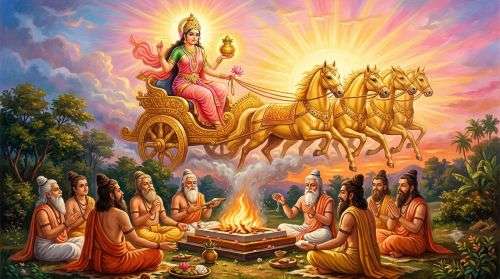
The hymns further portray Indra as radiant, joyous, and inwardly fulfilled through the praise offered by enlightened minds. The Rigvedic chants themselves are described as luminous and purifying, born specifically for the glorification of the cosmic intelligence represented by Indra. The sages assured the deity of comfort and reverence, symbolically sanctifying the vajra before placing it into his hands. This ritual imagery reflects a deeper philosophical truth: divine power must always be guided by purity, wisdom, and righteous intention. Indra was invoked to grow undiminished in brilliance, shining with the splendour of the sun itself, and to employ his divine weapon for the destruction of hostile and uncivilised tendencies represented by the Dasyus. In Vedic literature, the Dasyus are not merely external enemies but embodiments of disorder, ignorance, greed, and forces antagonistic to truth and progress.
The seers described Vṛtra as one dwelling within hidden caves, concealed amidst the waters and clouds, obstructing the natural cycles essential for life. This imagery reveals the extraordinary observational sensitivity of the Vedic mind toward natural phenomena. The sages perceived storms, lightning, rainfall, and atmospheric disturbances not as chaotic accidents but as manifestations of intelligible cosmic processes. They observed how thunderclouds gathered, roared, moved majestically across the heavens, and finally released nourishing rain upon the earth. The Maruts, companions of Indra and embodiments of storm energies, amplified the sound of thunder across the sky. Their movements symbolised dynamic forces of nature operating in harmony under cosmic order. The hymns poetically describe how Indra discovered Vṛtra hidden within the moving clouds and struck him with the vajra, causing the earth and heavens to tremble beneath the thunderous release of rain. In this vision, mythology and meteorology blend seamlessly into a unified perception of reality where natural processes are revered as sacred expressions of universal intelligence.
Indra was also celebrated as the protector and well-wisher of humanity. By slaying Vṛtra, the enemy of human flourishing, he restored fertility, agriculture, rivers, and social stability. The repeated roaring of the vajra symbolised the irresistible force of truth overcoming illusion and fear. The hymns proclaim that Indra drank the purified Soma, the mysterious elixir celebrated throughout the Vedas. Soma was not merely a ritual beverage but a profound symbol of heightened consciousness, ecstatic inspiration, vitality, and transcendental bliss. The sages understood that true strength arises not from brute force alone but from illumination of the mind and expansion of awareness. Through Soma, Indra attained supreme exhilaration and divine empowerment, enabling him to break the illusions cast by demonic forces. The hymns therefore suggest a subtle psychology in which purified consciousness becomes capable of overcoming ignorance, fragmentation, and despair.
The Brahmins and learned seers humbly sought a place within the awareness of Indra, aspiring to become worthy recipients of divine grace through righteous conduct, yajñas, meditation, and disciplined scholarship. Their prayers reveal the Vedic conviction that spiritual merit and ethical action are inseparable from material prosperity. Wealth, children, strong homes, noble descendants, and victorious strength were desired not for selfish indulgence but for sustaining social order, sacred duty, and continuity of culture. The luminous Indra was invoked to bless humanity with courageous offspring, harmonious families, and enduring vitality equal to that of noble warriors. Such prayers demonstrate the holistic worldview of the Vedic civilisation, where physical well-being, moral excellence, intellectual clarity, and spiritual aspiration formed an indivisible unity.
The hosts of Vayu and the venerable Maruts were invited to partake peacefully in the immortal Soma. Indra himself was said to gain strength through association with these cosmic powers, revealing the Vedic insight that even supreme force operates through cooperation and interdependence. The hymns describe how those who worshipped with purity, offering milk, sacred grass, and reverential hospitality, attained prosperity and honour. These ritual actions embodied psychological and social refinement, cultivating gratitude, humility, generosity, and disciplined order within communities. The Vedic sacrifice was therefore not an act of blind ritualism but a sophisticated cultural institution integrating ecology, ethics, spirituality, astronomy, sound science, and communal harmony.
The hymns further portray Indra in vividly human yet divine imagery. After joyfully consuming Soma during intense sacrificial days, he appeared radiant and pleasing, washing the froth from his chin before once again mounting his golden Hari steeds to return for further offerings. Such imagery reveals the intimacy between the divine and the human imagination within Vedic poetry. The cosmic powers were not distant abstractions but living realities participating dynamically in the rhythms of nature and consciousness. Indra’s destruction of the son of Dhanu, namely Vṛtra, symbolised the victory of light over constriction, while his hostility toward the Dasyus represented the eternal struggle against forces opposed to truth and harmony.
The hymns also recall Indra’s ancient deeds against powerful adversaries such as Viśvarūpa, son of Tvashta, and the demons Arbuda and Bala. These narratives preserve memories of cosmic conflicts interpreted simultaneously on spiritual, social, and psychological levels. The whirling vajra is compared to the revolving wheel of the sun’s chariot, symbolising the unstoppable motion of cosmic law and time. Through the support of devoted people and righteous intention, Indra destroyed destructive forces and enriched the priests with desired prosperity. The seers prayed fervently that the blessings of Indra should remain with those who worship sincerely, relinquishing ego and pride while upholding truth through devotion and self-discipline.
Thus the hymns of Śaunaka Gṛtsamada stand as magnificent testimonies to the intellectual depth, spiritual grandeur, and observational brilliance of the Vedic civilisation. They unite poetic beauty with cosmological insight, natural science with metaphysical reflection, and ritual symbolism with profound psychological understanding. In these sacred verses, thunder becomes the voice of divine order, rain the restoration of life, and the victory of Indra the eternal triumph of awakened consciousness over ignorance and obstruction. Through disciplined chant, ethical living, and reverent contemplation, humanity was invited to participate consciously in the vast harmony of the cosmos, recognising that the struggle against darkness within and without remains the timeless duty of every awakened soul.