Lakshmanrao Upadhyayula
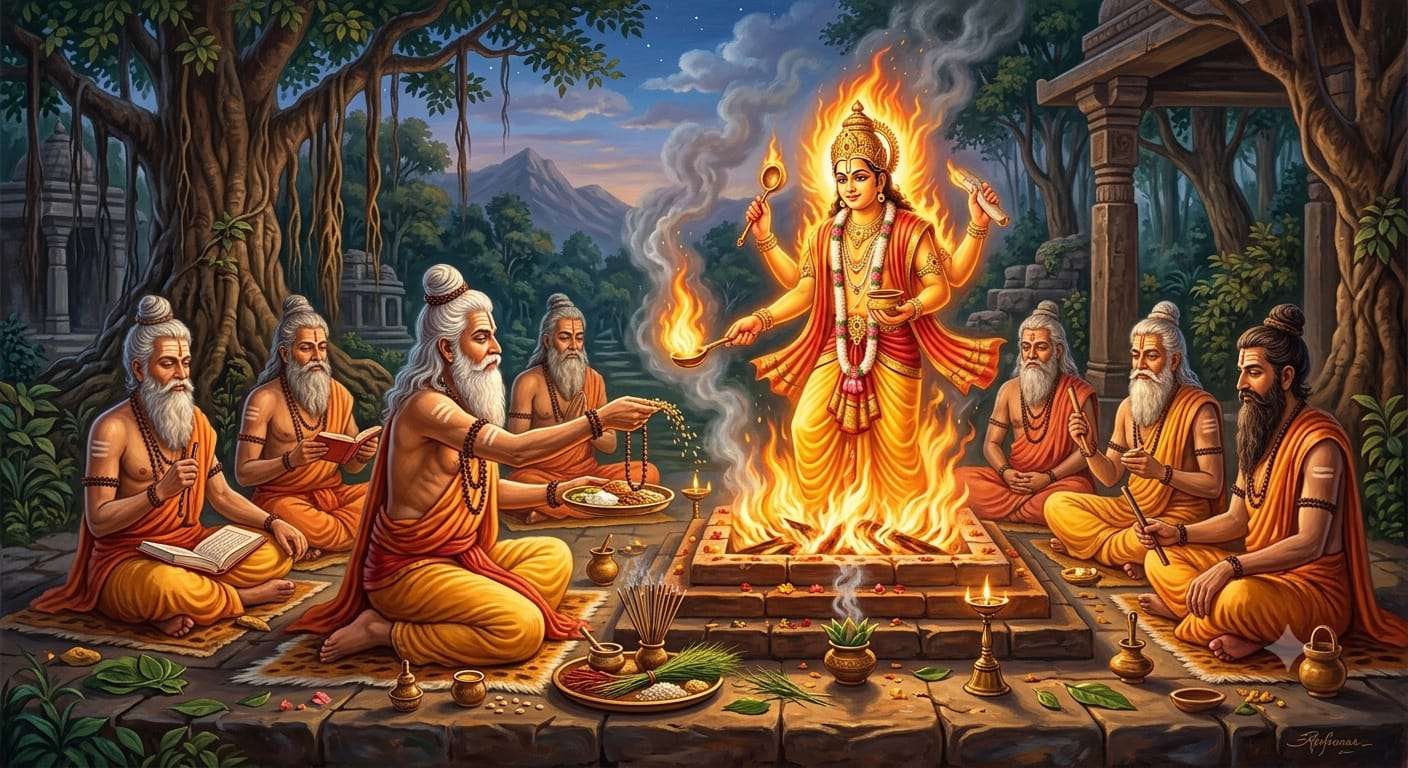
The sage Gādhi, immersed in sacred contemplation, invokes Agni through the majestic cadence of Tristup chandas found in the hymns of the Rigveda. In this exalted vision, Agni is praised as the eternal priest of the gods, the luminous intelligence dwelling within the cosmic order. He is radiant with wisdom, endowed with divine brilliance, and revered as the sacred mediator between humanity and the celestial realms. The sages accept him as the chief priest of the yajna, for Agni alone possesses the purity and discernment required to carry human aspirations into the presence of the gods. His flames symbolize awakened consciousness, while his light represents the unfailing clarity of truth and spiritual knowledge.
The hymn reveals Agni as the sustaining principle upon which all sacrificial actions depend. Every sacred rite, every offering, and every uttered mantra finds fulfillment through his divine agency. Agni is not merely physical fire; he is the transformative power hidden within nature, thought, and life itself. The sages implore him to conduct the yajna for the welfare of humanity, to sanctify the offerings, and to establish harmony between earthly existence and divine law. In Vedic understanding, yajna signifies the sacred principle of mutual nourishment, where human beings, nature, and the cosmic powers remain interconnected through disciplined action, gratitude, and reverence.
The offering of clarified butter into the sacred fire carries profound spiritual symbolism. The devotee approaches Agni with humility, placing the sacrificial ladle before him as an act of surrender and devotion. The oblations, enriched with ghee, are described as energetic and glorious because they represent purified intentions offered into the divine presence. Scientifically, the Vedic seers observed the purifying qualities of sacrificial fire. The combustion of medicinal herbs, clarified butter, and sacred woods during yajnas was believed to cleanse the atmosphere, promote environmental balance, and generate subtle energies beneficial to physical and mental well-being. Thus, the ritual united spiritual aspiration with an early understanding of ecological harmony and disciplined living.
Agni is glorified as the bestower of food, prosperity, and righteous wealth. The hymn declares that those protected by Agni attain radiance, honor, and abundance. His protection is not limited to material riches alone; it extends to moral strength, clarity of intellect, and the preservation of social harmony. In Vedic society, wealth was considered sacred only when acquired through righteous effort and shared for the welfare of others. Agni, as the witness of all actions, rewards those who uphold truth, charity, and sacred duty. The sages therefore pray to become prosperous through devotion, wisdom, and virtuous conduct, recognizing that true abundance emerges from alignment with cosmic order.
The hymn further celebrates Agni as the luminous guardian appointed by the conductors of yajna to preside over divine brilliance. His flames are envisioned as ascending toward the grand light of the heavens, carrying prayers to the celestial realms. This imagery reflects the Vedic perception of fire as a bridge between matter and spirit. The upward movement of flame symbolized the soul’s aspiration toward higher consciousness and immortal truth. The sages understood light as both physical and metaphysical—a force illuminating the external world while simultaneously awakening inner perception. In this sense, Agni becomes the embodiment of enlightenment, guiding humanity from ignorance toward wisdom.
The Rutvija priests, endowed with sacred insight, recognize Agni as the chief patron of all sacrificial rites and ceremonially anoint him with reverence. Through their chants and offerings, they invoke his power to inspire and invigorate humanity. They pray that Agni may protect future generations and provide their children with nourishment, vitality, and noble character. This prayer reflects the Vedic vision of continuity, where spiritual responsibility extends beyond the present generation into the future of society and civilization. Nourishment in the Vedic sense includes physical sustenance, intellectual refinement, moral discipline, and spiritual awakening.
The hymn ultimately portrays Agni as the eternal force of transformation operating within the universe. He is the sacred energy hidden in the sun, lightning, the hearth, and the human heart. Through yajna, the Vedic sages sought to harmonize human life with the rhythms of nature and the divine cosmos. Their reverence for Agni reveals not only profound spiritual devotion but also a disciplined scientific temperament rooted in observation, balance, and reverence for natural forces. In Agni’s sacred flames, the seers perceived the mystery of creation itself—the perpetual conversion of matter into energy, ignorance into wisdom, and mortal existence into divine realization.