Upadhyayula Lakshman Rao
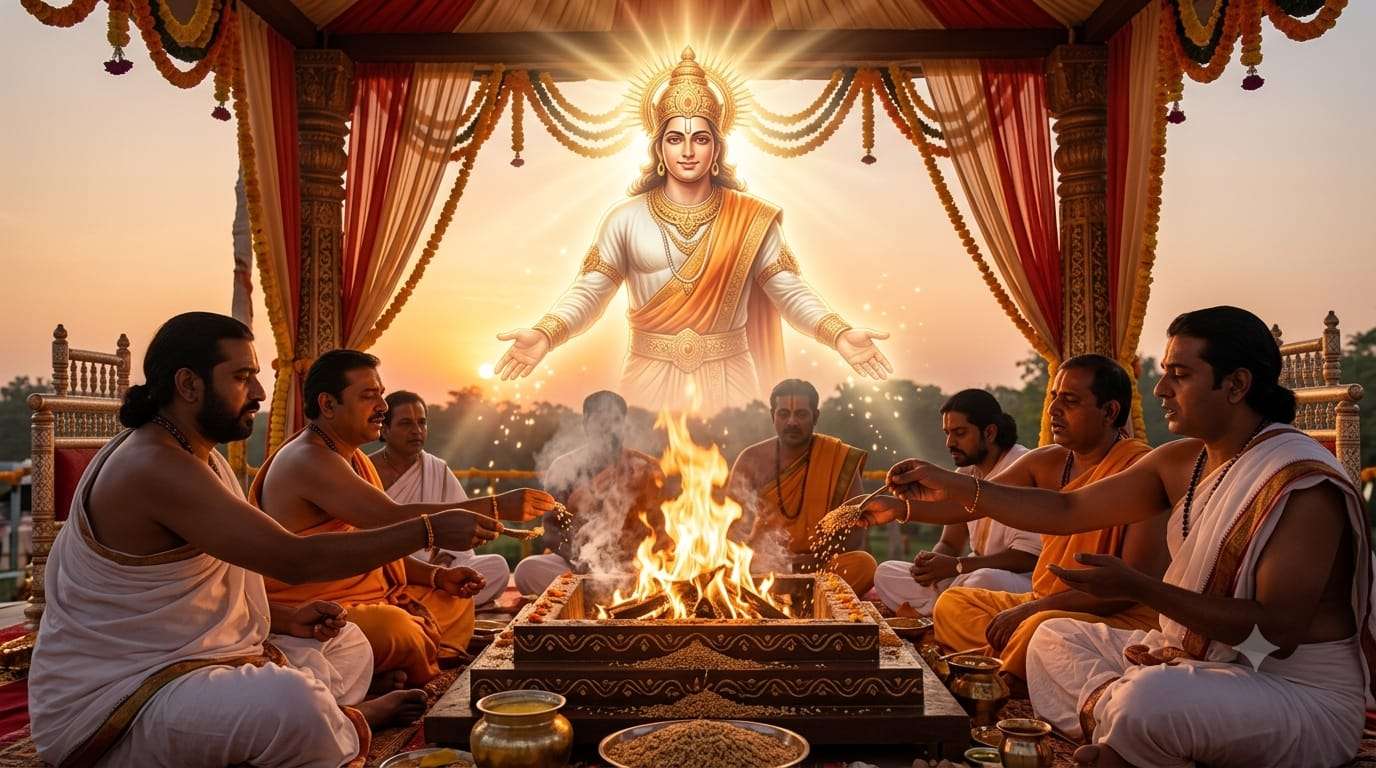
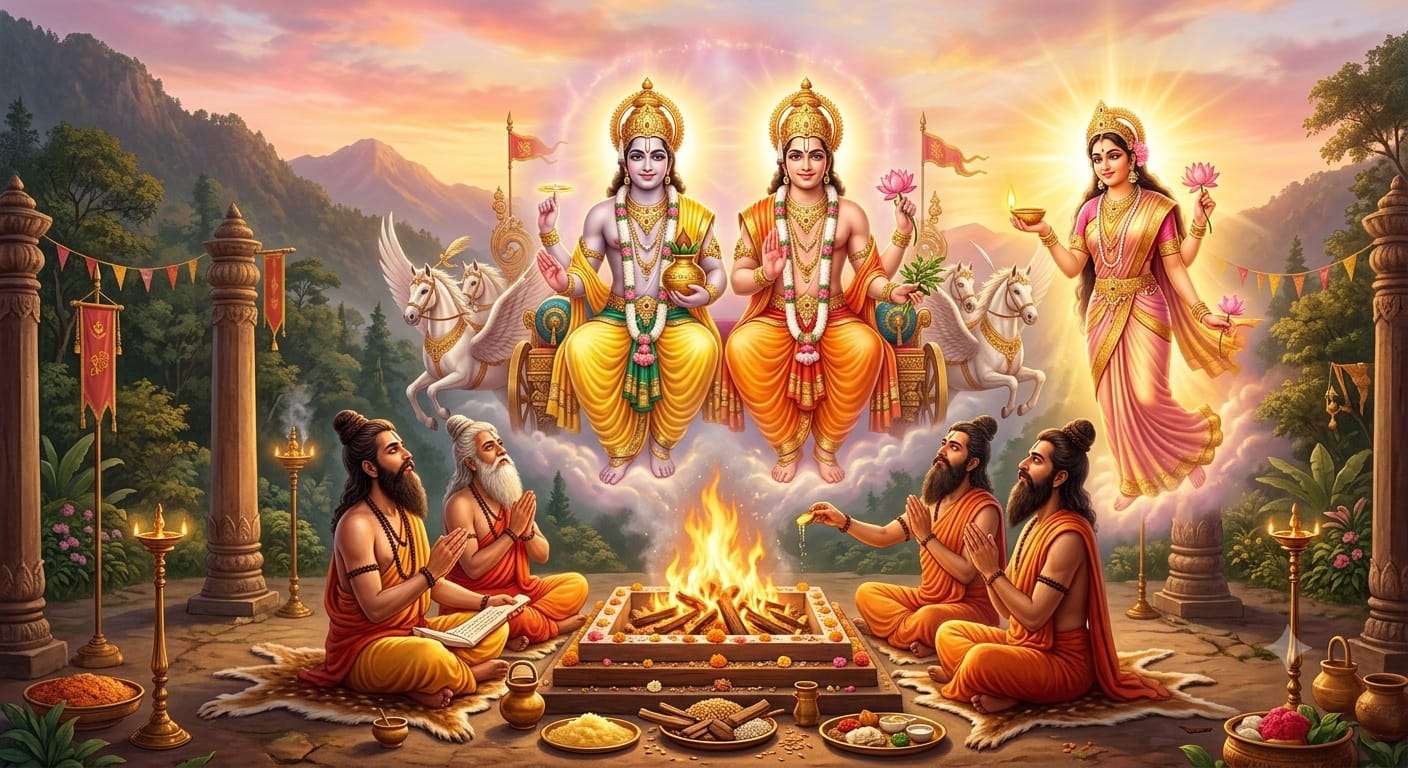
In the sacred cadence of Trishtup chandas, the venerable sage Deerghatama raises his contemplative hymn to Agni, the luminous principle that bridges the mortal and the divine. The Rugvedic vision beholds Agni not merely as fire, but as a cosmic intelligence—three-headed, encompassing earth, heaven, and the vast mid-space. His seven tongues, likened to the rhythmic meters of the Vedas, move unhindered, consuming the pure oblations offered with reverence. These tongues symbolize not only the sacrificial flames but also the manifold expressions of energy that sustain the universe. The sacrificial ground becomes a microcosm of creation itself, where Agni presides as the living axis connecting all realms.
Agni is described as dwelling both in the depths of the earth and in the expanses of space, embodying the omnipresence of energy in all states of existence. The offerings poured into him are not destroyed but transformed, reflecting a profound scientific intuition of conservation and transformation of matter and energy. The vibrations of the yajna, rising through chants and offerings, reverberate across celestial pathways, reaching unseen dimensions. These vibrations may be understood as subtle frequencies, harmonizing the environment and invoking balance in nature. Agni, as the cause of rain, represents the cyclical processes of evaporation, condensation, and precipitation—an early poetic recognition of ecological interdependence.
He is noble and eternal, untouched by decay, bearing within himself the sustaining force of both earth and heaven. Agni knows no old age, for he is the ever-renewing principle of life and motion. His presence at the altar, seated opposite the patron and his consort, signifies the sacred reciprocity between human effort and divine grace. Like a child, he appears gentle and approachable, yet within him resides immense cosmic power. This duality reflects the Vedic insight that the infinite often manifests through the finite, inviting devotion through intimacy.
The sanctified precincts of the yajna glow with his presence, as his flames purify not only the physical space but also the inner consciousness of the participants. The Atharvyu priests and other officiants, wise and disciplined, tend to Agni with utmost care, ensuring that the ritual proceeds in harmony with sacred injunctions. Their actions symbolize the disciplined application of knowledge, where ritual precision mirrors scientific methodology. Agni, thus nurtured, becomes the bearer of intentions, carrying them across realms and transforming them into subtle outcomes.
He prepares the pathways through which blessings flow, embodying excellence in all forms. His presence in every direction signifies the omnidirectional nature of energy fields, extending beyond visible boundaries. Agni protects both the mighty gods and humble mortals alike, reinforcing the principle of universal guardianship. His all-seeing nature reflects an awareness that pervades existence, akin to the unseen forces that govern natural laws.
Therefore, oblations are offered to him everywhere, for he is the witness and mediator of all actions. He protects the devotees as a father guards his children, ensuring continuity, prosperity, and well-being. In this grand vision, Agni emerges not only as a ritual deity but as a profound symbol of transformation, continuity, and cosmic intelligence—uniting spirituality with an intuitive scientific understanding of the universe.