



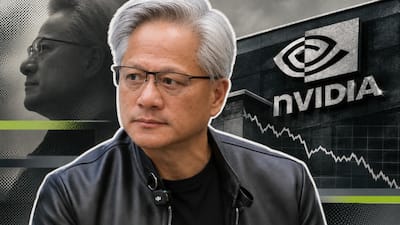
The return of Jensen Huang to the centre of the NVIDIA leadership narrative may have temporarily reassured investors, but it would be premature to assume that the storm surrounding the world’s most influential AI chipmaker has passed. Beneath the spectacular rise of artificial intelligence lies an increasingly complex contest involving corporate power, political influence, national security and geopolitical ambitions. What appears to be a corporate leadership controversy could yet develop into a much larger confrontation over who controls the future of AI.
Huang’s position and NVIDIA’s extraordinary market influence are inseparable from America’s ambitions to retain technological supremacy. His apparent political backing from President Donald Trump may have helped steady the immediate situation. But political protection, however powerful, is rarely permanent. If fresh controversies emerge and sections of the political establishment turn the spotlight on NVIDIA, Trump himself could be drawn into the controversy. Congressional scrutiny, political allegations and demands for accountability could create an entirely different environment. Trump may eventually find it politically expedient to distance himself from Huang rather than expend political capital defending one corporate leader. Such a development could once again unsettle NVIDIA’s valuation and send shockwaves through markets that have become heavily dependent on its fortunes.
There is, however, a wider concern that deserves attention. Some geopolitical commentators suspect that the battle over AI could extend beyond corporate boardrooms and Washington’s political corridors. They point to the possibility of cyber disruptions, data breaches and attacks on sensitive digital infrastructure across different countries, with AI either blamed for these incidents or portrayed as the underlying threat. Democracies could find themselves particularly vulnerable if such incidents undermine public confidence in their governments and institutions.
These remain speculative scenarios, not established evidence of a coordinated operation. Nevertheless, the geopolitical implications warrant serious examination. Artificial intelligence is now deeply embedded in financial systems, defence networks, communications, healthcare and critical infrastructure. Any major disruption, whether deliberate or accidental, could have consequences far beyond the immediate victim.
The regulatory dimension is equally significant. A series of high-profile cyber incidents or AI-related failures could intensify demands in the US Congress for stringent oversight of American technology companies. While reasonable safeguards are necessary, excessive regulation could become counterproductive. If political pressure translates into bureaucratic controls, restrictions on innovation and punitive compliance requirements, American AI companies could lose their competitive advantage to China and other emerging technology powers. The danger is that legitimate security concerns could become instruments for slowing down an industry that is central to America’s economic and strategic future.
The political calendar adds another dimension. With the possibility of Democrats gaining control of Congress following the November midterm elections, the new legislative environment from January could bring sharper scrutiny of the Trump administration and its relationships with major technology companies. Whether this translates into a coordinated campaign against NVIDIA or the wider AI industry remains uncertain. But investors would be unwise to dismiss the possibility of heightened political and regulatory turbulence.
The months ahead could therefore prove decisive. January may bring the first indications of a more aggressive political and regulatory approach. February could see its implications becoming clearer, while March may test whether the enormous valuations built around the AI boom can withstand sustained pressure. This is not a prediction of an inevitable market collapse, but a warning against assuming that the present AI rally can continue indefinitely.
The so-called AI bubble, if one exists, need not burst because the technology itself has failed. It could be punctured by political uncertainty, regulatory intervention, geopolitical confrontation or a sudden reassessment of valuations.
Investors would do well to distinguish between AI’s extraordinary long-term potential and the potentially inflated expectations surrounding individual companies. Innovation may be unstoppable, but market valuations are not immune to politics. The real test for American AI is whether Washington can protect national security without sacrificing technological leadership. And the real test for investors is whether they recognise the warning signs before the market does.

