



Sri Someshwara Temple is located at Shivanasamudra in Malavalli Taluk, Mandya District, Karnataka. The temple stands on the sacred island formed by the River Cauvery and is situated close to the famous Gaganachukki and Barachukki waterfalls. Shivanasamudra has been an important pilgrimage centre for centuries and is home to several ancient temples dedicated to both Lord Shiva and Lord Vishnu.
The temple is believed to be around 1,000–1,200 years old and is generally attributed to the Chola period. Over the centuries, the temple received patronage from the Hoysalas and Vijayanagara rulers, who carried out renovations and additions. The present structure reflects the architectural influence of these dynasties while preserving its ancient spiritual heritage.
The presiding deity of the temple is Lord Shiva, worshipped as Sri Someshwara, in the form of a sacred Shiva Lingam. The divine consort is Sri Prasanna Meenakshi Devi, who is enshrined in a separate shrine within the temple complex. Devotees worship Lord Someshwara for peace, prosperity, and relief from life’s obstacles, while Goddess Prasanna Meenakshi is revered as a compassionate mother who grants blessings to her devotees.
A notable feature of the temple is the presence of a Sri Chakra in the shrine of Goddess Prasanna Meenakshi. Local tradition holds that this Sri Chakra was installed by Jagadguru Adi Shankaracharya, adding to the spiritual importance of the temple.
The temple exhibits a harmonious blend of Chola, Hoysala, and Vijayanagara architectural styles. The entrance is adorned with traditional Dravidian features and sculpted Nandis. The sanctum houses the ancient Someshwara Lingam, while the spacious mandapa contains beautifully carved stone pillars and sculptures.
One of the unique features of the temple is a fish carving on the ceiling of the mandapa. According to local belief, devotees who stand beneath the fish carving, face the deity, and pray with devotion will have their sincere wishes fulfilled. The temple complex is surrounded by greenery and sacred trees, creating a serene atmosphere for worship and meditation.
Shivanasamudra has been a sacred religious centre since ancient times. The island became famous because the River Cauvery flows around it, creating a naturally protected and spiritually significant landscape. The region attracted sages, saints, and devotees who performed penance and worship on its banks.
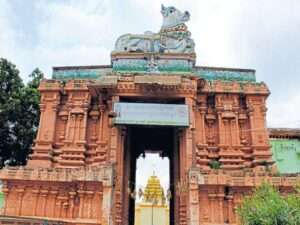
The Someshwara Temple flourished during the Chola period and continued to receive royal patronage from successive dynasties. Due to its sacred location and association with several legends, the temple became one of the important Shaiva centres in southern Karnataka. Even today, it remains a revered pilgrimage destination for devotees visiting the Cauvery River region.
According to a popular legend, Lord Shiva and Goddess Parvati were once travelling across the heavens when they noticed the majestic River Cauvery flowing below. They observed a huge rocky formation standing in the river’s path. Instead of stopping, the river gracefully divided and flowed around the obstacle, creating the appearance of a vast ocean surrounding the land.
Lord Shiva was greatly pleased by the sight and praised the river as “Dhanya Kaveri”, meaning “Blessed Cauvery.” Seeing the river encircle the land like an ocean around Shiva’s abode, Goddess Parvati declared that the place should be called Shivanasamudra, meaning “The Ocean of Shiva.” Thus, the sacred region received its divine name.
Another legend narrates that a powerful demon assumed the form of a gigantic rock and blocked the flow of the River Cauvery. Distressed by the obstruction, Mother Cauvery prayed to Lord Shiva for help. Responding to her prayers, Lord Shiva appeared and destroyed the demon, restoring the river’s natural course. In gratitude, Mother Cauvery requested Shiva to remain there permanently for the welfare of devotees. Lord Shiva agreed and manifested as Sri Someshwara, blessing the region for all time.
The temple is also associated with the Sapta Rishis, the seven great sages of Hindu tradition. It is believed that they performed intense penance and worshipped the Someshwara Lingam on the banks of the Cauvery at this sacred site. Their devotion sanctified the area, and the temple came to be revered as a sacred Sapta Rishi Kshetra.
Local tradition further states that Adi Shankaracharya visited this temple during his spiritual journeys across Bharat and installed a Sri Chakra in the shrine of Goddess Prasanna Meenakshi. This sacred installation continues to be worshipped by devotees to this day.
Maha Shivaratri is the most important festival celebrated at the temple and attracts large numbers of devotees every year.
Special worship is also conducted during Karthika Masam, the annual temple festival before Ugadi, and on auspicious days such as Amavasya and Pournami. Tuesdays and Fridays are considered especially sacred for worshipping Goddess Prasanna Meenakshi.

