Indian politics thrives on narratives. Every election throws up fresh slogans, accusations and counter-accusations. But beyond the din of political rhetoric lies a far more consequential question that deserves a serious national debate: Who created the ecosystem that enabled some of India’s biggest financial offenders to secure enormous loans from public sector banks, despite warning signs, and subsequently leave the country?
It is time to shift the narrative.
This debate has acquired fresh relevance following the publication of former RBI Governor Y. V. Reddy’s book Advice and Dissent. In the book, Reddy reportedly makes serious observations about governance, policymaking and the functioning of institutions during the UPA years. If a former Governor of the Reserve Bank of India raises concerns of such magnitude in a published work, they cannot simply be brushed aside. His observations deserve scrutiny, public discussion and, where necessary, factual examination.
Equally important is another uncomfortable reality. The names that have come to symbolise India’s biggest banking frauds are familiar to every citizen—Vijay Mallya, Nirav Modi, Mehul Choksi and several others accused in high-profile financial crimes. Their cases involved thousands of crores of rupees belonging ultimately to public sector banks and, by extension, the Indian taxpayer.
The obvious question is not merely who committed the alleged frauds. The more pertinent question is: who enabled them?
How were such massive loans sanctioned? Why were repeated warning signals allegedly ignored? Why did internal controls fail? Why did regulators, lenders and oversight mechanisms not intervene in time? And perhaps most importantly, why were several of these individuals able to leave India before investigative agencies could effectively restrain them?
These are not partisan questions. They are questions of public accountability.
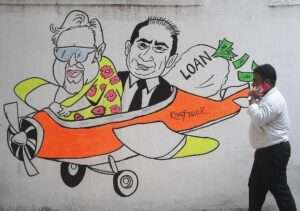
Many of the banking exposures, loan sanctions and alleged irregularities associated with these cases originated before 2014, a matter reflected in public records, investigative findings and judicial proceedings. That timeline naturally invites a broader discussion on whether India’s banking governance, regulatory oversight and political environment during those years adequately protected public money.
The issue extends beyond a handful of well-known names. Various investigative agencies have, over the years, identified numerous individuals accused of defaulting on or allegedly defrauding banks, with some leaving the country while proceedings were pending. Each case has its own facts and legal status, but collectively they expose serious weaknesses that existed in the banking and regulatory architecture.

None of this absolves the primary accused of their alleged wrongdoing. Fraudsters alone bear criminal responsibility for their actions. Yet institutions entrusted with safeguarding public money must also be subjected to rigorous scrutiny whenever systemic failures occur. Public confidence in the banking system depends not only on punishing offenders but also on ensuring that such failures are never repeated.
Over the past decade, the banking sector has undergone significant structural reforms. Recognition of stressed assets became more transparent, mechanisms such as the Insolvency and Bankruptcy Code strengthened recovery processes, wilful defaulters came under greater scrutiny and investigative agencies pursued extradition of several high-profile economic offenders. These reforms do not erase past failures, but they represent an attempt to address longstanding structural weaknesses.
Political debates often reduce complex financial scandals to simplistic slogans. That does little service to the nation. Citizens deserve answers to more substantive questions. Who ignored early warning signs? Which institutions failed? Were there instances of political influence over lending decisions? What lessons have been learnt? Have sufficient safeguards been introduced to prevent a recurrence?
These questions become even more relevant when senior constitutional functionaries and former institutional heads place their observations on record through published works. Such assertions should neither be accepted unquestioningly nor dismissed reflexively. They should instead encourage deeper examination supported by evidence, parliamentary scrutiny and informed public debate.
India’s taxpayers have every right to know how public money was placed at such extraordinary risk and what has changed since then.
The real narrative, therefore, should not revolve around who shouts “thief” the loudest. It should revolve around institutional accountability. Democracies are strengthened not by partisan slogans but by transparent governance, robust oversight and equal accountability before the law.
It is time India shifted the narrative—from political theatre to the enduring question every taxpayer deserves answered: Who enabled the loot of public money, and what has been done to ensure that such an episode is never repeated?