



The guns have fallen silent, diplomacy has prevailed and global markets have responded instantly.
With US President Donald Trump officially announcing the signing of a peace agreement with Iran during the G7 summit in France, the world has heaved a collective sigh of relief. The most immediate beneficiary of this development has been the global energy market, with crude oil prices witnessing a dramatic collapse from nearly $140 per barrel at the peak of tensions to around $74.
That is not a mere statistic. It is a massive economic opportunity.
For countries heavily dependent on imported energy, particularly Bharat, this development could prove transformational if the benefits are passed on to ordinary citizens without delay.
The West Asia conflict involving the United States, Iran and Israel had rattled the entire world. The closure of the Strait of Hormuz, one of the world’s most strategic maritime routes through which a significant share of global oil shipments pass, had triggered panic across international markets.
Bharat was among the most vulnerable nations.
Nearly 85 per cent of Bharat’s crude oil requirements come from imports, much of it originating from the Gulf region. Every fluctuation in crude prices directly impacts the Bharateeyan economy, from transportation costs to inflation, agriculture, manufacturing and household budgets.
To his credit, Prime Minister Narendra Modi managed to shield the country from the worst effects of the crisis for over a month. But even the strongest leadership cannot indefinitely insulate a nation from global shocks. Eventually, fuel prices went up and LPG cylinder prices too witnessed an increase, putting additional pressure on millions of households already battling rising costs.
Now that the storm has subsided, an important question confronts New Delhi.
Will the government act with the same urgency in reducing prices as it did while increasing them?
That is the litmus test.
Citizens understand that governments have little control over international crises. What they do expect, however, is fairness. If prices are raised swiftly citing geopolitical tensions, they must also be reduced swiftly when those tensions disappear. Mod government needs to direct the Oil companies to do so.
There cannot be one rule during a crisis and another during peace.
The numbers themselves justify immediate intervention. Before the outbreak of the West Asia conflict, crude was trading around $64 per barrel. Even after the latest decline to around $74, prices are substantially lower than the panic-driven highs witnessed during the conflict.
This provides ample room for both the Centre and the states to provide meaningful relief.
The Narendra Modi government has repeatedly demonstrated its ability to take bold decisions when national interest demands it. Whether it was economic reforms, infrastructure expansion or strategic diplomacy, decisiveness has become one of its defining characteristics.
This is another such moment.
Lower fuel prices will have a cascading impact across the economy. Transport costs will reduce. Prices of essential commodities can stabilise. Inflationary pressures will ease. Businesses will get breathing space. Most importantly, the common citizen will feel immediate relief.
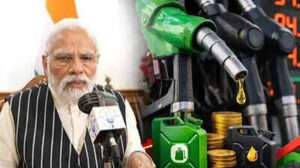
But the responsibility does not end with New Delhi.
State governments, too, cannot escape scrutiny.
Take Telangana, for instance. A substantial portion of every litre of petrol sold comes from state taxes and excise collections. For years, consumers have been repeatedly reminded that a sizeable chunk of what they pay at the fuel station goes not to oil companies but to government coffers.
Will Telangana Chief Minister Revanth Reddy now step forward and reduce the state’s burden on consumers?
Or will he remain a silent spectator while continuing to reap enormous tax revenues?
That is the billion-dollar question.
Political parties, irrespective of ideology, cannot selectively invoke global events. If international conflicts are cited to justify higher prices, international peace must equally justify lower prices.
The people deserve consistency, not convenience.
The peace deal between the United States and Iran is more than a diplomatic breakthrough. It is a golden opportunity for governments to reaffirm that they stand with citizens and not merely with balance sheets.
Prime Minister Modi has an opportunity to send a powerful message to every Bharateeya household: when global prices fall, the benefits will reach the people.
The ball is now in the court of both the Centre and the states.
The world has chosen peace over conflict.
Oil prices have fallen.
Markets have reacted.
Will governments now act with equal speed?
Millions of Bharateeyas are waiting for the answer at the fuel pump.

