



Every controversy in Bharat now seems to follow a familiar script. A statement is made. Social media erupts. Television studios turn into kangaroo courts. Political parties go into damage-control mode. The police rush to register cases. The media pronounces guilt before trial. And, almost invariably, the individual at the centre of the storm is abandoned long before the courts examine the facts.
Truth becomes the first casualty. Political courage becomes the second.
The recent acquittal of former BJP MLA T. Raja Singh in the 2022 case relating to his remarks on Prophet Muhammad should force uncomfortable introspection—not merely within political circles, but also among the media, investigating agencies and every institution that allows public outrage to replace due process.
The Special Court did not deliver a theological verdict. Nor did it certify every word spoken by Raja Singh. What it did expose were glaring procedural and evidentiary deficiencies in the prosecution’s case. During the trial, prosecution witnesses reportedly acknowledged that portions of the references cited by Singh exist in recognised Islamic texts, while the investigating officer admitted that he had not even verified whether the statements were drawn from authentic religious sources before filing the charge sheet. The prosecution’s own forensic evidence also reportedly suffered from gaps in the chain of custody.
Those failures should concern every citizen, irrespective of political ideology.
If law enforcement agencies begin filing criminal cases without first verifying the factual basis of the allegations, they cease to be investigators and become instruments of public pressure. Courts exist precisely to prevent such shortcuts.
The bigger question, however, is political.
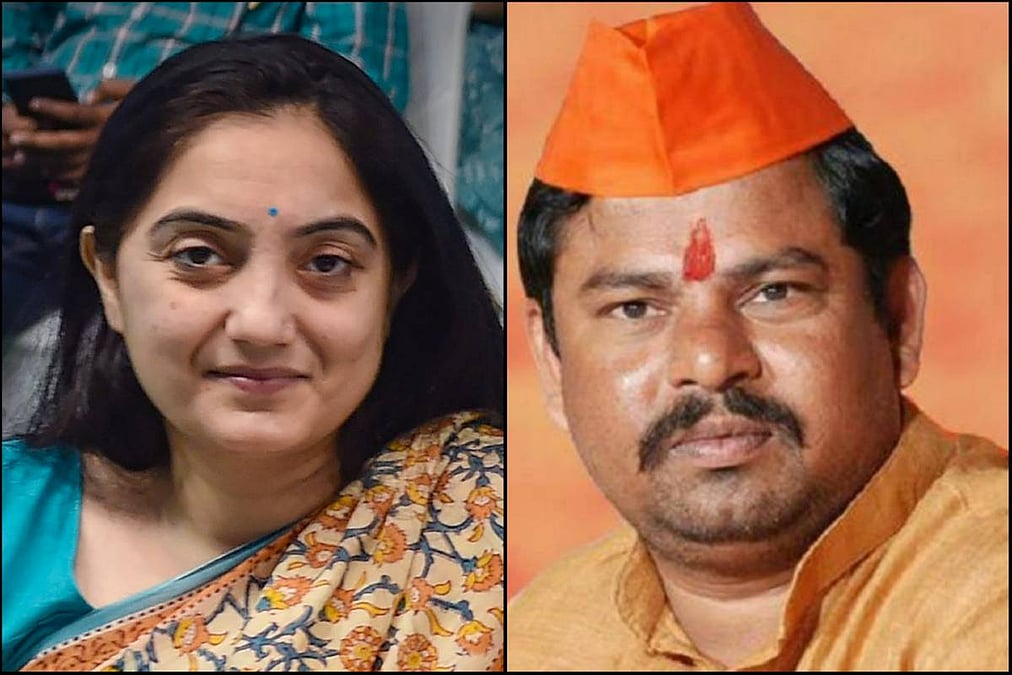
The BJP, which proudly projects itself as the defender of Sanatan Dharma and the voice of civilisational confidence, has repeatedly displayed surprising nervousness whenever controversies involving religion erupt. Rather than standing by its own leaders until facts are judicially tested, the party has often preferred immediate political distancing.
The most striking example remains Nupur Sharma.
During a televised debate, Sharma responded to provocative remarks by referring to passages that she said were drawn from Islamic sources. Whether her manner of presentation was appropriate can always be debated. But instead of defending her right to due process or even examining the factual basis of her statements, the BJP swiftly suspended one of its brightest and most articulate national spokespersons.
That decision did not calm extremists.
Instead, it emboldened them.
The horrifying “sar tan se juda” threats that followed transformed a political spokesperson into a permanent security risk. Her public life was virtually destroyed. The message was unmistakable: organised intimidation works. Violence—or the threat of it—can dictate political decisions.
The Raja Singh episode reinforces the lesson that political parties should have learned years ago: panic is a terrible substitute for principle.
If an individual has violated the law, let independent courts determine that after examining the evidence. If the statements are factually incorrect, expose them with facts. If they amount to hate speech under the law, prosecute them fairly. But sacrificing one’s own leaders merely because street protests have intensified or hashtags are trending is neither justice nor leadership.
The media, too, must introspect.
Far too often, selective outrage dominates national discourse. Insults directed at Hindu deities are routinely defended in the name of artistic freedom, satire or freedom of expression. Yet any perceived criticism involving Islam instantly becomes an issue demanding arrests, suspensions and nationwide outrage. Such visible double standards steadily erode public confidence in both journalism and democratic institutions.
Equal standards are the foundation of a secular democracy. Selective standards create resentment.
Bharat’s judiciary has once again demonstrated why constitutional institutions ultimately matter more than television debates or social media verdicts. Courts examine evidence. They test the procedure. They insist on proof rather than emotion.
Political parties should learn the same discipline.
Democracies cannot function if leaders are punished first and facts are examined later. Investigating agencies cannot afford to become spectators to mob sentiment. The media cannot continue acting as prosecutor, judge, and executioner rolled into one.
Truth does not become false because crowds protest against it.
Nor does panic become wisdom simply because it is politically convenient.
The greatest strength of a democracy lies not in how loudly it reacts, but in how patiently it seeks the truth.
Today it may be Raja Singh. Yesterday it was Nupur Sharma. Tomorrow it could be someone from an entirely different ideology. Once governments, political parties, the media, and investigating agencies begin treating outrage as evidence, no citizen’s freedom of expression remains secure. Democracies are not protected by rewarding the loudest mob. They are protected by the courage to uphold facts, due process and equal standards under the law.

