


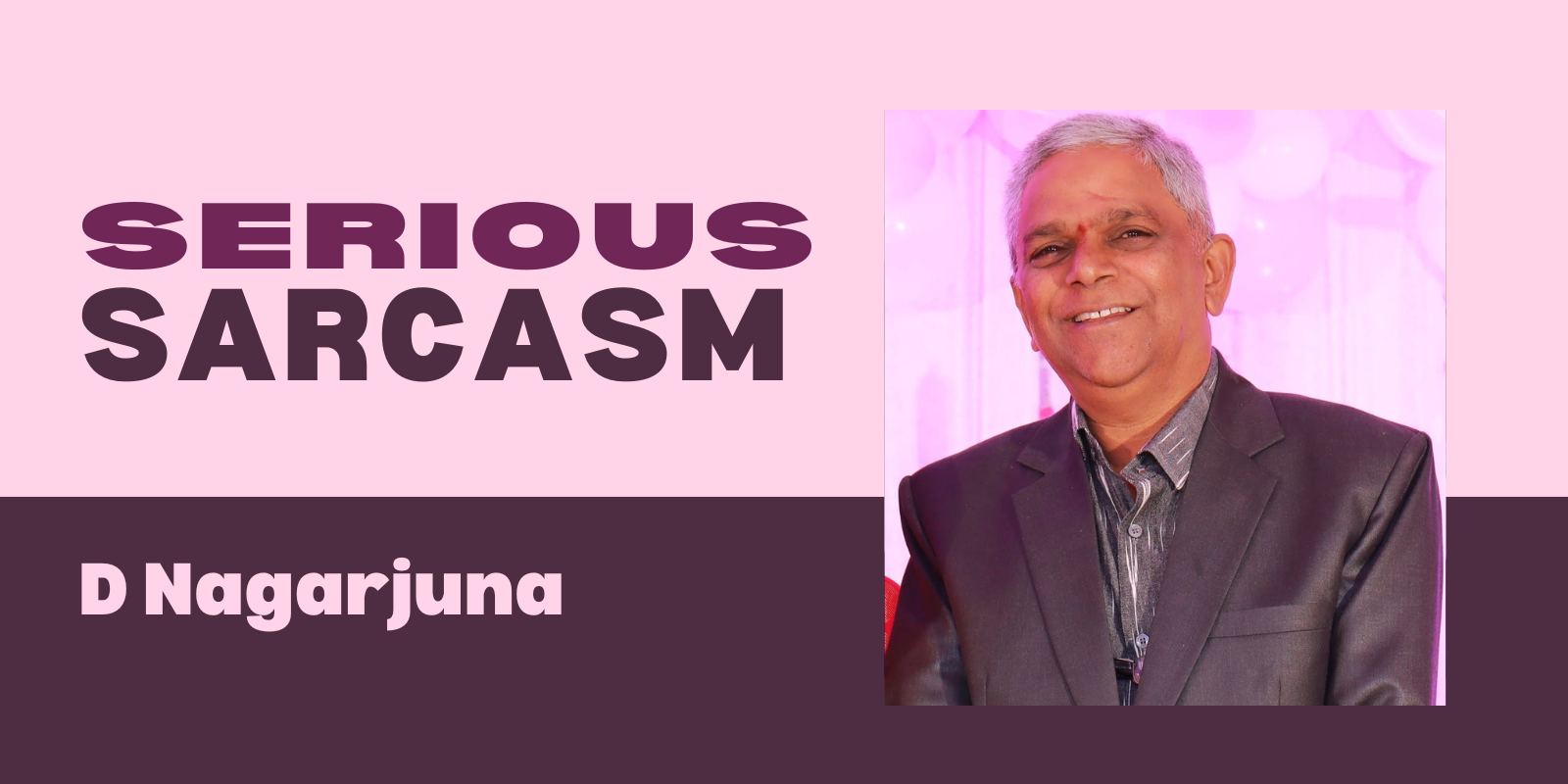
In response to the appeal made by the Editor of this daring portal, Orangenews9, this writer—who missed becoming a freedom fighter by at least 20 years—has come forward to pen a few thoughts on the occasion of our 80th Independence Day, when people eagerly look forward to the Prime Minister’s address from the ramparts of the Red Fort.
As the saying goes, one should listen to what comes directly from the “horse’s mouth”. We still have surviving freedom fighters, though their number has dwindled to a tiny fraction of our population. According to figures cited by the Ministry of Home Affairs, only around 13,000 freedom fighters remain alive and receive pensions. How many of them are still physically and mentally able to recount their experiences of when and how they fought for the freedom of our country is difficult to say. Increasingly, the first-hand account of our freedom struggle is becoming a matter of history books and archival records.
When we attained independence, India’s population was around 34 crore. Today, it has crossed 140 crore, making us the world’s most populous nation and accounting for roughly one-sixth of humanity. Life expectancy at independence was barely around 32 years; today, it is well above 65 years. We have undoubtedly travelled a remarkable distance.
There was also a time when public life placed a greater emphasis on ethics, morality and values. Corruption certainly existed, but its scale and manifestations were different. The media was relatively limited—largely newspapers, magazines and radio—and, for all its shortcomings, it did not have the enormous and instantaneous reach that it possesses today.
Today, the media is rampant and widespread, with tentacles reaching virtually every corner of society. Ironically, however, questions about its independence have never been greater. The media appears to have split into two broad camps—the larger one often accused of being excessively pro-government, sometimes to the point of arguing that two plus two equals five; and a smaller but vociferous section that opposes the government tooth and nail, sometimes trying to prove, as a Telugu saying goes, that the rabbit has three legs.
Social media emerged, perhaps to provide some balance between these extremes, but it has brought its own complications. Its unbridled freedom has buried us under an avalanche of information, opinions, half-truths and outright falsehoods. It has made us impulsive, reckless and sometimes needlessly sarcastic. Yet, paradoxically, it has also awakened many of us from a deep slumber and forced us to question what we are doing—or failing to do—to protect and strengthen our nation.
Social media can be truthful, but separating fact from fiction is often like searching for a needle in a haystack.
This is not to suggest that India is on the brink of disaster. Far from it. But we have reached a point where we need to pause and ask ourselves some uncomfortable questions. Over the past eight decades, India has progressed on several fronts. Population and life expectancy have increased dramatically. Literacy has expanded, infrastructure has transformed, technology has revolutionised daily life and India has emerged as a major force in the global economy.
Yet, alongside this progress, we seem to have witnessed a decline in certain aspects of public life—honesty, ethics, morality, civic discipline and respect for institutions. These shortcomings have contributed to the growth of corruption, criminality, political opportunism, endless whataboutery and, tragically, crimes against women.
At times, one wonders whether our material progress has kept pace with our moral progress. Occasionally, the frustrations are so deep that people even wonder whether we were better off under British rule. But the moment we remember what freedom means, there can be only one answer: India is Mera Bharat Mahaan.
We have grown irrespective of which government has been in power. Therefore, if the present rulers claim that nothing was achieved in the previous 70 years, that would be as unreasonable as the previous rulers claiming that nothing worthwhile happened after they left office. The truth lies somewhere between the political claims of both sides.
A lot has been achieved despite politics, and sometimes because of politics. India has proved its mettle in almost every field. We have gone from a largely poor and developing nation to one of the world’s major economies and technological powers. Ours is a unique country where a bullock cart and a rocket can exist side by side, while a digital revolution unfolds in villages and cities alike. We have continued to move forward despite formidable challenges from our neighbours and a turbulent global environment.
But our independence has also faced serious internal tests.
The most dramatic came in 1975, when the Emergency was imposed and democratic freedoms were suspended. The courage of leaders such as Jayaprakash Narayan, Atal Bihari Vajpayee and many others helped sustain the democratic resistance. Ultimately, the people themselves delivered their verdict in the 1977 elections, decisively rejecting the Emergency regime.
That episode remains a powerful reminder: democracy can be weakened from within, but ultimately its greatest safeguard is an alert and determined citizenry.
With the explosion of media—from newspapers to television, digital platforms and social media—we are now surrounded by information on an unprecedented scale. Yet instead of always making us better informed, it sometimes leaves us confused about what to believe. We must therefore ask ourselves whether we are misusing the freedoms that democracy and independence have given us.
India should not fail in democracy. And if democracy ever fails, we should remember that dictatorship is certainly not the answer. Our own history has demonstrated that Indians will ultimately reject authoritarianism when their democratic freedoms are threatened.
True independence, therefore, is not merely freedom from foreign rule. It is freedom from corruption, indiscipline, intolerance, ignorance, apathy and the habit of blaming everyone except ourselves.
Real freedom will come when civic sense becomes a way of life—when people respect traffic rules, keep public places clean, protect public property, obey the law and understand that rights come with responsibilities. It will also come when the law is applied uniformly, without fear or favour, and institutions command respect because they are fair and independent.
The mantle is now in our hands. For a change, let us not blame political parties, leaders or the system for everything that is wrong with the country.
Let us look into the mirror.
After 80 years of independence, the real question is not whether India is free. The real question is whether we are worthy of the freedom we inherited.
If we can answer that question honestly—and act upon it—we will have taken the next great step towards making Bharat not merely an independent nation, but a truly responsible, disciplined, united and powerful one.


