



Why would Prime Minister Narendra Modi ask citizens to avoid buying gold unless it is genuinely necessary? At first glance, the appeal may appear unusual. Gold is deeply embedded in Bharat’s social and cultural fabric, and millions of households regard it as a safe store of wealth. So why caution people against buying more of it when the economy appears reasonably stable? The answer may lie not in the present, but in preparing for what could happen tomorrow. Bharat’s economy is growing despite the persistent efforts of its political detractors to paint a far gloomier picture. Financial markets are functioning normally, the banking system remains resilient and the country has a comfortable cushion of foreign exchange reserves. The external payments position, too, is manageable. There is, therefore, no reason for panic. But prudent governments do not wait for a crisis before preparing for one. The global environment remains exceptionally fragile. The continuing Russia-Ukraine war has demonstrated how quickly geopolitical conflicts can disrupt energy, food and commodity markets. Meanwhile, tensions involving the United States and Iran carry the potential for another major shock, particularly if they threaten energy supplies or shipping routes. Prime Minister Modi has consistently called for dialogue and an end to conflicts, but geopolitics does not always listen to good sense. The Strait of Hormuz, in particular, remains a critical vulnerability for global energy supplies. Any prolonged disruption could send crude oil prices sharply higher. And when oil becomes expensive, the pain does not stop at the petrol pump. Transportation costs rise, inflationary pressures intensify and prices of food, metals, chemicals and virtually every imported commodity can come under pressure. For Bharat, the consequences would be significant. A substantially higher import bill could widen the current account deficit, put additional pressure on the rupee and increase demand for foreign exchange. Persistent pressure could eventually affect the country’s reserves and make external financing more expensive. None of this means that Bharat is heading towards a crisis. It means only that economic resilience must not be confused with immunity.
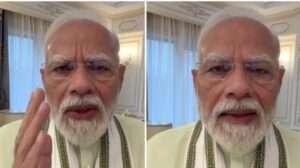
This is where gold becomes more than a matter of jewellery or personal investment. When uncertainty rises, households instinctively seek assets they believe can preserve their wealth. Gold has historically played precisely that role. But from the country’s perspective, excessive demand for imported gold means foreign exchange flowing out to pay for an asset that does not directly add to domestic productive capacity. That creates a paradox. What is financially prudent for an individual household may not always be optimal for the economy as a whole when the country is under external-payment pressure. History offers enough examples of governments tightening economic controls during periods of severe financial stress—through higher import duties, stricter foreign-exchange regulations, restrictions on capital movement or measures designed to keep domestic savings within the financial system. That is why Modi’s appeal deserves to be read as a precaution rather than a prohibition. If citizens unnecessarily divert more of their savings into imported gold when productive domestic financial instruments are available, the cumulative impact can become substantial. Conversely, if household savings remain within the formal financial system, they can help finance investment, infrastructure, businesses and economic growth. The message, therefore, is remarkably simple: do not wait for a crisis to discover the value of preparation. Gold may glitter. But foreign exchange is what keeps an import-dependent economy moving when the world turns hostile. Modi’s ‘gold(en)’ appeal is consequently less about gold and more about economic prudence. A government that warns citizens before a possible storm arrives is not necessarily signalling that the storm is coming. It is demonstrating that it understands the importance of keeping the umbrellas ready. You do not buy insurance after the fire has started. You arrange it while the skies are still clear.


Excellent Analyses With Simple Examples, Too Good Shankar Sir👏🏿👏🏿👏🏿👍👍👍