


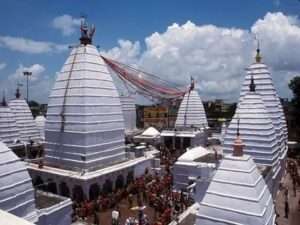
Mahakala Bhairava Temple is situated within the sacred complex of Baidyanath Dham in Deoghar district, Jharkhand. The shrine is located near the renowned Baidyanath Jyotirlinga Temple and is regarded as one of the important guardian shrines of the holy kshetra. Pilgrims visiting Baba Baidyanath traditionally offer prayers here to receive the complete blessings of the sacred pilgrimage.
The exact date of the construction of the temple is unknown. However, the shrine has been an integral part of the ancient Baidyanath Dham complex for several centuries. The worship of Bhairava at Deoghar is believed to be as old as the Shaiva traditions associated with the Jyotirlinga itself.
The presiding deity is Sri Mahakala Bhairava, a powerful manifestation of Lord Shiva worshipped as the protector of the holy kshetra. Bhairava is revered as the guardian of sacred places, remover of obstacles, destroyer of evil forces, and dispenser of divine justice.
The deity is depicted seated in a serene posture, a feature that distinguishes this shrine from many other Bhairava temples where the Lord is portrayed in a fierce form. Devotees are often struck by the calm and compassionate expression on the deity’s face, which inspires a sense of peace and spiritual assurance.
Traditionally, Bhairava is shown holding a Damaru, Trishula, Danda, and the severed head of Brahma, while his sacred vehicle is the dog, symbolizing vigilance and protection.
The temple reflects the traditional North Indian style of architecture seen throughout the Baidyanath Dham complex. Though comparatively modest in size, the shrine possesses a powerful spiritual presence.
The sanctum houses the seated idol of Mahakala Bhairava, adorned with flowers, sacred ash, vermilion, and traditional ornaments. The simple structure emphasizes devotion and spiritual experience rather than architectural grandeur. The peaceful atmosphere within the shrine makes it a unique place for meditation and prayer.
According to ancient Shaiva tradition, Lord Brahma once became proud of possessing five heads and considered himself equal to Lord Shiva. To destroy this arrogance and restore cosmic order, Shiva created Kalabhairava from the fiery radiance of his fingernail.
Kalabhairava manifested as a powerful divine being and severed Brahma’s fifth head, thereby removing his pride. This act established Bhairava as the embodiment of divine justice and the protector of dharma. Thereafter, he became the guardian of Shiva’s sacred abodes across the universe.
At Baidyanath Dham, Mahakala Bhairava is worshipped as the Kshetrapala, or guardian deity, entrusted with protecting the sacred Jyotirlinga and the holy precincts of the temple complex. Local tradition holds that worship at Baidyanath Dham is spiritually incomplete without paying respects to Mahakala Bhairava.
An important and unique aspect of this shrine is that despite Bhairava’s fierce reputation, the deity here radiates extraordinary tranquility. Devotees believe that Mahakala Bhairava not only protects them from negative influences and dangers but also grants inner peace, courage, and spiritual strength.
The temple is also associated with ancient Tantric traditions, and special forms of Bhairava worship have been performed here for generations by devotees seeking divine protection and blessings.
Kala Bhairava Ashtami is the principal festival of the temple and is celebrated with special pujas, Bhairava mantra recitations, and devotional offerings. Maha Shivaratri attracts large numbers of devotees who worship both Baba Baidyanath and Mahakala Bhairava. During the sacred month of Shravana (Sawan), thousands of Kanwariya pilgrims visit the shrine and seek the blessings of the guardian deity before completing their pilgrimage at Baidyanath Dham.

