PL Srinivas
Jantar Mantar 2.0: A test of protest, public order and constitutional authority
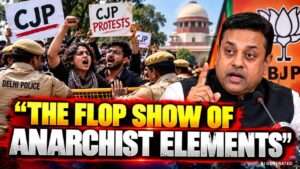
The much-publicised Jantar Mantar 2.0 agitation called by the Cockroach Janta Party (CJP), demanding the resignation of Chief Election Commissioner Gyanesh Kumar, has turned into a major confrontation over the right to protest, the responsibility of the police to maintain public order and the limits of political mobilisation.
The developments surrounding the proposed demonstration have placed Delhi Police at the centre of a politically charged controversy. The authorities denied permission for the October 10 gathering, citing inadequate advance notice, alleged non-compliance with conditions imposed during an earlier demonstration and concerns about public safety, traffic management and law and order.
The CJP, led by Abhijeet Dipke, maintained that citizens had every right to take to the streets to raise their grievances against the Election Commission. Its principal allegation concerns the Special Intensive Revision (SIR) of electoral rolls, which it claims has resulted in the improper exclusion of eligible voters.
Yet the question confronting the authorities was not simply whether the protesters had a grievance. It was whether the proposed gathering could proceed in the manner and at the location intended without creating unacceptable risks for the capital and its residents.
Delhi Police deserves recognition for its responsibility to protect public order. But the episode also demonstrates that the right to peaceful assembly and the administration’s duty to maintain order must operate within the same constitutional framework.
The rule of law cannot be optional for protesters. Nor can it be optional for the authorities.
The ten-day requirement
One of the principal grounds cited by Delhi Police was the short notice given by the organisers. According to Joint Commissioner of Police Nupur Prasad, the application for the proposed demonstration was received on October 7, only three days before the scheduled gathering. The prevailing guidelines for events at Jantar Mantar require applications to be submitted at least ten days in advance.
The police also referred to alleged violations of directions issued during an earlier protest. These concerns, according to the authorities, contributed to their decision to deny permission.
There is a practical reason for requiring advance notice. A large demonstration in the national capital involves far more than assembling a crowd at a designated location. The authorities must anticipate traffic congestion, arrange adequate security, preserve emergency access, coordinate public transport and ensure that essential services are not unnecessarily disrupted.
A gathering that attracts thousands of people cannot be managed effectively through improvisation alone. The larger the anticipated crowd, the greater the need for planning and coordination.
However, the ten-day requirement should be understood as an administrative rule governing the relevant venue, not as a universal constitutional condition applicable to every peaceful gathering across Bharat. The legality of any restriction depends on the applicable rules, the circumstances and the availability of appropriate remedies.
The CJP could have challenged the denial through the prescribed administrative or judicial channels. Equally, the authorities must be prepared to justify their decision if it is challenged before a court.
The central principle remains that nobody can claim an unrestricted right to occupy a public space at any time and in any manner. But neither can the State deny permission merely because a proposed demonstration is politically inconvenient or critical of those in power.

The constitutional right to protest
Article 19(1)(a) of the Constitution guarantees freedom of speech and expression, while Article 19(1)(b) protects the right to assemble peacefully and without arms. These guarantees apply to everyone seeking to hold a peaceful protest in a public place to ventilate their grievances. If these rights apply to the CJP, they must equally apply to organisations such as the Bajrang Dal and the Vishwa Hindu Parishad, which are associated with the ruling BJP.
These are essential democratic freedoms. They allow citizens to question governments, challenge public institutions and demand accountability. The right to protest is especially important when people believe conventional channels have not adequately addressed their grievances.
But these rights are subject to reasonable restrictions under the Constitution. Public order, the rights of other citizens and the requirements of lawful administration cannot simply be disregarded.
The Supreme Court has addressed this balance in several cases. In Mazdoor Kisan Shakti Sangathan v. Union of India (2018), it examined the competing claims of protesters and residents in relation to demonstrations at Jantar Mantar and Ramlila Maidan.
The broader lesson is that democratic governments must facilitate peaceful protest while also protecting the public from unreasonable disruption.
A protest organiser cannot claim that constitutional freedom gives the organisation an unrestricted licence to assemble anywhere. Equally, the police cannot treat every demonstration as a threat merely because it challenges a constitutional authority.
The test is whether restrictions are lawful, justified and proportionate.
The Supreme Court’s intervention
The controversy assumed wider significance when the Supreme Court examined the sweeping restrictions imposed in Delhi ahead of the proposed demonstration.
The measures included the closure of Metro stations and restrictions affecting train services to the capital. The scale of these measures raised questions about the impact on ordinary citizens who had no connection with the proposed protest.
During the October 9 hearing, a bench headed by Chief Justice Surya Kant, comprising Justices Joymalya Bagchi and V. Mohana, questioned the proportionality of the restrictions. The Court expressed concern over the closure of numerous Metro stations and disruption of railway services, emphasising that the authorities could not bring normal public life to a standstill in the name of maintaining law and order.
The memorable analogy about using a hammer to kill a fly captured the concern that security measures must not be excessive in relation to the threat they seek to prevent.
Following the Court’s intervention, the restrictions on Metro services were revised. Reports indicated that 45 stations remained affected under the revised arrangements.
The judicial intervention was a reminder that the administration’s responsibility to prevent disorder does not place its decisions beyond scrutiny.
Watch this: https://www.facebook.com/share/r/1LYX4PFph8/?mibextid=wwXIfr
Delhi Police must be allowed to perform its duties without waiting for violence to erupt. At the same time, preventive measures should be based on credible assessments of risk and designed to minimise unnecessary hardship.
Commuters, patients, students, office-goers and other residents should not be made to bear disproportionate costs because political organisations and public authorities are locked in a confrontation.
The Supreme Court’s scrutiny should therefore not be reduced to a contest between the police and the protesters. It reflects the constitutional requirement that public safety and individual freedom must be balanced.
The controversy over electoral rolls
At the heart of the CJP’s campaign is its demand for the resignation of Chief Election Commissioner Gyanesh Kumar over alleged irregularities in the Special Intensive Revision of electoral rolls.
The integrity of electoral rolls is fundamental to democracy. Every eligible citizen must have a fair opportunity to register as a voter, verify their particulars and seek correction if their name has been omitted improperly.
The Election Commission, operating under Article 324 of the Constitution and the applicable election laws, has responsibilities relating to the conduct of elections and the supervision of electoral processes. The legality of a revision exercise and the correctness of individual decisions made during it, however, are separate questions.
The fact that an exercise is authorised by law does not mean that every decision taken during its implementation is necessarily beyond challenge. Similarly, allegations of wrongful deletion do not automatically establish that the entire exercise is unlawful.
The appropriate response is to examine the evidence: how many names were removed, for what reasons, how many affected persons were eligible voters, and what procedures were available to correct errors.
Any genuine case of wrongful exclusion deserves prompt attention. Equally, allegations of systematic wrongdoing must be supported by reliable evidence before conclusions are drawn.
The demand for the CEC’s resignation is a political position that the CJP and its supporters are entitled to express peacefully. But the demand itself is not proof of misconduct.
Electoral integrity is too important to be reduced to competing political assertions. The Election Commission must provide transparency, eligible voters must have access to effective remedies, and allegations must be examined through established procedures.
A difficult responsibility for Delhi Police
The security arrangements for Jantar Mantar 2.0 highlight the challenges of policing politically sensitive gatherings.
According to reports published on October 10, Delhi Police deployed a substantial force, supported by central security personnel, while restrictions and surveillance measures were introduced across sensitive parts of the capital. Some reports put the deployment at approximately 25,000 personnel, while others cited a broader figure of around 30,000 police and paramilitary personnel involved in the security arrangements.
The authorities were preparing for a large mobilisation despite the denial of permission for the proposed gathering.
Such preparations are not inherently unreasonable. The police must anticipate possible crowd surges, confrontations, obstruction of essential routes and damage to public property. But the deployment of a large force is not, by itself, proof that every person seeking to participate in the demonstration intends to break the law.
The distinction between peaceful protesters and individuals responsible for unlawful acts must be maintained.
If violence, arson or damage to public property occurs, those responsible should be identified and dealt with under the law. If organisers violate lawful conditions, the authorities should document the violations and take appropriate action.
At the same time, peaceful participants should not automatically be treated as offenders because they support a controversial campaign.
Evidence-based policing is the best safeguard against both disorder and arbitrary enforcement.
The authorities have cited alleged non-compliance during the CJP’s previous demonstration as one reason for their decision. If the alleged violations are documented, they may be relevant to assessing the risks associated with another gathering. But responsibility should be established on the basis of verifiable incidents and individual conduct rather than generalised allegations.
The same standards must apply to all political groups, regardless of their ideology or affiliations.
Political mobilisation and counter-mobilisation
The episode has also exposed the increasingly competitive nature of political mobilisation in the capital.
The CJP’s campaign against the CEC has attracted attention beyond the organisation itself, with opposition leaders and other groups expressing concern over the electoral-roll controversy. The question is no longer confined to one organisation’s demand; it has become part of a wider political dispute over electoral accountability and the functioning of constitutional institutions.
The proposed protest has also generated discussion about rival mobilisation, including reports of Bajrang Dal activists organising a counter-demonstration or displaying saffron flags in Delhi.
Such developments, where verified, illustrate how quickly a dispute over public policy can become a contest between rival political constituencies.
Counter-demonstrations are not inherently unlawful. Citizens are entitled to express opposing views, provided they comply with the law. But rival groups must not be encouraged to confront one another in the streets.
The responsibility of the police is to apply the same rules to everyone, preventing intimidation and violence without favouring one political camp over another.
The size of a demonstration may indicate an organisation’s ability to mobilise supporters. It does not establish the truth of its allegations. Nor does the absence of a large crowd necessarily mean that a grievance is unworthy of examination.
Political strength, public support and factual accuracy are distinct matters.
A mature democracy must be able to accommodate competing political views without allowing public spaces to become arenas for intimidation.
The political connections question
The political background of the CJP and its reported links with individuals associated with earlier anti-corruption campaigns have also attracted attention.
Arvind Kejriwal, the founder of the Aam Aadmi Party and former Delhi Chief Minister, has been mentioned in discussions surrounding the movement and its participants. However, claims about the nature of his relationship with the CJP, his endorsement of the October 10 agitation or his intended participation must be supported by verifiable statements and reliable reporting.
Political association is not always the same as formal organisational membership. Participation in a common campaign at an earlier stage does not automatically establish continuing links or shared responsibility for subsequent actions.
Likewise, a public figure’s absence from a demonstration cannot, on its own, establish the reasons for that absence.
The legitimate journalistic question is whether the movement has maintained an independent identity or whether established political interests have sought to influence its campaign. That question can be examined through public statements, documented organisational links and the accounts of those involved.
It should not be answered through speculation about motives.
The importance of institutional credibility
The confrontation also raises a broader question about the relationship between political agitation and constitutional institutions.
The Election Commission, the police and the judiciary perform different functions within the democratic framework. The Election Commission administers electoral processes; the police enforce the law and maintain public order; and the judiciary examines legal disputes and safeguards constitutional rights.
None of these institutions should be exempt from legitimate criticism. Public confidence depends on transparency, accountability and the willingness to correct mistakes.
But institutional accountability should not be confused with an assumption that an allegation is true merely because it has been widely publicised.
If the CJP or any other organisation possesses credible evidence of electoral irregularities, it should place that evidence before the appropriate authorities and pursue available remedies. If the authorities find errors, they should correct them. If allegations are not supported by evidence, that conclusion should also be communicated transparently.
The same principle applies to police action. Where restrictions are justified by credible security concerns, the authorities should explain their basis. Where measures are excessive, they should be reviewed and corrected.
The rule of law is strengthened not by shielding institutions from scrutiny, but by ensuring that scrutiny follows evidence and established procedures.
What Jantar Mantar 2.0 should teach us
The developments surrounding Jantar Mantar 2.0 offer lessons for protest organisers, political parties, public authorities and ordinary citizens.
For organisers, the message is that advance planning and compliance with lawful conditions are essential. A cause does not become more legitimate merely because its supporters disregard procedural requirements.
For the police, the message is that maintaining order must not become an excuse for imposing restrictions that are broader than necessary. Public safety and the freedom of peaceful assembly must be protected together.
For political parties, the lesson is that counter-mobilisation should not become a substitute for substantive debate. Political competition is legitimate, but the public interest must take precedence over attempts to provoke confrontation.
For the judiciary, the challenge is to examine the competing claims carefully, ensuring that neither constitutional freedom nor public safety is sacrificed without adequate justification.
And for citizens, the fundamental principle is that democracy requires both rights and responsibilities.
Delhi Police deserves appreciation when it prevents violence and protects ordinary people from disorder. Such appreciation, however, should not mean that every administrative decision is automatically beyond question.
Likewise, a protest movement deserves the protection of constitutional freedoms, but those freedoms do not confer immunity from lawful restrictions.
The right to protest is not a gift from the government. It is a constitutional freedom. Obedience to the law is not an optional inconvenience. It is a responsibility shared by every citizen and institution.
Jantar Mantar must remain a place where peaceful dissent can be heard. It must not become a battleground where political organisations attempt to impose their will through confrontation, or where public authorities treat every expression of dissent as a threat.
The ultimate test of democracy is not whether a government can prevent criticism, or whether a protest movement can mobilise a crowd. It is whether both sides can operate within the Constitution, respect the law and protect the rights of citizens who may have no part in their confrontation.
That is the standard by which Jantar Mantar 2.0, the conduct of its organisers and the actions of Delhi Police must be judged. (The author is Telangana state BJP unit official spokesperson and Convenor MLC enrolment of fresh graduates in Mahankali district)