
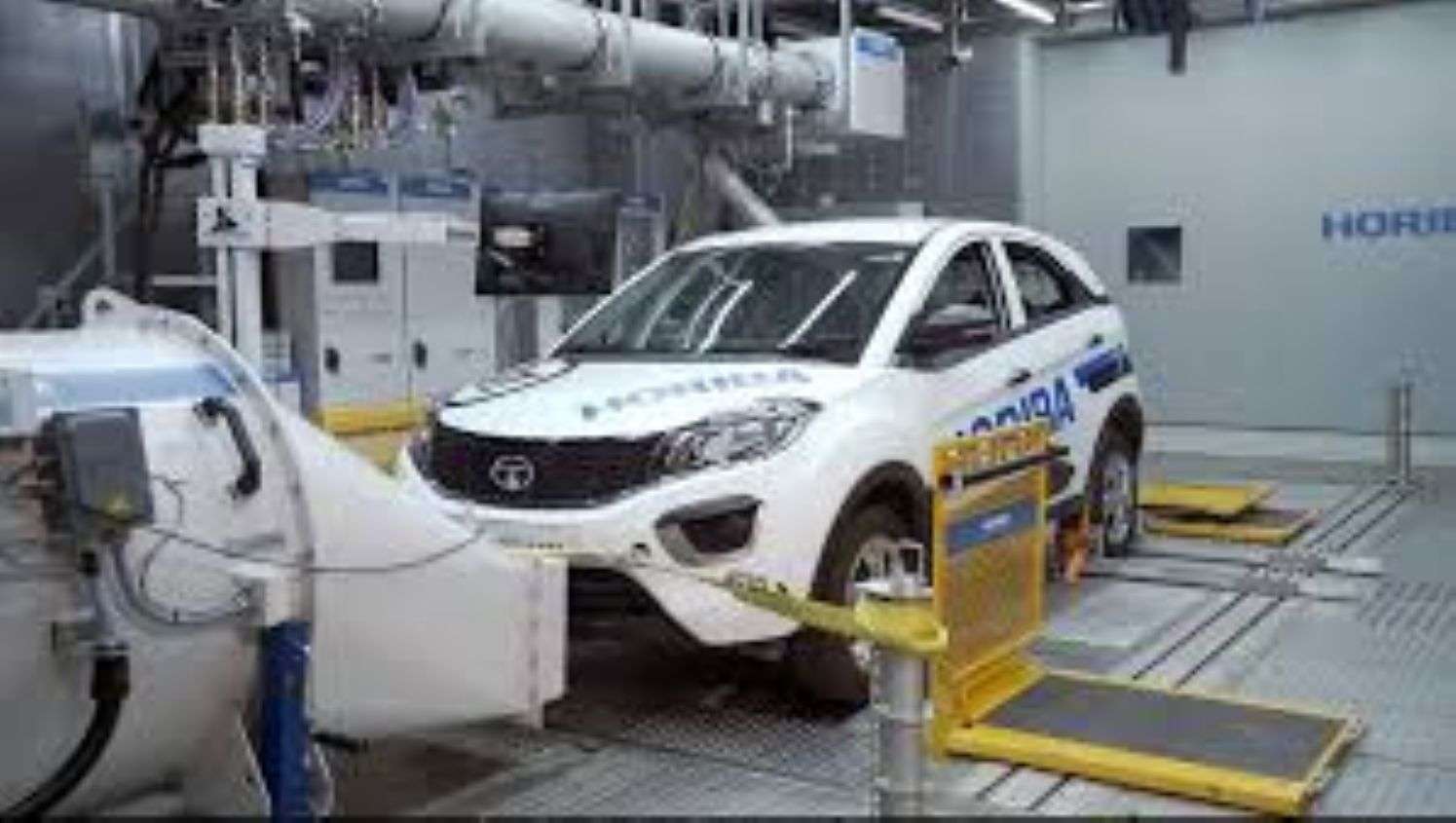
New Delhi: Japanese precision instruments and testing systems manufacturer Horiba on Monday said it is targeting a revenue of 20 billion yen from its India operations by 2028, as the country emerges as an increasingly important base for its global manufacturing and research roadmap.
The company, which is marking 20 years of operations in India, reported an annual turnover of about 15 billion yen in FY 2025, at an average annual growth rate of over 15 per cent.
“Looking at our global businesses, India is probably the most exciting and growing energetic market for us. Going forward…it would definitely be a key market for the Horiba Group.
The Japanese measurement and testing company, which entered India in 2006 with a team of just seven to eight people, today employs more than 600 people in the country. HORIBA India has an installed base of over 35,000 systems, more than 250 distributors and 20 Make-in-India products. Its operations span facilities in Pune, Nagpur and Haridwar, alongside research collaborations with institutions including IIT Delhi and IISc Bengaluru.
India currently derives around 40 per cent each of its business from healthcare and energy and environment, while materials and semiconductor account for the remaining 20 per cent. Around 40 per cent of HORIBA India’s turnover comes from products that are either assembled or manufactured domestically, although exports from India remain minimal.
Dr. Rajeev Gautam, President, HORIBA India, said the company sees its first two decades in the country largely as the foundation for a much larger expansion. “The first 20 years were the base. I think the next 20 years are the second innings, which will be bigger,” he said.
Semiconductor Push Opens New Opportunity
Semiconductors are emerging as one of the company’s key potential investment areas in India as domestic fabrication and electronics manufacturing capacity expands.
Globally, HORIBA has a market share of more than 60 per cent in mass flow controllers, according to the company, with its products used by major chip manufacturers. China, South Korea and Japan have traditionally been major markets for these products.
India’s semiconductor push, however, is creating a need not only for fabrication capacity but also for the equipment, measurement systems and technical support surrounding chip manufacturing. HORIBA said it is already in touch with companies including Tata and Foxconn as the domestic ecosystem develops.
Dan Horiba, Director, HORIBA Ltd., Japan, said the growth of semiconductor manufacturing in India would also require HORIBA to rethink a supply chain that is currently concentrated elsewhere. “We need a supply chain in India. Mostly, they are in Japan right now. We need localisation,” he said.
The company said India’s semiconductor ecosystem currently lacks the scale of large equipment and system manufacturers found in established semiconductor markets, making customer-side technical support particularly important as fabrication facilities come online.
Hideyuki Koishi, Group Director, Strategy Division, HORIBA Ltd. and Chairman, HORIBA India, said, “We need to develop technical support on the customer side. We need to get in touch with customers to see what they want. In India, there are no big system makers; fabs will drive growth for equipment.”
HORIBA’s semiconductor ambitions in India also extend into advanced materials research. In January 2026, it completed the acquisition of Ahmedabad-based Pristine Deeptech, giving it an R&D platform in lab-grown diamond material science, next-generation power semiconductors and quantum-related research.
The company views the acquisition primarily as a long-term technology investment rather than an immediate commercial play. Its lab-grown diamond work is currently at the R&D stage, with diamond being explored as a substrate for future technologies. HORIBA expects technology emerging from this research to have potential global applications rather than being restricted to the Indian market.
From EV Rush To Technology-Neutral Mobility
HORIBA is also seeing another shift in the automotive testing market. After the sharp global push towards battery electric vehicles following the Covid-19 pandemic, the company said automakers are once again investing across multiple powertrain technologies.
Hybrids have gained importance while manufacturers continue R&D spending on internal combustion engines alongside EVs, fuel cells and hydrogen technologies. HORIBA’s strategy is consequently to maintain its conventional automotive testing business while building capabilities across new-energy processes, including hydrogen, fuel cells, methane and carbon capture.
In India, the company’s Pune Technical Center includes capabilities for testing emerging powertrains, including an H₂-ICE test bed. Its equipment is also used by the International Centre for Automotive Technology (ICAT) for vehicle testing.
Hydrogen, however, remains constrained by economics. HORIBA estimates hydrogen production currently costs roughly $10-15 per kg and believes the cost needs to fall towards $1-2 per kg to enable much wider adoption. The company is positioning its testing infrastructure to serve the industry as projects move towards commercialisation rather than entering hydrogen production itself.
HORIBA’s wider energy and environment portfolio covers hydrogen energy, power generation and storage, fuel cells and batteries, next-generation mobility, air and water quality, and carbon-management applications. In India, it has also built a sizeable environmental monitoring footprint, with around 2,000 analysers across the country, according to management.
The company sees the next stage of pollution monitoring moving beyond simply generating data towards improving its quality and reliability as regulatory scrutiny increases. HORIBA’s global experience has involved working with governments and regulators as measurement requirements become more stringent, with tighter standards generally increasing the need for accurate testing and monitoring.
The company is yet to specify a headcount target for its next phase of Indian expansion, citing increasing automation and the need to align hiring with future capacity. It is also evaluating where its next investments should be directed, with semiconductors and medical technologies among the areas under consideration.
For HORIBA, the larger shift is from India being primarily a market for global technologies towards becoming part of their development. Its advanced-materials research is an early example: if its diamond-substrate work reaches commercial maturity, the technology developed through its Indian R&D operation is intended for deployment in global markets.