Upadhyayula Lakshman Rao
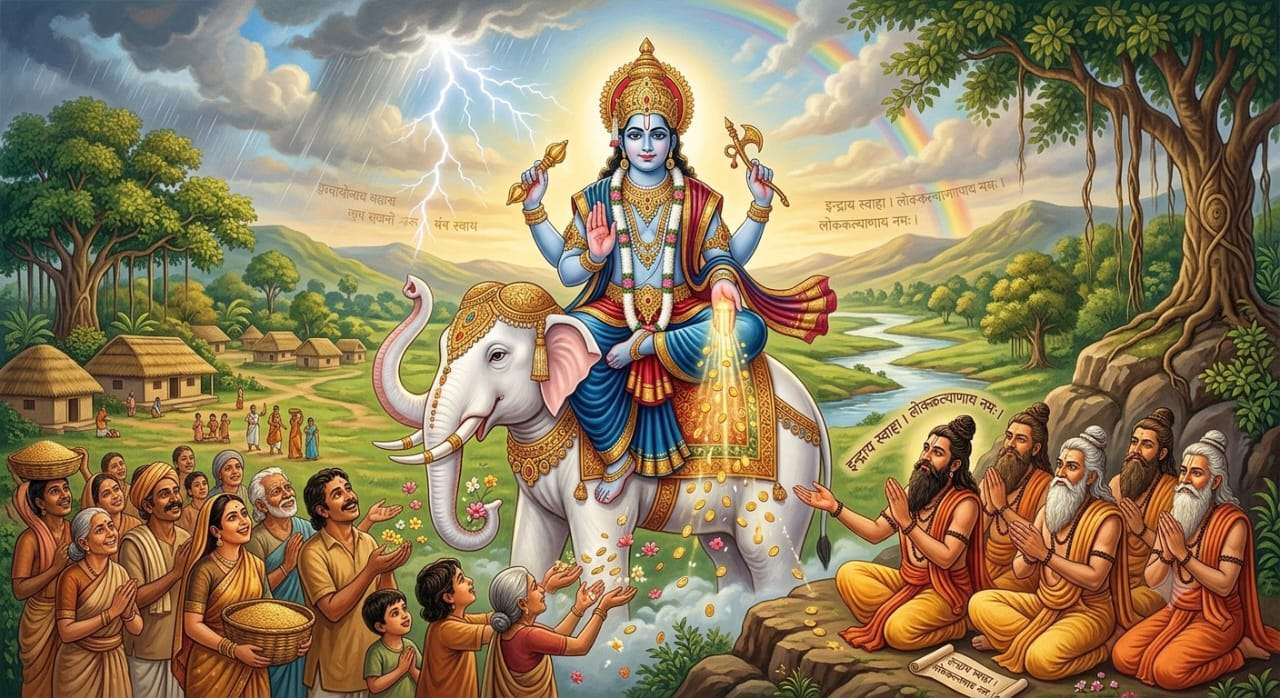
In the solemn cadence of the Rigveda, shaped in the dignified rhythm of Trishtubh meter, the sage Agastya raises his luminous voice toward Indra and the radiant hosts of the Maruts. The invocation unfolds as both reverence and aspiration, where the human spirit seeks alignment with cosmic forces. Indra, the protector in manifold ways, is extolled as the guardian of those who approach with sincerity, his brilliance likened to a radiant force that illuminates both heaven and mind. The sage calls upon him to arrive, not in abstraction, but with fullness of presence, bearing wealth not merely material but symbolic of vitality, strength, and inner abundance.
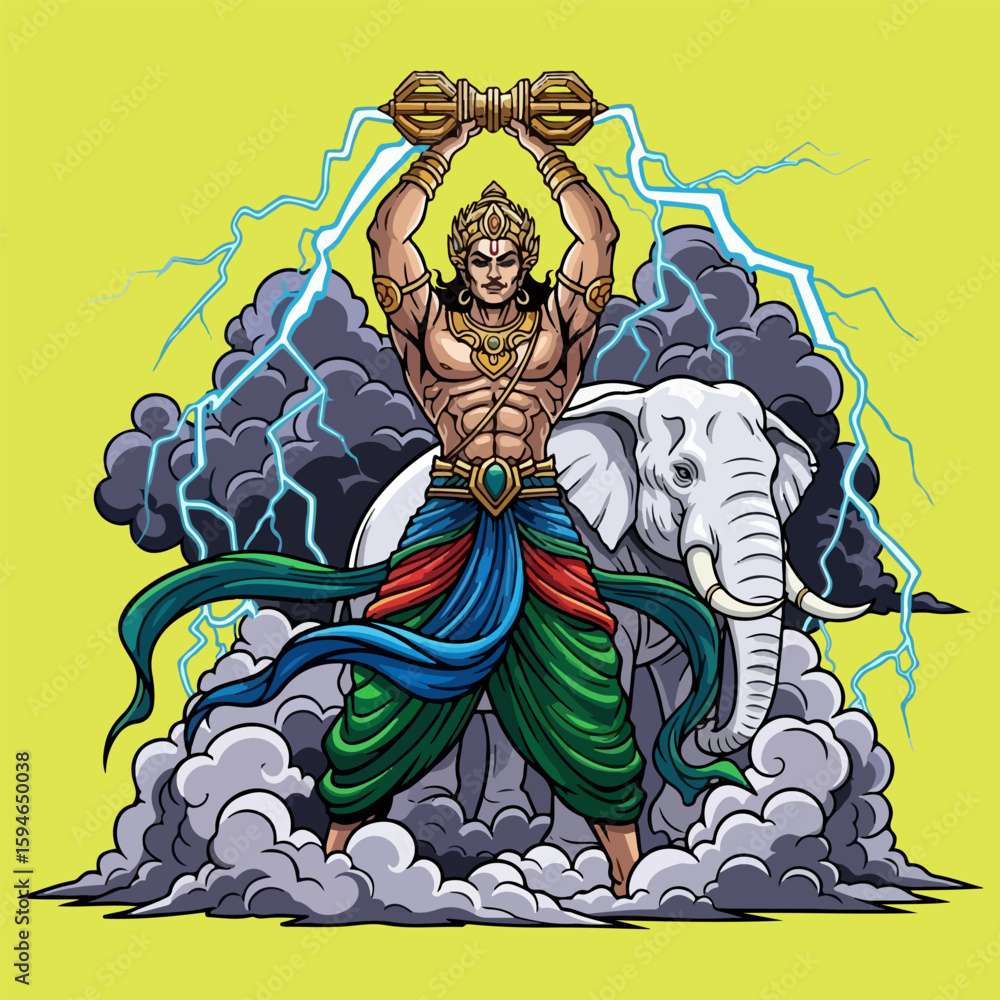
The imagery of Indra’s chariot, drawn by the untamed twin steeds known as Hari, suggests energies that transcend limitation, swift as thought and vast as the oceans. These steeds, unrestrainable and resplendent, symbolize the dynamic forces of nature and consciousness that move freely across the cosmic expanse. The prayer seeks participation in this abundance, not as possession alone but as harmonious integration, where herds of cattle, horses, and other riches signify sustenance, mobility, and societal prosperity. Such desires, though material in form, reflect a deeper yearning for stability and flourishing within the natural order.
Behind the golden-hued garlands of clouds, heavy with rain, lies an unseen orchestration governed by the Maruts. They are depicted as a disciplined yet vibrant assembly, their presence concealed yet responsive to the rhythmic recitation of hymns. The repetition of sacred sound acts as a bridge between human intention and atmospheric transformation, revealing an intuitive grasp of resonance and vibration. The call of the yajna rises upward, and even the distant coursing energies, symbolized as Indra’s far-reaching steeds, are invoked to heed the sacred summons carried through the currents of air and ether.
The waters, described as pure and maiden-like, held gently within the womb of clouds, evoke both tenderness and latent शक्ति. Their descent is not chaotic but purposeful, joining the hosts of the Maruts in a coordinated expression of nature’s power. The Maruts, strong and unyielding, embody forces that shape the earth and sky, yet remain harmonized within cosmic law. Their association with electrical currents and atmospheric movement reveals an early contemplative awareness of natural phenomena, where poetic intuition mirrors what modern inquiry would later interpret as meteorological and energetic processes.
The consort of the Maruts, envisioned as the vast expanse of space, becomes a symbol of receptivity and creative potential. Her flowing presence, adorned with loosened hair, signifies both freedom and continuity, ever serving the cosmic rhythm with devotion. She is likened to the radiant daughter of the sun, ascending upon the chariot of the Ashvins, embodying the swift movement of light and energy. This portrayal subtly reflects the interplay of solar radiation, atmospheric currents, and the cyclical renewal of life, expressed through the language of myth and reverence.
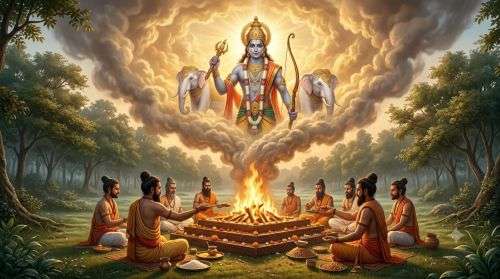
At the commencement of the yajna, the Maruts are welcomed as active participants, bringing with them the life-giving rains. The maiden, symbolic of the fertile sky, is carried upon their chariot, uniting heaven and earth in a sacred exchange. The sage, in devotion, offers hymns and oblations, recognizing that ritual is not mere ceremony but a conscious alignment with the forces that sustain existence. The soma, purified and sanctified through mantra, becomes an offering of refined awareness, inviting the deities to partake in a shared act of renewal and communion.
The grandeur of the Maruts is acknowledged by all, their majesty extending beyond perception. Their consort, ever auspicious, embodies productivity and sustenance, her longing to release rain reflecting the natural urge toward creation and nourishment. She stands as a symbol of continuity, her achievements rooted in the cyclical rhythms that uphold life. The sage resolves to praise her qualities, not only in devotion but as recognition of the sustaining principles that govern both nature and society.
The guardians of cosmic order—Mitra, Varuna, and Aryaman—are invoked to ensure the integrity of the ritual. They represent harmony, law, and social cohesion, overseeing the correctness of action and intention. Their role in removing imperfections from the yajna reflects an understanding that both inner discipline and external precision are essential for meaningful engagement with the sacred.
The Maruts, when the time ripens, enter the depths of the clouds and release the rains, an act both physical and symbolic. Their शक्ति cannot be fully comprehended from afar, as it operates through layers of subtlety and force. They move like ocean waves, overwhelming obstacles and restoring balance, demonstrating the interplay between शक्ति and order. In acknowledging their might, the sage affirms the necessity of humility before the vastness of natural and cosmic processes.
In conclusion, the hymn turns once more toward Indra, seeking his favor through continuous praise. The daily recitation of his glory becomes a practice of remembrance and alignment, reinforcing the bond between human aspiration and divine शक्ति. The sage Mandarya, through this composition, offers a self-sustaining hymn, imbued with the strength of its own सत्य. It travels through sound and intention, carrying the prayer for nourishment, longevity, and well-being. Thus, the hymn stands as a confluence of spirituality and early scientific awareness, where observation, reverence, and insight merge into a unified vision of existence.