


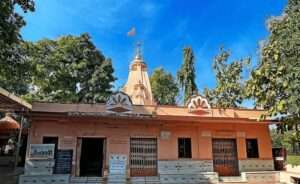
Gaypagla Temple, also known as Gay Nu Paglu Tirthdham, is situated in Dhoran Pardi village on the sacred banks of the Tapi River in Kamrej Taluka of Surat District, Gujarat. Surrounded by a tranquil natural environment, the temple attracts devotees seeking both spiritual solace and divine blessings.
The present temple structures have undergone renovations over time, but the sanctity of the site is traditionally traced back to the Dvapara Yuga. According to local belief, the place became sacred due to the penance performed here by Lord Krishna and Lord Balarama, making it an ancient and revered pilgrimage center.
The temple complex houses beautiful marble idols of Lord Radha and Lord Krishna. The most sacred object of worship is a stone bearing the footprints of cows, known as “Gay Nu Paglu” (Cow’s Footprints), which is carefully preserved within the temple. Devotees regard these footprints as a divine symbol of Lord Krishna’s compassion and the miraculous restoration of life granted through Lord Shiva’s blessings.
The complex also contains shrines dedicated to Lord Dattatreya, Himaleshwar Mahadev, Shankheshwar Mahadev, Hanuman, Sai Baba, Jalaram Bapa, Rang Avadhoot Maharaj and Saraswati Devi, making the temple a spiritually vibrant center for devotees of different traditions.
The temple follows traditional Gujarati temple architecture and is built within a spacious courtyard. A large Sabha Mandap leads to three principal sanctums crowned by elegant shikharas.
The left sanctum houses a three-faced marble idol of Lord Dattatreya. The central sanctum enshrines a Shiva Linga worshipped as Ghushneshwar Mahadev, with Nandi facing the deity. The right sanctum contains the idols of Radha and Krishna along with the sacred cow-footprint stone. Several smaller shrines dedicated to saints and deities are spread across the complex, creating an atmosphere of continuous worship and devotion.
The temple derives its name from the sacred cow footprints preserved within the shrine. For generations, devotees from Surat and neighboring regions have worshipped at this holy site, believing it to be a place where sincere prayers, repentance and devotion receive divine grace.
The temple’s importance grew from the ancient belief that Lord Krishna and Lord Balarama performed penance here after a tragic incident involving thousands of cows. Their worship of Lord Shiva transformed the site into a revered kshetra associated with forgiveness, purification, and spiritual renewal.
According to the temple legend, Lord Krishna, Lord Balarama and their companions were grazing cattle near the Yamuna River during the Dvapara Yuga. One day, while playing a ball game, Krishna’s ball fell into the river. Krishna entered the waters, where he encountered and subdued the venomous serpent Kaliya.
After the encounter, Krishna rested nearby. As evening approached, he asked Balarama to blow his conch and gather the cows. During the second attempt, the conch produced an unusual sound that frightened the cattle. In panic, thousands of cows rushed toward the river and drowned.
The brothers were deeply distressed and were said to have incurred the sin of Gauhatya (cow slaughter). Their sacred symbols—the conch of Krishna and the plough of Balarama—turned black as a sign of the burden they carried. Seeking a remedy, they approached Sage Garga, who advised them to travel to the banks of the Tapi River and worship Lord Shiva.
Following the sage’s instructions, Krishna and Balarama arrived at the present site of Gaypagla and performed intense penance before a Shiva Linga for five days, from Vaishakha Shukla Ekadashi to Purnima. Pleased with their devotion, Lord Shiva appeared before them, removed the sin, and restored the drowned cows to life.
As the revived cows walked across a sacred stone, their footprints became permanently imprinted upon it. These footprints are believed to be the very marks preserved in the temple today. Because of this miracle, the site became known as Gay Nu Paglu, meaning “The Footprints of the Cow.”
The legend teaches that sincere repentance, humility, and devotion can earn divine forgiveness. The sacred footprints are therefore not only a reminder of the miracle but also a symbol of Lord Shiva’s compassion and Lord Krishna’s deep reverence for all living beings.
Krishna Janmashtami is celebrated with great devotion and special worship of Radha and Krishna. Maha Shivaratri is one of the most important festivals of the temple, drawing large numbers of devotees to worship Lord Shiva. Datta Jayanti is observed with religious ceremonies and special prayers dedicated to Lord Dattatreya.During the holy month of Shravan, devotees perform special pujas, abhishekams and prayers to Lord Shiva, making the temple particularly vibrant with spiritual activities.


