N Nagarajan
Those of us born in the baby-boomer era, when the father was usually the sole earning member, grew up seeing our mothers and, in some families, elder sisters labelled “housewives”. The term carries a long history, yet even today schools have not adequately encouraged children to use the gender-neutral word “homemaker”. Ask a child what their parents do, and the quick response is often, “My father works and my mother is a housewife.” The label has existed in various forms for centuries.
What is the historical background to the assumption that women should cook and raise children while men work outside the home? Indian society probably conditioned women from a young age to remain domesticated, largely confined to kitchens and household chores, including washing men’s clothes. How and why did neither women nor men question this arrangement?
Surprisingly, our mothers rarely showed their strain openly. Perhaps they suppressed their feelings, with occasional outbursts. Whether in nuclear or joint families, housewives were confined to the kitchen and assigned tasks, with neither breaks nor leisure. In joint families, work or time might be divided, but the burden remained. Interestingly, working-class women in various occupations became partners in earning alongside their husbands. Economic necessity often compelled them to work, as men alone could not support families that were generally larger than those of today.
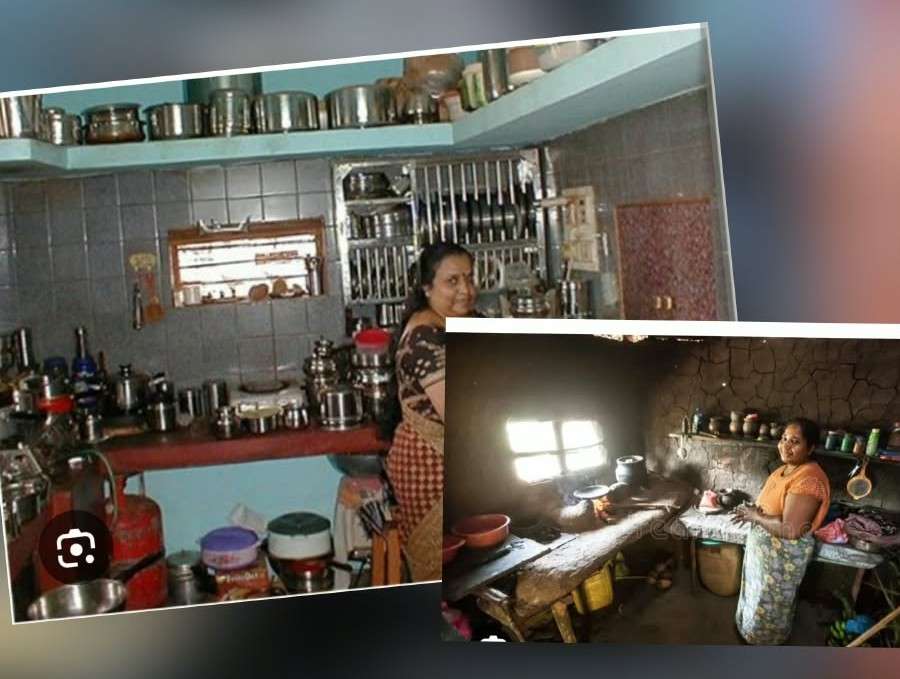
In those days, housewives worked silently, come rain or shine. Their days began at 4.30 or 5 a.m. and their exhausting routine often ended only when everyone else had comfortably gone to bed, around 10 p.m. or later. Some women, particularly in South India, also had to deal with sisters-in-law who were themselves victims of child marriage and early widowhood, sometimes in their teens. Their frequent visits could bring additional work and unpleasant behaviour, adding to the homemakers’ agony. Unannounced visits by relatives, sometimes even after the kitchen chores were over, meant starting all over again. Kitchens then lacked modern cooktops and LPG stoves; women relied on coal-fired chulhas or kerosene stoves, noisy or otherwise. Hot plates were a luxury. Despite spending long hours in the kitchen, they had to resume the same routine the next day.
Many also had to manage household budgets within the limits of their husbands’ salaries. Any overspending could invite a dressing-down. In some families, women had to explain their daily household expenses to their husbands. This was another form of male chauvinism. It was a hard era, and many such attitudes persist even today.
How can we forget the Covid lockdown, when earning members were required to work from home? The routine of homemakers changed dramatically. They had to make additional rounds serving hot and cold drinks, not only to men but also to family members working or studying at home. Hot drinks on demand became the order of the day. For nearly two years, this meant extra work without remuneration. They carried out these duties, often with a smile, without even receiving appreciation from family members.
The situation has since changed, with both partners working to meet additional needs and maintain financial independence while sharing responsibility for running the family. Millennials who manage their own households increasingly expect husbands to participate in daily chores, including cooking. Boys who wish to marry should learn to cook and manage household errands; otherwise, married life may become difficult. Once, a man who helped his wife was derisively called joru ka gulam. Today, men should wear their willingness to share domestic responsibilities as a badge of honour.
The changing scenario calls for mutual understanding between spouses. Wives can encourage their husbands to take on more responsibilities, overlook minor mistakes and avoid unnecessary interference wherever possible. Persistent inflexibility on either side can create conflict and, at times, lead to separation or divorce. Husbands, too, must learn to volunteer and become equal partners in managing the home.
Finally, parents of every generation must work to end gender bias and teach boys to understand and respect girls and women. The glorification of boys as raja betas must end. In today’s changing economic environment, parents should never consider it beneath their sons’ dignity to share household responsibilities equally with their future wives. The time has come to move beyond the label “housewife”. Children must learn that mothers who manage homes, whether or not they also work outside, are homemakers. It is time to discard the outdated term “housewife”—and perhaps even encourage lexicographers to remove it from dictionaries.