Hyderabad: In a significant scientific breakthrough, researchers at the CSIR–Centre for Cellular and Molecular Biology (CCMB), Hyderabad, have uncovered a previously unknown biological mechanism that helps one of the world’s deadliest fungal pathogens transform itself into a form capable of surviving the human immune system and eventually invading the brain.
The discovery, the result of painstaking research by CCMB scientists led by Dr Sriram Varahan, sheds new light on how Cryptococcus neoformans—a deadly fungus responsible for cryptococcal meningitis—adapts to the human body and develops its extraordinary ability to survive under hostile conditions.
The findings are particularly important at a time when invasive fungal infections are emerging as a growing global health threat. Fungal pathogens cause hundreds of thousands of deaths every year, especially among people with weakened immune systems. Yet the arsenal of effective antifungal drugs remains limited, several existing medicines can be toxic, and growing drug resistance is making treatment increasingly difficult.
The World Health Organization has consequently identified several fungal pathogens as priorities for research and new drug development. Among them is Cryptococcus neoformans, which can begin as an infection in the lungs before spreading through the bloodstream to the brain and causing cryptococcal meningitis.
The disease affects more than 150,000 people worldwide every year and remains a major cause of death among people living with HIV/AIDS.
The fungus that becomes a giant
One of the most remarkable survival strategies of Cryptococcus neoformans is its ability to dramatically alter its physical form after entering the host.
Under certain conditions, some fungal cells enlarge several-fold, transforming into enormous cells known as “Titan cells”. Unlike ordinary fungal cells, these giant cells are extremely difficult for immune cells to engulf and destroy. Their extraordinary size and altered biological properties enable the pathogen to withstand immune attack and establish persistent infection.
Scientists have known about Titan cells for almost two decades. But one crucial question remained unanswered: What tells the fungus to become a Titan cell in the first place?
The CCMB research has now provided an important answer.
The study, published in Genetics, has identified a previously unknown biological circuit that links the fungus’s energy metabolism with calcium signalling and the calcineurin pathway—one of the key cellular systems that enables the pathogen to survive stress inside the human body.
The breakthrough did not emerge from a single observation. It represents the outcome of detailed and painstaking scientific investigation by the CCMB research team into the intricate molecular processes that allow the fungus to adapt, survive and become more dangerous.
When metabolism becomes a decision-maker
Traditionally, metabolism is viewed primarily as the machinery that supplies energy to a cell. The CCMB study, however, reveals that in Cryptococcus neoformans, metabolism can play a much more sophisticated role.
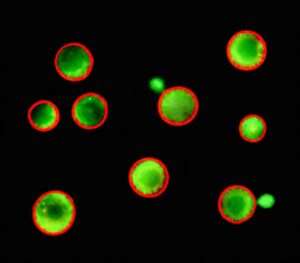
The researchers found that efficient glucose metabolism helps the fungal cell maintain the right balance of intracellular calcium.
Calcium, although widely associated with bones and muscles in the human body, serves a very different purpose inside cells. It acts as an important molecular messenger, transmitting signals that can switch cellular processes on and off.
In Cryptococcus neoformans, the researchers found that this calcium balance is crucial for activating calcineurin, a master signalling pathway that helps the fungus cope with stressful conditions inside the human host.
The pathway, in turn, contributes to the transformation of ordinary fungal cells into Titan cells.
As Dr Sriram Varahan explained, the discovery reveals that metabolism is not merely providing fuel to the fungus. It is actively influencing the signalling machinery that determines whether the pathogen can undergo one of its most formidable transformations.
In effect, the researchers have uncovered a hidden communication network inside the fungus—one in which energy production, calcium signalling and cellular stress responses work together to help the pathogen become more resilient.
Turning a deadly weapon into a vulnerability
The significance of the discovery lies not merely in explaining how Titan cells are formed. It identifies a potential vulnerability in one of the fungus’s most important survival mechanisms.
The findings establish a direct connection between glucose metabolism, calcium regulation and calcineurin activation in controlling Titan cell formation. These processes, previously understood largely as separate biological functions, appear to operate as an interconnected network that helps Cryptococcus neoformans adapt to its host environment.
That raises an intriguing possibility for future antifungal research.
Instead of relying exclusively on drugs designed to kill the fungus outright, researchers could potentially develop therapies that interfere with the biological circuitry required for Titan cell formation.
Such an approach would not necessarily have to destroy every fungal cell. Instead, it could prevent the pathogen from activating one of its most powerful defence mechanisms, potentially making it more vulnerable to the host immune system and existing antifungal treatments.
A discovery with therapeutic possibilities
The CCMB findings come at a time when the world urgently needs new approaches to treating invasive fungal infections.
Cryptococcal meningitis remains particularly difficult to treat, while the emergence of antifungal resistance threatens to further narrow therapeutic options. Understanding the molecular mechanisms that enable the pathogen to survive and cause severe disease is therefore an essential step towards developing better interventions.
The CCMB study provides precisely that kind of fundamental insight.
By painstakingly tracing the relationship between metabolism, calcium signalling and calcineurin activation, the researchers have exposed a previously hidden layer of fungal biology. More importantly, they have identified a potential point at which the pathogen’s transformation into a highly resilient Titan cell could, in future, be disrupted.
The discovery does not represent an immediate cure for cryptococcal meningitis. But it provides researchers with a new biological target and a new way of thinking about antifungal therapy.
The next generation of antifungal strategies may therefore not simply ask how to kill the fungus.
They may ask a more strategic question: How can its most dangerous survival weapon be switched off before it gets the chance to strike?
And that is precisely where the painstaking scientific work of the CCMB team could prove to be consequential—not just in explaining one of nature’s most extraordinary fungal survival strategies, but potentially in helping science find a new way to defeat it.