



Bhīmasena, consumed by the blazing fire of righteous indignation, sprang upon Karṇa’s motionless chariot with the fierce resolve to sever the tongue that had once poured venom upon the honour of Queen Draupadī before the assembled kings. His mighty hands reached for his weapon as memories of that shameful day surged through his heart like an unquenchable flame. At that decisive moment, Śalya swiftly restrained him with calm wisdom. He reminded Bhīma that Karṇa had not been slain but had merely fallen unconscious beneath the weight of battle. Should his tongue be cut in such a helpless state, death might follow, and with-it Arjuna’s solemn vow to slay Karṇa would remain unfulfilled. Such an act, though born of justice, would bring ruin upon Arjuna, who would rather surrender his own life than fail in the sacred oath he had sworn before all warriors.
The words of Śalya restored Bhīma’s clarity. Folding his anger beneath the discipline of dharma, he confessed, “In the fury of this moment I forgot my beloved brother’s command. The cruel insults this wicked man hurled at Draupadī in the royal assembly have never departed from my heart. Their bitter echo has burned within me through every passing day of exile and every hour of this dreadful war. I sought only to avenge that unforgivable outrage. Yet if I slay Karṇa now, Arjuna’s vow shall perish with him, and my brother, devoted to righteousness above life itself, would embrace death rather than survive dishonour. You have prevented a great calamity. I shall not transgress your counsel.” Pleased by Bhīma’s submission to wisdom, Śalya turned Karṇa’s chariot away from the field until consciousness returned to its fallen master.
Hearing this account, Dhṛtarāṣṭra listened in anxious silence while Sañjaya continued his narration. The blind monarch recalled how Duryodhana had repeatedly proclaimed before kings and warriors that Karṇa alone possessed the strength to crush the Pāṇḍavas and secure everlasting victory for the Kaurava cause. Yet on that day, Bhīmasena had shattered the pride that rested upon such boastful confidence. Karṇa, who had inspired the hopes of the Kuru army, had been brought low before the irresistible might of Vāyu’s son.
Burning with humiliation and rage at Karṇa’s temporary withdrawal, Duryodhana immediately commanded his surviving brothers to surround and destroy Bhīmasena before Karṇa could return. Obeying their king, the Kuru princes advanced with terrible determination. Alongside them marched Śrutavarma and a formidable company of five hundred seasoned warriors whose armour glittered like a moving wall of iron. They closed upon Bhīma from every direction, believing that even his unmatched strength would be overwhelmed beneath their united assault.
Their confidence proved vain. Bhīmasena advanced among them like a colossal mountain set in motion by divine wrath. His arrows, mace, sword, and irresistible strength became instruments of destruction. Śrutavarma fell first beneath his crushing attack. Vikata, Sāmu, Nanda, Upananda, Grādha, and many renowned princes soon followed, struck down with relentless precision. Chariots splintered, banners collapsed, elephants crashed upon the earth, and horses fled riderless across the blood-soaked plain. The mighty warriors who had marched with proud hearts were reduced to lifeless forms scattered across Kurukṣetra. Witnessing such devastation, the courage of the Kaurava host steadily dissolved into despair.
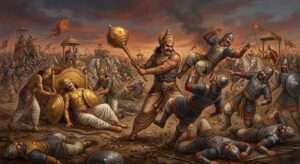
Meanwhile, Karṇa regained consciousness. Refusing to yield to defeat or humiliation, he mounted his chariot once more and returned to battle with undiminished resolve. His warrior’s spirit blazed brighter than before, and his bow sang once again across the battlefield. Opening the renewed encounter, Karṇa discharged seven swift arrows toward Bhīmasena. With astonishing mastery, Bhīma severed every shaft in mid-air before they could reach him. Karṇa instantly answered with an unceasing torrent of arrows that darkened the space between them. Bhīma, undeterred, struck him repeatedly with keen shafts whose force caused the son of Rādhā to tremble upon his chariot. Raising a thunderous roar that echoed across the field, Bhīma struck fear into every supporting division that stood behind Karṇa.
The son of Rādhā, inflamed with fury, released ten powerful arrows that shattered Bhīma’s bow. Without hesitation, Bhīmasena seized his immense mace and hurled it with devastating force. Karṇa’s celestial skill enabled him to break the rushing weapon before it reached him. Instantly Bhīma took up another mighty bow and showered Karṇa with blazing arrows that flashed like tongues of sacrificial fire. Karṇa answered every missile with equal precision, refusing to yield even a single step. Bhīma then launched a long, irresistible shaft that pierced through Karṇa’s breast and shoulder. Though grievously wounded, Karṇa stood unwavering. His face flushed crimson, his eyes burned with consuming anger, and he replied by striking Bhīma with twenty-five piercing arrows that drew streams of blood from the mighty son of Pāṇḍu.
Again Karṇa broke Bhīma’s bow and slew his horses with deadly accuracy. Rising with unconquerable pride, Bhīmasena grasped another colossal mace and charged through the battlefield like the god of destruction himself. Nothing withstood his advance. Seventeen mighty elephants were smashed into lifeless heaps beneath its crushing weight. Three thousand horses belonging to Śakuni’s divisions perished in moments. Chariots splintered into fragments, five hundred warriors were annihilated together with their weapons, and the specially trained Yavanasva forces dispatched by Śakuni were ground into ruin as though reduced to fine dust beneath an irresistible tempest.
While Bhīma carved devastation through the enemy ranks, Karṇa suddenly turned his wrath upon Dharmarāja Yudhiṣṭhira. His arrows slew the king’s charioteer and shattered the royal chariot, forcing the righteous monarch into desperate retreat. Perceiving the danger threatening his elder brother, Bhīmasena rushed forward and intercepted Karṇa’s advance. At once both armies converged around their foremost champions, and the battlefield erupted into another tremendous struggle. Sātyaki, ever eager to defend the sons of Pāṇḍu, crossed before Bhīma and engaged Karṇa with fearless determination. Their bows thundered without pause as countless arrows filled the heavens. The dense showers of missiles veiled the radiant midday sun itself, and the sky appeared woven with steel. Neither warrior yielded; each strove ceaselessly to overcome the other in a contest worthy of immortal fame.
As the sun stood high above Kurukṣetra, the sacred field became a vast river of blood. The severed heads of fallen heroes drifted upon its crimson currents like blooming lotuses floating upon tranquil waters. Broken standards resembled uprooted trees carried by the tide, while shattered armour glimmered beneath the sunlight like jewels hidden within a scarlet stream. The golden reflection of the sun danced upon the flowing blood, imparting a haunting and solemn beauty to the dreadful spectacle. Thus, amid immeasurable sorrow and incomparable valour, the earth itself bore witness to the terrible price of ambition, vengeance, and destiny as the great war moved steadily toward its appointed end.

