



The BJP-led NDA appears prepared to take a confidential political risk to push through the Constitution (131st Amendment) Bill, which seeks to advance women’s reservation and facilitate delimitation of parliamentary constituencies. With the Lok Sabha session scheduled to reconvene on November 30, the government faces a challenging numbers game. Yet, the political manoeuvring under way suggests that the ruling coalition is far from ready to abandon an initiative it considers both politically significant and constitutionally consequential.
On paper, the NDA, with an estimated 320 Lok Sabha members, falls short of the two-thirds majority required to pass a constitutional amendment. With three vacancies in the 543-member House, the effective membership stands at 540. Assuming full participation, the two-thirds requirement would be approximately 360 votes, in addition to the constitutional requirement of a majority of the total membership. The Speaker ordinarily votes only in the event of a tie. The earlier attempt on April 17, 2026, failed, securing 298 votes against the required 352 among 528 members who voted. The NDA’s present strength is reportedly higher, following political realignments involving 20 Trinamool Congress MPs and six MPs who moved from Shiv Sena (UBT) to Shiv Sena. Nevertheless, the numbers remain insufficient if the Opposition votes unitedly against the legislation.
This is where the NDA’s political strategy becomes interesting. It is reportedly reaching out to parties outside its formal alliance, particularly the DMK (22 MPs), NCP (SP) (eight MPs) and YSRCP (four MPs). Their support, or even abstention, could prove consequential. There is, however, an important distinction: abstentions do not add to the government’s affirmative votes; they reduce the number of members present and voting, thereby lowering the two-thirds threshold. Consequently, the NDA needs to secure sufficient affirmative votes while ensuring that the Opposition cannot assemble the numbers to defeat the Bill.
The YSRCP’s position is particularly worth watching. Although the party has indicated that it will not support the legislation, its political calculations may not be entirely straightforward. Under Y.S. Jagan Mohan Reddy, the party has enjoyed considerable support among women voters in Andhra Pradesh. Taking an uncompromising position against a measure projected as advancing women’s political representation could carry electoral consequences. Whether the party eventually votes against the Bill, abstains or reconsiders its position will therefore matter considerably. Its past voting behaviour on important parliamentary issues offers some context, but should not be mistaken for a commitment on this particular legislation.
The DMK presents an even more intriguing political puzzle. The party’s ideological opposition to the BJP, particularly over its position on Sanatana Dharma and its allegations concerning the BJP’s political and cultural agenda, makes any understanding between the two appear improbable. Yet, parliamentary politics has its own compulsions. Reports of back-channel discussions and a possible understanding have generated considerable speculation. If the DMK were to support the Bill or even abstain, it would represent a significant political embarrassment for the Congress-led INDIA bloc. Whether there is any concrete understanding, however, remains to be established. Political speculation and television channel claims of having accessed a deal cannot substitute for an official confirmation.
The Congress leadership, meanwhile, faces an uncomfortable challenge. Party president Mallikarjun Kharge is reportedly attempting to reach out to parties beyond the existing alliance, but the strained relationship between the Congress and the DMK could complicate those efforts. The larger problem for the Congress is that its opposition to the Bill must be carefully distinguished from opposition to women’s reservation itself. Having historically supported the principle of greater representation for women, it cannot afford to appear obstructive without presenting a convincing constitutional and political alternative, particularly on the contentious question of delimitation and the distribution of parliamentary representation among States.
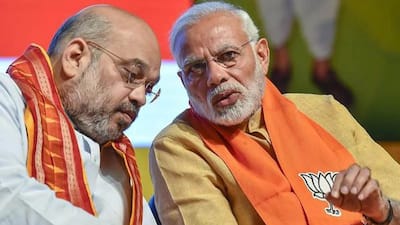
Ultimately, the BJP appears confident that Prime Minister Narendra Modi and Home Minister Amit Shah have weighed the political risks before embarking on this exercise. That confidence may be justified, but constitutional amendments cannot be passed on political calculations alone. The government must secure the numbers, address legitimate concerns over federal representation and explain how delimitation will protect the interests of States that have performed better in population control.
If the Bill succeeds, it could significantly alter the political landscape, while exposing the fragility of the INDIA bloc and its internal contradictions. The Congress could find itself further isolated, particularly with its differences with the Samajwadi Party in Uttar Pradesh adding to its difficulties ahead of the Assembly elections.
But the larger question is not merely who gains or loses politically. Women’s representation and equitable federal representation are both matters of national importance. The NDA is entitled to take a political risk for a cause it believes is in the national interest. The real test will be whether it can convert that risk into a constitutional reform that is inclusive, fair and sustainable, rather than merely a parliamentary victory.


