



Electricity is not merely an advertisement for a government’s achievements, but a true test of its development potential. When industries are forced to halt production, farmers wait for electricity for irrigation, cities face power cuts during summer, and consumers have to buy expensive electricity, it’s natural to question claims of energy self-sufficiency. India’s power sector grapples with this very paradox. While on the one hand, there is celebration of record power generation, renewable energy expansion, and grand plans for the future, on the other, there are challenges like fuel crisis, weak distribution companies, inadequate storage, and demand pressure.
The biggest weakness of the power sector is that our energy planning often seems to focus more on installed capacity figures than actual demand. Growth is measured by the number of megawatts of power plants installed, the number of solar projects launched, and the number of new schemes announced. But the real question for consumers is whether electricity is available when needed. The gap between installed capacity and actual supply poses a serious challenge to energy planning. Having a power plant and having it produce continuously during a crisis are two different things.
While calls to reduce coal dependence have been circulating for years, thermal power remains the backbone of India’s power system. Instead of acknowledging this dependence, the energy transition debate is often limited to the expansion of clean energy. If serious attention is not paid to coal supply, rail transportation, adequate plant reserves, and the maintenance of production units, all plans will remain on paper in times of crisis. Energy policy requires pragmatism, not contradiction. Until alternative sources become sufficient, stable, and economically viable, weakening the traditional generation system would be risky.
Expanding solar energy is certainly a future necessity, but energy security isn’t simply about having electricity available when the sun is shining. Solar production declines as the sun sets, while domestic and commercial demand increases in many sectors. Filling this gap requires battery storage, pumped storage, hydropower, nuclear power, and sufficient regulated generation capacity. The question is: are our plans developing these systems with the same seriousness as presenting solar capacity figures? If storage and grid preparedness lag behind, renewable energy expansion could also create new instability.
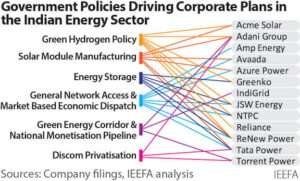
The financial plight of power distribution companies is an aspect of this crisis that can no longer be ignored. Distribution companies, which have been incurring losses for years, have been financially weakened by technical losses, power theft, weak billing systems, and political pressure. The politics of free electricity and subsidies are valid, but if payments are not made on time and transparently, the power system ultimately suffers. Leaving distribution companies in financial crisis in the name of consumer relief is not a visionary policy. Governments must understand that a world-class power system cannot be built with weak discoms.
Transmission systems are also a significant weakness in the power sector. Increasing power generation is insufficient if the network to deliver it to the areas in need is not robust. Sometimes, power availability and demand differ in different regions, but limited transmission capacity prevents its effective use. Investment in modern transmission lines, interstate networks, smart grids, and technical monitoring is no longer an option, but a necessity. A single weak link in the power system can impact the entire system.
Rising electricity demand can no longer be simply ignored. Industrialization, the digital economy, data centers, electric vehicles, urbanization, and increasing heat have transformed the nature of electricity needs. Merely outdated demand projections will not suffice in the coming years. The government, power companies, and regulators must realistically assess future needs. Otherwise, every heat wave, every industrial expansion, and every demand increase will create crisis management situations.
Reforming the energy sector means more than just announcing new projects, but also ensuring accountability. Transparency in power procurement, realistic assessment of distribution companies’ losses, timely project implementation, smart metering, energy efficiency, and demand management should be prioritized. Industries should be encouraged to conserve energy, and domestic consumers should be made aware of efficient appliances and their efficient use. Saving electricity will be possible not just through moral appeals, but through technology, incentives, and effective policy.
India must avoid both extremes—impractical targets in the name of energy transition and clinging to old patterns in the name of power crisis. On the one hand, there’s environmental responsibility; on the other, economic growth and the needs of millions of consumers. A true energy policy is to balance these two. Clean energy should expand, but it should also be accompanied by the development of storage, grids, reliable generation, and economic stability.
The measure of success in the power sector should not be megawatt announcements, but uninterrupted supply, reasonable bills, a robust distribution system, and energy availability during times of crisis. India needs a power system that is not only large in numbers, but also reliable in the lives of its citizens. After all, the light of development is meaningful only when it transcends manifestos and statistics and reaches homes, farms, hospitals, and industries without hindrance. This is the true test of India’s energy policy.


