



As grief and fury consumed his mind, Ashwatthama reflected upon the principles of war as he understood them. He recalled the ancient injunctions that permitted a warrior to strike an enemy when the foe was exhausted, resting, travelling through narrow paths, overtaken by misfortune, or lying asleep. The supreme object, he reasoned, was the destruction of the enemy, and every means that accomplished that end found sanction in certain martial traditions. Convinced by this stern interpretation, he persuaded himself that slaying the sleeping Pandavas would not violate the duty of a Kshatriya but would instead fulfil it.
His thoughts then turned to the conduct of the Pandavas during the great war. Bhishma, the invincible grandsire, had not been defeated in a straightforward contest. Drona, his revered father and preceptor, had laid down his arms only after being deceived. Karna had been struck when fate had abandoned him, and Duryodhana had fallen through means that Ashwatthama regarded as unworthy of righteous warfare. To him, these events justified an equally ruthless response. If such methods had been accepted against the Kaurava heroes, he saw no reason to hesitate in adopting a similar course against their victors.
With this terrible conviction, Ashwatthama awakened his maternal uncle Kripacharya and the valiant Kritavarma. He rebuked them for seeking rest at such a tragic hour. “We were absent,” he lamented, “when Duryodhana, abandoned by fortune, stood alone amidst countless enemies. The sovereign who commanded eleven Akshauhinis never departed from the path of honour even while fighting single-handed. Yet Bhima felled him by unrighteous means. As though that humiliation were insufficient, the crowned king of the Kuru race was struck upon the head with a kick. That insult wounded him more deeply than death itself.”
He continued with profound sorrow. “Warriors of immeasurable strength fought for many days to secure victory for the Kuru king, yet destiny decreed otherwise. When divine will turns against men, what can human effort accomplish? Such has been the fate of Duryodhana. Tell me, if your minds remain unshaken, what course should we now pursue in the face of this overwhelming calamity.”
Kripacharya gazed steadily at Ashwatthama and answered with calm wisdom. “First reveal the thoughts that dwell within your heart. Thereafter I shall speak of what appears righteous to me. Listen well, O sinless one. Every undertaking requires both human endeavour and divine grace. Neither alone can bring success. However diligently a farmer tills his land, abundant rain at the wrong season can destroy the crop. Likewise, fertile fields without timely showers yield little harvest. Thus effort and providence must always walk together.”
The venerable teacher continued, “When righteous endeavour supports human action, divine favour naturally accompanies it. Such deeds bear noble fruit and bring lasting glory. Actions opposed to righteousness may seem successful for a moment, but they inevitably invite disgrace and extinguish honour. You possess keen discernment, Ashwatthama. Do not allow grief to cloud the wisdom that has long distinguished you.”
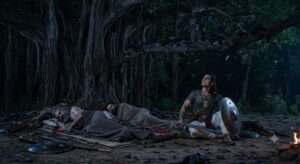
He warned further, “Unrighteous deeds, though they appear to achieve their purpose, leave behind fear, blame, and endless sorrow. If they fail, they bring dangers even greater. Anger, greed, and fear drive men toward ruin despite the counsel of the wise. Those who surrender to such passions lose wealth, reputation, peace of mind, and ultimately themselves.”
Kripacharya then reflected upon the downfall of Duryodhana. “Our king allowed anger and greed to rule his judgment. He rejected the wholesome advice of well-wishers and earned lasting blame by humiliating the noble Pandavas. Misconduct inevitably leads to destruction. His fate stands as a solemn lesson before us.”
After a thoughtful pause, he proposed a different path. “Let us go to King Dhritarashtra. Let us hear the counsel of Queen Gandhari. Vidura also stands beside them, rich in wisdom and steadfast in righteousness. Whatever guidance these elders offer, let us accept with humility. Their command shall become our duty, and by following it we shall remain free from reproach. Rash action seldom serves a worthy cause. Let us deliberate before we act.”
Ashwatthama, however, remained unmoved. Tormented by grief, he looked upon Kripacharya and Kritavarma and spoke with intense determination. “Every man believes his own judgment to be superior. He dismisses the wisdom of others and praises only his own understanding. The opinions cherished in childhood are abandoned in youth, and those of youth are cast aside in old age. In times of distress, a man chooses one course as righteous; when prosperity returns, he follows another. There are moments when a man values an undertaking more than his own life and rejects every opposing voice. This is no unfamiliar truth.”
He then declared the resolve that had consumed his heart. “What I intend shall free us from grief. Listen carefully. When the Creator established the social order, He endowed the Brahmin with self-restraint, the Kshatriya with valour, the Vaishya with enterprise, and the Shudra with faithful service. When these qualities are abandoned, blame inevitably follows. Though born into a revered Brahmin lineage, destiny has shaped me as a warrior. To abandon the path of arms now and embrace the peaceful life of a Brahmin would be a betrayal of my nature.”
His voice trembled with anguish as he remembered his father. “My father, the wielder of celestial weapons, was brought down through deceit. How can I continue to live with honour while his death remains unavenged? Until Dhrishtadyumna and the other enemies are slain, I cannot lift my head without shame.”
Unable to bear the consuming fire of sorrow, Ashwatthama unfolded his dreadful design. “Our enemies sleep in complete confidence, believing all hostility has ended. Their weapons are laid aside, their chariots stand abandoned, and victory has filled them with careless joy. They imagine us scattered and incapable of striking again. This is the hour fate itself has granted.”
His words grew darker with every breath. “I shall descend upon their camp like a tempest. Some shall fall beneath my arrows, others beneath my mace. I shall drench the earth with blood and sever the heads of mighty warriors. Their triumphant slumber has rendered them as helpless as the dead. The battlefield shall become a dreadful feast for spirits and beasts. When I behold Dhrishtadyumna lying lifeless among fallen elephants, horses, and warriors, the flames of my vengeance shall finally be quenched.”
His terrible vow reached its climax. “I shall surround the camp without mercy and destroy every warrior I encounter. Like the wrathful Lord Shiva entering the hosts of the arrogant, I shall reduce the enemy to lifeless silence. Only then shall I prove my strength before the spirit of my father and discharge the sacred debt I owe him.”
Sanjaya, witnessing the fierce determination blazing within Ashwatthama, perceived that an unimaginable calamity was about to unfold. Turning to King Dhritarashtra, he reported with grave foreboding that the son of Drona had resolved upon an act of dreadful vengeance whose consequences would forever darken the closing chapter of the great war.

