



Chhath Mahaparva is a unique festival of Indian culture, folk faith, and nature worship, where a wonderful confluence of devotion, penance, discipline, cleanliness, and social harmony is witnessed. This festival is not merely a religious ritual, but also conveys the message of expressing gratitude to nature and embracing the values of life. Dedicated to Lord Surya and Chhathi Maiya, this grand festival symbolizes the rich tradition and unwavering faith of Indian folk culture.
In the year 2026, Chhath Mahaparva is being celebrated from November 13th to November 16th. This four-day festival begins with Nahay-Khaay. On this day, devotees bathe and pay special attention to the cleanliness of the house and surrounding environment and consume sattvik food. On the second day, the ritual of Kharna is performed. On this day, devotees fast the entire day and after the evening puja, they consume prasad of jaggery kheer and roti. After this, a difficult 36-hour Nirjala fast begins, in which devotees worship Suryadev and Chhathi Maiya with complete devotion and faith.
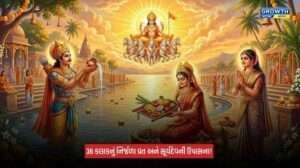
The third day of the Chhath festival holds special significance. On this day, evening offerings are made. Devotees, accompanied by their families, gather at the banks of rivers, ponds, and other water bodies. Fruits, coconuts, sugarcane, thekua, and other traditional offerings are decorated in bamboo baskets and dauras. By offering arghya to the setting sun, wishes are made for the family’s well-being, prosperity, and the long life and good health of their children. The burning lamps on the ghats, the echoing Chhath songs, and the vast crowds of devotees add to the spiritual beauty of this festival. On the fourth and final day, arghya is offered to the rising sun in the morning. This concludes the fast, and the four-day festival concludes.
The most unique feature of Chhath Puja is that it worships both the setting and rising suns. This tradition gives us a profound life message: we should not only honor success and achievements, but also give equal importance to struggles, experiences, and every stage of life. Offering Arghya to the setting sun symbolizes that every individual has their own importance in society. Worshiping the rising sun conveys the message of new energy, new hope, and a positive beginning. In fact, this festival teaches us that humility and gratitude are the true beauty of life.
Chhath Mahaparva is also deeply connected to nature conservation. This festival expresses gratitude to the sun, water, air, earth, and plants. The use of bamboo spoons, earthen lamps, seasonal fruits, and natural materials in worship inspires us to adopt an environmentally friendly lifestyle. The tradition of worshipping on the banks of rivers and ponds underscores the importance of water sources. Today, when the entire world is facing serious challenges like climate change, water pollution, and environmental crisis, the nature-friendly message of Chhath Mahaparva has become even more relevant. This festival reminds us that nature is not just an object of our use, but the foundation of our existence. Therefore, it is our moral duty to protect it.
Chhath Mahaparva is also a unique example of social harmony and brotherhood. On this occasion, discriminations based on caste, class, language, and economic status are left behind. People from all walks of life come together to clean the ghats, decorate the paths, and assist the fasting people. Traditional Chhath folk songs are the soul of this festival. These songs beautifully express a mother’s love for her family, her children’s well-being, and her unwavering devotion to the Sun God. This festival, once particularly associated with Bihar, Jharkhand, and eastern Uttar Pradesh, is now celebrated with great enthusiasm in many states across the country and abroad. Its popularity is steadily growing in many regions, including Haryana, Punjab, Delhi, and Maharashtra. This is a testament to the deep and widespread roots of Indian folk culture.
Amidst the hustle and bustle of modern life, Chhath Mahaparva teaches us the importance of restraint, patience, discipline, and family unity. This festival inspires us to be mindful of our duties, help those in need, and maintain cleanliness around us. However, given the strictness of the fast, it is essential to take health precautions, as a waterless fast is not safe for everyone. Along with devotion, it is equally important to take care of your physical fitness and health.
In modern times, the relevance of Chhath Mahaparva has increased even more. This festival not only connects us with the great traditions of Indian culture but also reminds us of our social and environmental responsibilities. Today, it is necessary to not limit ourselves to religious rituals, but also to prioritize clean ghats, pure water, a pollution-free environment, and social harmony. If we can incorporate the core message of Chhath Mahaparva into our lives, this festival can become more than just a four-day religious event, but a medium for positive change in society.
Ultimately, it can be said that the Chhath festival is an invaluable heritage of Indian folk life and a pride of our cultural identity. It teaches us that respect for nature, dedication to family, responsibility to society, and a positive outlook on life are the foundation of true human values. On the auspicious occasion of Chhath festival 2026, let us all pledge to protect nature, keep water sources clean, promote love and brotherhood in society, and pass on this great cultural tradition to future generations.
Chhath Mahaparva is the name of salutation to the setting sun, salute to the rising sun and gratitude towards nature!
Hail Chhathi Maiya! Hail the Sun God!


