
106 Signatures, 32 Barred Clubs and a Desperate Last-Minute Manoeuvre
Special Correspondent
The Hyderabad Cricket Association (HCA), once among the most respected members of the BCCI, cannot continue to be held hostage by a handful of self-appointed power brokers, club secretaries and vested interests who appear to have mistaken the association for their personal fiefdom. Its continuing administrative degeneration is not merely the consequence of poor management; it reflects a deeply entrenched culture of patronage, questionable club representation and an alarming reluctance to enforce accountability.
As we pointed out in Part 1, the rogue elements operating through certain clubs have become a serious impediment to restoring credibility to Hyderabad cricket. Part 2 raises even more disturbing questions about a letter bearing 106 signatures, seeking a Special General Meeting (SGM) to amend HCA’s rules. A closer examination of the association’s own records throws up discrepancies that cannot simply be brushed aside.
The most disturbing aspect is the timing. The letter, dated June 17, reportedly reached the HCA only on October 17, barely three days before the three-year term of the existing office-bearers ended on October 20, 2026. Coincidence? Perhaps. But when the interests of the signatories, the timing of the demand and the association’s impending electoral process converge so conveniently, transparency becomes imperative.
Three men, one uncomfortable question
Among the signatories are Sardar Daljeet Singh, Vice-President and Acting President, T. Basava Raju, Joint Secretary, and Sunil Kumar Agarwal. They are not ordinary club representatives. They are also part of the very administration expected to consider the demand they have endorsed.
Can those who have signed a demand for changes to the association’s rules, potentially affecting the very administration in which they hold positions, also participate in deciding its fate? Where is the institutional safeguard against a conflict of interest? Who stands to benefit if the existing arrangement continues or the rules are altered before elections?
Their three-year tenure began on October 20, 2023, and ended on October 20, 2026. Why did a letter dated June 17 surface only on October 17? Who kept it pending for four months? Was the delay accidental, or was there a larger calculation behind its timing?
These are legitimate questions. HCA members deserve answers, not evasions.
Same date, second front
The letter is dated 17 June 2026. On the same date, nine clubs filed an appeal in the High Court against the April judgment that gave the Single Member Committee its powers. Eight of the nine appear on the SGM letter.
Is it a coincidence that one group moved on two fronts on the same day: in court against the SMC, and by letter for a Special General Meeting? Who coordinated the two?
The numbers that refuse to add up
A comparison of the 2023 voters’ list with the 2026 list reveals that 21 of the 100 clubs examined have different representatives. Seven clubs appearing in the earlier list cannot be traced in the 2026 list. Nine of the clubs with changed representatives also figure in the SGM letter.
The clubs whose representatives changed
| Club | Representative, 2023 list | Representative, 2026 list | Signatory on the SGM letter (as read) |
| Budding Stars | Syed Maavinuddin | Rehan Bin Masqati | — |
| Consult | Tarun Raj | V Narsimha Rao | Sravan (reading uncertain) |
| Continental | S Rajan Kumar | P V Sailendra | — |
| Deccan Colts | M Sagarika | Vinay Akula | — |
| Deccan Wanderers | Riaz Quraishi | M Srinivas Reddy | M. Srinivas Reddy |
| Future Stars | Vishal Gulechha | V Pradeep Kumar | J. Ravi Shanker |
| Gaganmahal Blues | Ashok Agarwal | Laksh Agarwal | Ashok Agarwal |
| Lucky XI | R Rajesh Yadav | Bankat Lal Bhati | — |
| Manchester | Nathmal Gheloi | Balram Bhati | — |
| Marredpally Sporting | S Venkateshwaran | Vijay Bhasker Reddy | — |
| National | D Christo Phyis | Rajiv Moses | Rajiv Moses |
| Ours | Dharam Singh | K V Srinivas | — |
| Oxford Blues | P Shiv Shanker | M Jeevan Reddy | — |
| Rushiraj | P. Sridhar | P Maneesh | — |
| Sportive | I Uma Devi | Mohd Iqbal | Iqbal |
| Starlets | C Vikas | P Shashank Nag | — |
| Telangana | G. Srinivasa Rao | G Sudhakar Rao | G. Srinivasa Rao |
| Universal | M. Srinivas Reddy | A Prithiv Reddy | — |
| Victory | Vijay Patel | Arvind Kumar Yadav | — |
| Yadav Dairy | Revathi Yadav | Abhinandan Yadav | (scribbled, unclear) |
| Zinda Tilismath | Khaleem Khan | Mohd Imaduddin Farooqi | Imaduddin Farooqui |
Shaded rows are clubs on the SGM letter. “—” means the club is not on the letter. Names are read from the lists published by HCA; any club may write to the SMC to correct an entry.
More troublingly, the letter reportedly carries the earlier representatives’ names in certain cases, including Telangana Cricket Club and Gaganmahal Blues, rather than the representatives appearing in the 2026 list.
Who authorised these signatures? Were the respective club committees consulted? Are there resolutions, minutes of meetings or authority letters establishing that the signatories were empowered to represent their clubs?
A club’s membership and voting rights cannot become the private property of whoever happens to possess a letterhead or wield influence. Nor can representation be treated as a transferable convenience.
There are also questions concerning names appearing against different clubs. The reported overlap involving Deccan Wanderers and Sporting XI, and the similarity between the names associated with Universal CC and Deccan Wanderers, warrant verification. Are these the same individuals? If so, under what authority are they representing different clubs? If not, why were the identities and credentials not independently verified before accepting the signatures?
The SMC must establish the facts rather than allow ambiguity to become another instrument of manipulation.
Thirty-two barred clubs. Who gave them a voice?
Perhaps the most serious issue concerns the 32 clubs on the SGM letter that were barred under the 2023 order. That order dealt with clubs whose office-bearers had overstayed and stipulated that they could participate in cricket only after changing their committees. It also warned that severe action, including expulsion of membership, could follow.
Yet 32 such clubs reportedly figure among those seeking an SGM.
On what basis were they treated as eligible members for this purpose? Were their committee changes verified? Were their memberships restored? Who certified their authority to sign?
If clubs were barred for failing to comply with prescribed norms, how can their signatures now be invoked to influence the association’s constitutional framework? This is not a minor procedural lapse. It goes to the very foundation of membership, representation and legitimacy.
The real rot goes beyond the SGM
The SGM controversy must not divert attention from the much larger disease afflicting Hyderabad cricket. The association needs a complete overhaul, not another round of adjustments designed to accommodate familiar faces.
The High Court-appointed Supervisory Committee (SMC), headed by Justice P. Naveen Rao, must use this opportunity to undertake the structural reforms that have remained unfinished. The earlier Supreme Court-appointed committee headed by Justice L. Nageswara Rao had already identified the need to weed out questionable club structures and restore institutional accountability. That exercise cannot be allowed to remain a collection of recommendations gathering dust.
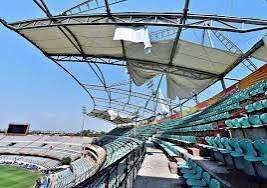
Every club must undergo rigorous verification. Its constitution, membership register, elected committee, AGM proceedings, audited accounts and cricketing activity must be examined. Clubs existing only on paper, those without credible elections or functioning membership structures, and those operating as extensions of private academies or individual power brokers must face scrutiny.
Institutional clubs that have mysteriously disappeared from the association’s functioning must also be traced. If they have ceased to exist, who is accountable? If they continue to exist, why are they absent from the cricketing landscape?
The same uncompromising scrutiny must extend to selection committees. Hyderabad’s cricketing fortunes cannot be sacrificed at the altar of personal loyalty, private academy interests or alleged money-for-merit arrangements. Selection positions are not patronage appointments. Men and women who earn their places through performance must not be pushed aside by pliable nominees of influential individuals.
Where parents or players have submitted complaints alleging impropriety, the investigating agencies must pursue them promptly and independently. If financial inducements are alleged, examine the evidence, financial transactions and relevant assets through lawful investigative procedures. Establish whether there is any disproportionate change in financial circumstances before and after appointments. Do not allow complaints to languish indefinitely, but neither should allegations be treated as convictions without evidence.
And let nobody imagine that past glory offers permanent immunity. Having represented Hyderabad, played Ranji Trophy cricket, held an administrative post or contributed to the association in earlier years does not confer an entitlement to control its present or future. Former players deserve respect for their achievements, but the association’s interests must come before individual reputations. The same yardstick must apply to every office-bearer, secretary, selector, former administrator and influential club representative.
Seven warning signs cannot be ignored
The proposed SGM also raises fundamental procedural questions. Where is the draft of the proposed amendments, given the requirement of 21 days’ notice and circulation? Why were members allegedly not adequately informed? Why was no amendment proposal placed within the stipulated period under Rule 8(3)? What is the purpose of pushing the issue when Rule 45 reportedly requires a three-fourths majority and the Supreme Court’s leave?
The High Court has treated the existing council as an interim arrangement pending membership verification and elections. The SMC’s approval and the applicable judicial directions cannot be bypassed. The Safilguda judgment and the requirement for SMC oversight of council decisions must also be respected. A meeting cannot acquire legitimacy merely because 106 signatures appear on a letter.
The SMC must establish whether the proposal is legally maintainable before allowing it to proceed.
No more band-aid solutions
Justice Naveen Rao has an opportunity, and a responsibility, to ensure that Hyderabad cricket is rescued from the cycle of controversies, court interventions and administrative paralysis. The SMC should set firm timelines for club verification, completion of pending investigations and the electoral process. Where necessary, it should seek the assistance of investigative agencies to expedite probes into alleged financial and administrative irregularities.
The message must be unmistakable: no club is too powerful to be scrutinised, no secretary too influential to be questioned, no former player too celebrated to be held accountable and no administrator too well-connected to face the consequences of proven misconduct.
HCA cannot be rebuilt by retaining the very structures and individuals responsible for its continuing decline. It needs fresh, credible and genuinely cricket-oriented leadership, transparent club membership, accountable administration and selection systems insulated from vested interests.
The objective must not be to replace one set of power brokers with another. It must be to dismantle the power-broker culture itself.
Hyderabad cricket belongs to its players, clubs and aspiring cricketers across Telangana — not to a privileged circle of secretaries who believe that controlling a club means controlling the association. The time for cosmetic reforms, convenient compromises and selective accountability is over.
Either HCA undertakes a total overhaul now, or it risks losing whatever remains of its institutional credibility.