
Aggrieved parents and players demand transparency as questions mount over Hyderabad women’s cricket selections
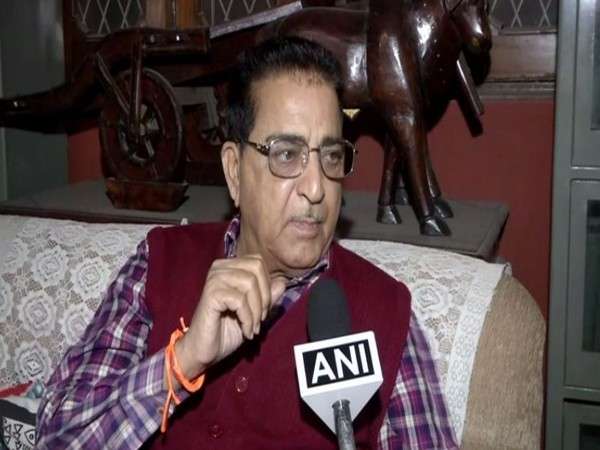
An Aggrieved Parent
What difference is court supervision making to women’s cricket in Hyderabad? Under the elected Apex Council, complaints about women’s selections were routine, and parents could at least blame a divided council that obstructed the court-appointed supervisor. The SMC was meant to change that. A year on, the faces making decisions have changed, but the complaints have not. If anything, they have multiplied: a questioned U-23 squad, a disputed senior captaincy, a senior coach removed midway and now back without explanation, and still no women’s league. With the Apex Council gone, there is no one else to point to.
The latest controversy surrounding the Hyderabad Cricket Association’s (HCA) U-23 Women’s T20 selections has once again brought its transparency, accountability and selection credibility under scrutiny. The association has reportedly announced a state camp involving two teams and around 120 players following the selection controversy. While such a camp could offer emerging cricketers a valuable opportunity to prove their talent, the fundamental question remains: Will it genuinely determine merit-based selection, or will it turn out to be another exercise that raises hopes without changing the eventual outcome?
For aspiring women cricketers and their families, the concern is not the camp itself, but whether performances will genuinely determine selection—or whether familiar names will continue to find places regardless of results and the availability of more deserving alternatives.
A camp cannot substitute for credibility
A state camp involving 120 players can serve its purpose only if it follows transparent selection criteria, documented performance assessments and independent scrutiny. Without these safeguards, even an elaborate exercise risks becoming a public-relations initiative rather than a credible pathway to state representation.
Parents invest years of time, money and emotional energy in their daughters’ cricketing ambitions. They deserve more than assurances and temporary opportunities. Every player must understand the selection criteria, know how her performance is evaluated and trust that the final squad reflects cricketing merit.
The crucial question is straightforward: Will HCA publish its criteria and demonstrate that the final selections are performance-driven?
Repeated questions over U-19, U-23 and senior teams
The controversy extends beyond one age-group tournament. Questions have repeatedly arisen about Hyderabad’s U-19, U-23 and senior women’s teams, their performances and the association’s long-term strategy for competing successfully at the BCCI level.
How frequently have Hyderabad’s women’s teams won major BCCI domestic competitions? What targets have been established for each age group? Have disappointing results triggered independent reviews, changes in strategy or measurable improvements?
These are legitimate questions that demand data-backed answers.
When teams repeatedly fall short of expectations, administrators cannot simply continue with existing structures without evaluating their effectiveness. Selection committees, coaching arrangements, preparation methods and accountability mechanisms must all be examined. An association must be judged not merely by the squads it announces, but by the opportunities it provides and the results it delivers.
Who scrutinises the selectors?
The qualifications, experience and accountability of those entrusted with selecting Hyderabad’s state teams also require clarification.
Parents and cricket stakeholders are entitled to know whether selectors possess the playing experience, coaching qualifications and technical understanding required under applicable BCCI regulations. The BCCI should clarify the eligibility requirements governing state selection committees, including any applicable Level 2 coaching qualifications or India-level playing experience criteria.
HCA, meanwhile, must disclose the credentials of its appointed selectors and demonstrate compliance with the rules governing their appointments. These requirements should be verified against the applicable regulations rather than left to speculation.
This is not about personal animosity towards individuals. It is about whether the selection machinery commands confidence among players, parents and the cricketing community.
If the process is fair, scrutiny will strengthen it. If it is not, scrutiny becomes essential to reform.
BCCI must act if confidence erodes
Growing dissatisfaction calls for more than internal assurances. The BCCI should consider an independent review of the disputed selection process and the broader governance of women’s cricket in Hyderabad.
Possible measures include independent observers at trials and selection matches; publication of selection criteria and player-performance records; written explanations for significant selection decisions; disclosure of selectors’ credentials and verification of their eligibility; a formal grievance mechanism for players and parents to submit evidence of alleged irregularities; and periodic performance reviews of U-19, U-23 and senior teams against measurable development targets.
Where credible evidence warrants it, an independent audit of selection procedures should also be considered.
Neutral oversight would protect deserving players, restore confidence and help ensure that allegations of favouritism do not undermine genuine opportunities.
Are young cricketers getting a fair chance?
For a young woman pursuing cricket seriously, state representation can be a crucial stepping stone to higher-level opportunities. Years of training, financial sacrifice and personal commitment should not be undermined by a perception that performances carry insufficient weight in selection decisions.
No player should be guaranteed a place through connections. Equally, no player should be denied an opportunity because she lacks them.
Allegations of favouritism, undue influence or financial impropriety, wherever raised, must be investigated impartially on the basis of evidence. Any substantiated wrongdoing should invite appropriate disciplinary and administrative action.
But every allegation cannot automatically be treated as proven, just as every complaint cannot be dismissed as frustration over non-selection. A credible association must provide a fair process through which facts can be established and responsibility fixed where warranted.
Where is the vision for women’s cricket?
Beyond the immediate controversy lies a larger question: where is HCA’s publicly communicated, measurable roadmap for sustained success in women’s cricket?
What objectives have been set for the next three to five years? What benchmarks govern age-group progression, coaching quality, fitness, player development and BCCI tournament performance? How are selectors and administrators held accountable when those targets are missed?
A strong cricket association builds a talent pipeline, invests in coaching, rewards performance and establishes a transparent route from grassroots cricket to state representation. Parents and players cannot be expected to retain confidence indefinitely without demonstrable progress.
HCA must answer
The proposed camp offers HCA an opportunity to restore confidence, not merely make another announcement followed by unanswered questions.
Will all 120 players receive a fair opportunity? Will performances be documented? Will selection criteria be disclosed? Will the final squad reflect merit? Will HCA explain its decisions to the cricketing community?
These are not unreasonable demands. They are minimum standards for an organisation entrusted with nurturing and representing Hyderabad’s cricketing talent.
The BCCI and its senior administrators must ensure that credible complaints receive impartial examination and that women’s cricket in Hyderabad gets the scrutiny and professional attention it deserves.
Hyderabad’s women cricketers do not need token opportunities or empty assurances. They need a fair system, accountable selectors, professional administration and a genuine pathway to success.
Until HCA demonstrates that its selections are transparent and performance-driven, doubts over its credibility will persist—and those who suffer most will be the very players the association is supposed to serve.
The time for explanations has arrived. Hyderabad’s women cricketers deserve answers, accountability and a level playing field.