Lakshmanrao Upadhyayula
In the sacred tradition of the Ṛgveda, the enlightened sage Vishwamitra raises a profound prayer to the Viśvadevatās through the majestic cadence of the Triṣṭubh Chandas, where every syllable carries both spiritual power and cosmic wisdom. His invocation is not merely a poetic expression but a sacred dialogue between humanity and the universal forces that uphold creation. With humility, he calls upon Indra to receive his celestial prayer and to understand the loneliness of the seeker, who stands vulnerable like a cow without a guardian. In Vedic symbolism, the cow represents purity, nourishment, knowledge, and the life-sustaining abundance of nature. Thus, the prayer itself assumes the form of the divine cow, whose blessings yield immediate spiritual and material fruits to those who approach with sincerity and unwavering faith.
The sage invokes Indra and Agni to delight in this sacred offering, while also praising Indra, Pūṣan, the generous bestower of prosperity, whose auspicious hands fulfil righteous desires. Along with Mitra and Varuṇa, the divine guardians of truth, harmony, and cosmic law, these deities sustain the moral and natural order of the universe. The Vedic vision poetically describes them as dwelling in the vast expanse of heaven, gathering the waters within the cloud-cow before releasing life-giving rain upon the earth. This imagery beautifully reflects both spiritual symbolism and scientific observation, portraying the eternal cycle of evaporation, cloud formation, and rainfall as expressions of divine intelligence operating through the immutable laws of nature.
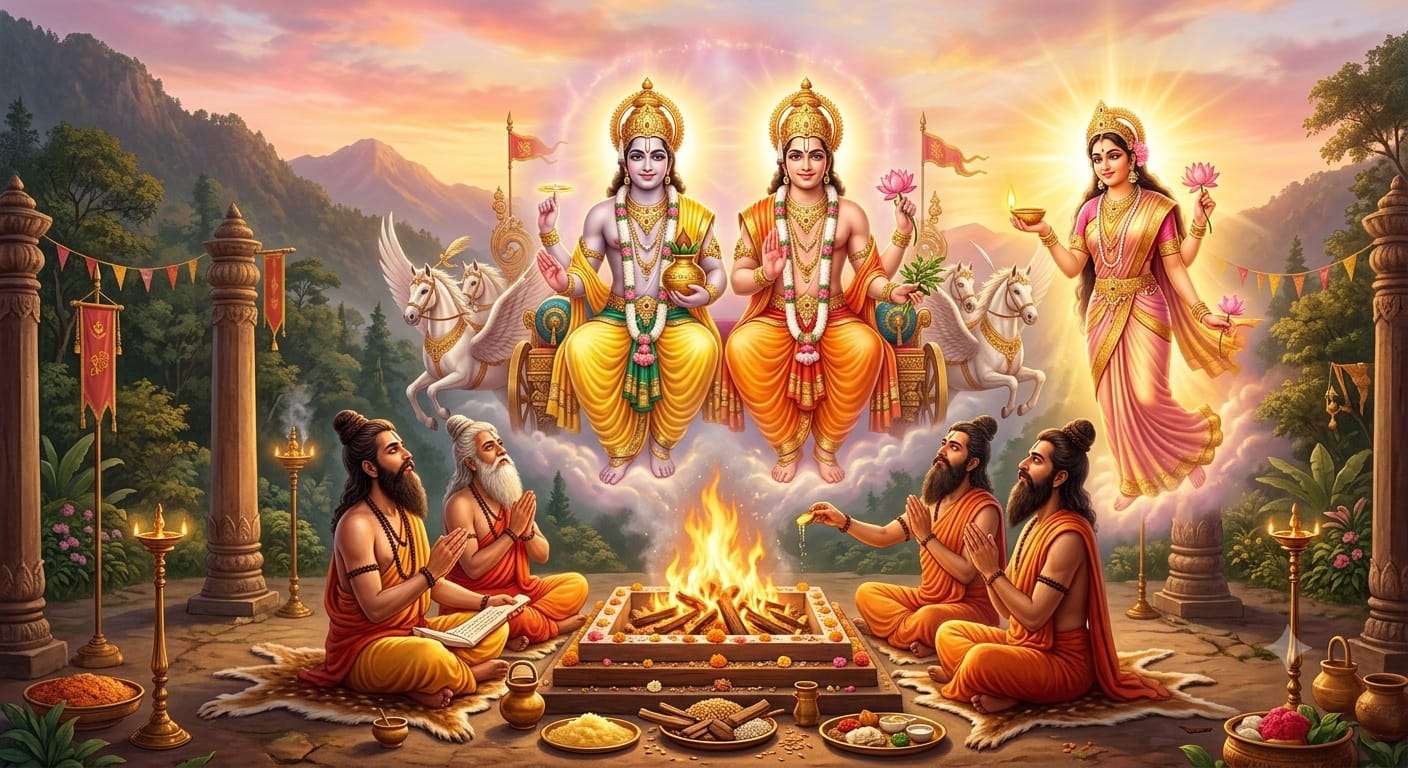
The Viśvadevatās are invited to descend upon the sanctified altar of sacrifice and bless humanity with peace, prosperity, and comfort. Their presence transforms the yajña into a meeting place between heaven and earth, where sacred sound harmonizes the visible and invisible worlds. The rains released through Indra’s mighty power awaken the hidden vitality within the herbs, plants, and forests. These humble herbs silently recognize the divine potency that renews creation and enables continual regeneration. The Vedic sages perceived that rainfall nourishes every form of vegetation, making agriculture, health, and human civilization possible through an unbroken chain of natural interdependence.
The fertile herbs, longing to bear fruit, spread joy throughout the world as they flourish into abundant harvests of rice, barley, wild grains, and countless other crops. Vrihi, Yava, and Nīvāra become symbols of divine generosity, sustaining every household and every generation. Like beloved children born from Mother Earth, these harvests remind humanity that prosperity arises through harmony between human effort and the blessings of nature. This vision also reflects an early scientific temperament, recognizing the intimate relationship between rainfall, fertile soil, biodiversity, seasonal cycles, and the continuity of life.
Within the sacred yajña, worshippers reverently arrange stones and sacred wood upon the altar, not as ordinary objects but as consecrated instruments that participate in the cosmic sacrifice. Their hymns rise toward Earth and Heaven, acknowledging that all elements of creation cooperate in sustaining existence. The altar itself becomes a symbolic representation of the universe, where fire, earth, water, air, and space unite through sacred ritual. Every offering affirms the Vedic understanding that human beings are not masters of nature but grateful participants within its divine order.
Agni shines forth as the radiant embodiment of divine light, wisdom, and spiritual transformation. His brilliance surpasses every earthly illumination and inspires both reverence and devotion. Rising upward with luminous flames, Agni carries the prayers of humanity to the celestial realms while simultaneously bringing the blessings of the gods back to the worshippers. His flames are poetically described as graceful celestial maidens, gentle in nature yet resplendent with brilliance, wisdom, and irresistible spiritual energy. They spread far and wide, transcending every boundary, becoming the divine messengers who unite heaven and earth through the power of sacred fire.
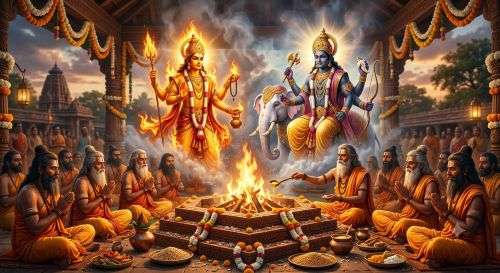
As the visible manifestation of the divine Goddess of Flame, Agni becomes the eternal protector of the sacrifice. He graciously invites all the gods to partake of the sanctified Soma, symbolizing divine bliss, immortality, and the harmonious exchange between the celestial and earthly realms. Through this sacred participation, the gods bestow timely rains, ensuring the flourishing of life and the continuation of righteousness. Thus, the yajña becomes a profound ecological and spiritual covenant, reminding humanity that gratitude, discipline, and reverence sustain both the natural world and the moral order.
The hymn concludes with an earnest appeal to Agni, the ever-luminous presence dwelling in countless forms throughout creation. The worshippers pray that his compassionate grace may never depart from them, but continually bestow the fulfilment of righteous desires, inner strength, and enduring prosperity. Just as herbs flourish beneath nourishing rains, may every individual, family, and community grow in wisdom, virtue, and abundance under his divine protection. The ever-renewing Agni, eternally youthful and life-giving, is invoked to grant universal growth, kindness, and auspicious well-being, so that every generation may flourish in harmony with the eternal laws of the cosmos, where spiritual realization and scientific understanding together reveal the magnificent unity of creation.