Questions Over Women’s Selections
Special Correspondent
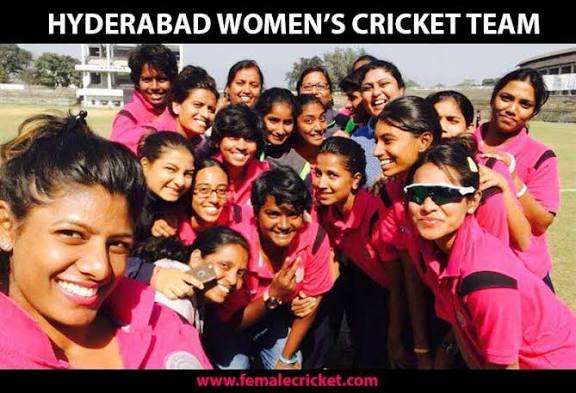
Is performance really the only passport to Hyderabad women’s cricket teams?
That is the uncomfortable question increasingly being asked within sections of the Hyderabad cricket fraternity following concerns over the manner in which players are being retained, promoted and repeatedly considered for selection despite what stakeholders describe as prolonged periods of underwhelming statistical returns.
The issue is not about denying any young cricketer an opportunity. Nor is it about targeting individual players. It is about a far more fundamental principle: when a state team is selected, can every selection be explained objectively through performance, fitness, form and cricketing merit?
If the answer is yes, the Hyderabad Cricket Association should have little difficulty placing the relevant records in the public domain and putting the questions to rest.
If not, the questions will only become louder.
The concerns assume greater significance because the performance trail is not hidden. BCCI competition records provide match centres and statistical information across its domestic tournaments. A player’s matches, runs, wickets, averages, strike rates and opportunities can therefore be examined over a meaningful period rather than judged on one innings, one match or one tournament.
And that is precisely where the controversy begins.
HCA does not even need to look far. It publishes batting and bowling figures from its own selection matches on its website. The data to test every selection already sits in the association’s own records.
Performance or influence?
Stakeholders have questioned whether selection decisions in Hyderabad women’s cricket are being driven exclusively by cricketing performance or whether influence outside the formal selection structure is creeping into the process.
There are allegations of a network involving influential intermediaries, individuals close to the system and a section of parents attempting to influence selection-related decisions.
These are serious allegations and, importantly, they remain allegations requiring independent verification. No individual should be declared guilty merely because a claim is circulating within the cricketing community.
But neither should serious allegations be dismissed simply because they are uncomfortable.
The appropriate response is simple: open the records, explain the selections and investigate any specific complaint supported by evidence.
The rulebook itself leaves no room for outsiders. Under Rule 26 of HCA’s Rules and Regulations, women’s teams across all age groups are selected by a Women’s Selection Committee of five former India internationals who retired at least five years earlier. The same committee, and only that committee, appoints the captain. Where the selectors cannot agree on players, the captain’s wishes prevail. No one else has a place in that room. So the first answer HCA owes is simple: who attended the selection meetings, and who decided?
Among the players whose continued selection has reportedly prompted questions from stakeholders are Niteesha Kunchalam, Sandhya Gora, Srujana and Kranthi Reddy.
There is no suggestion here that any of these players has committed wrongdoing. The question is different and much more basic: what does the performance record say, and what objective criteria justify repeated selection?
That distinction matters.
A player may have attributes that do not immediately appear in a scorecard. A selector may have legitimate reasons for backing a player whose recent statistics are modest—technical improvement, fielding ability, fitness, role requirements, potential or performances in trials and practice games, among others.
But if such considerations are being relied upon, should they not be properly documented?
Three seasons cannot disappear
The most uncomfortable questions arise when selection patterns are examined over multiple seasons rather than isolated matches.
Stakeholders contend that some players have received repeated opportunities despite what they describe as inadequate contributions across formats, while other players who have produced stronger performances in league and age-group cricket have allegedly found it difficult to progress into the state set-up.

That is a claim capable of being tested.
The relevant question is not whether a particular player scored a fifty last month or took three wickets in one match. It is whether the player’s overall three-season record compares favourably with those competing for the same position.
How many matches were played?
How many runs were scored?
What was the batting average?
What was the strike rate?
How many wickets were taken?
What was the bowling average and economy rate?
How frequently was the player selected?
How frequently did the player actually get an opportunity to bat or bowl?
How did the player perform against stronger opposition?
And, perhaps most importantly, how did those numbers compare with players who were overlooked?
These are not hostile questions. They are basic questions of sporting accountability.
The BCCI’s domestic structure provides competition-specific match and tournament records, making it possible to examine performances rather than rely on whispers, perceptions or selective statistics.
The real test is consistency
Selection committees inevitably make difficult choices. No selection process can satisfy every player, parent or coach.
But a credible selection system must demonstrate consistency.
If Player A is dropped after a poor run while Player B continues to receive opportunities despite a comparable or weaker record, selectors should be able to explain the distinction.
If a youngster performs strongly at the league or age-group level but remains outside the state set-up, while another player with substantially weaker numbers continues to be selected, there should be a documented cricketing explanation.
Otherwise, the inevitable perception is that the rules are not the same for everyone.
And perception itself can damage a sporting ecosystem.
Young players and their parents invest years of effort, money and emotional energy in the hope of representing their state. They accept rejection when they believe the process is fair. What they find difficult to accept is the suspicion that performance may not be enough.
That is why transparency is not an administrative luxury. It is fundamental to the credibility of the selection system.
The money allegation
Far more disturbing are allegations circulating about money allegedly being sought from parents in connection with selection opportunities.
This is where extreme caution is essential.
A claim that money changed hands cannot be published as an established fact without evidence. If there are documentary records, payment trails, messages, audio/video material or witnesses supporting such allegations, they should be placed before the appropriate authorities and independently investigated.
Nor is this the first time such complaints have surfaced. The 2023 report of the Supreme Court-appointed Single Member Committee recorded “serious complaints of bribes being taken for selecting cricketers” and of “large amounts of money paid by parents to get their children selected”, and said: “This needs a thorough investigation.” Three years on, has it been done?
But if such complaints have actually been made, the answer cannot simply be silence.
The questions are obvious:
Who allegedly demanded the money?
Who allegedly collected it?
Was anybody acting on behalf of a selector, coach or intermediary?
Were parents told that payment would improve a player’s prospects?
Were any transactions made through bank transfers, digital payments or cash?
Did any player subsequently receive preferential treatment?
And most importantly:
Has the association ever conducted an independent inquiry into such complaints?
These questions do not establish guilt. They establish the need for verification.
Conflict of interest cannot be ignored
There is another area that deserves scrutiny: conflicts of interest.
Selection becomes particularly vulnerable when selectors, coaches, academies, trainers, intermediaries and parents have overlapping relationships.
That does not automatically mean wrongdoing. Cricket is a relatively close-knit ecosystem, and some overlap is unavoidable.
But a robust system requires safeguards.
HCA’s own rules already provide them. Rule 38 states in terms: “A runs a cricket academy. He is appointed as a selector. A is hit by Conflict of Interest.” And: “A is a selector. His son is in the zone of consideration for selection. A is hit by Conflict of Interest.” The same rule requires every person taking office under HCA to disclose potential conflicts in writing within 15 days, with the disclosures uploaded on HCA’s website. Have the women’s selectors filed theirs?
Are selectors required to disclose conflicts of interest?
Can a selector participate in a decision involving a player from an academy with which he or she has a professional or personal association?
Are selection meetings minuted?
Are reasons for contentious selections recorded?
Are performance data reviewed systematically before teams are finalised?
Is there a mechanism for an aggrieved player or parent to lodge a complaint without fear of retaliation?
And who independently examines that complaint?
These are the safeguards that distinguish a transparent sporting institution from a system dependent on personalities and informal influence.
The bigger casualty is Hyderabad cricket
The danger is not merely that one player may get selected or another may be overlooked.
The bigger danger is that talented youngsters may eventually stop believing in the pathway.
Once players begin to believe that performance is secondary to connections, influence or access, the damage reaches far beyond one selection committee. It affects academies, coaches, parents and, ultimately, the quality of players entering the Hyderabad system.
The irony is that the solution is remarkably simple.
Let the numbers speak.
Put the selection criteria on record.
Make the performance parameters clear.
Explain exceptional selections where necessary.
Declare conflicts of interest.
Investigate specific allegations of financial inducements through an independent mechanism.
And provide a credible grievance-redressal process for players and parents.
There is nothing revolutionary about these demands. They are basic principles of accountability.
No witch-hunt—just answers
Hyderabad women’s cricket does not need a witch-hunt. It needs credibility.
Nor should any player be humiliated because her recent statistics are modest. Selection is not determined by one scorecard, and young cricketers deserve the opportunity to develop.
But the opposite principle is equally important: no player should be beyond scrutiny simply because she has been repeatedly selected.
The selectors, too, deserve fairness. If they have legitimate cricketing reasons for their decisions, they should be allowed to state them.
That is ultimately what this controversy should be about.
Not personalities.
Not camps.
Not parents versus selectors.
Not allegations versus counter-allegations.
Performance versus process.
The records are available. The BCCI’s domestic competition framework provides the statistical trail. The questions can therefore be answered with facts rather than speculation.
If the selections are genuinely merit-based, publish the numbers and let them settle the argument.
If there are legitimate reasons beyond the numbers, explain them.
And if there is credible evidence of outside influence, conflict of interest or money being sought for selection, investigate it without fear or favour.
Because in women’s cricket, as in every other sport, the greatest injustice is not merely losing a place in a team.
It is losing faith that the place was ever decided on the field.