



Napoleon Bonaparte’s prophetic cliché “Let China sleep, for when she wakes, she will shake the world”, made in 1814, has at last arrived before mankind. Xi Jinping himself used a version of the quote in a March 2014 speech in France (200 years later): “The lion that is China has awoken, but it is a peaceful, amiable, and civilized lion.”
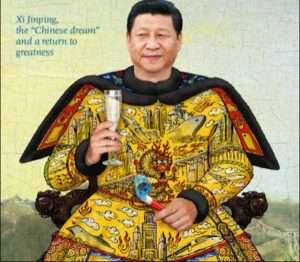
In 2014, on assumption of CCP leadership, Xi Jinping original strategic grandstanding was to attain “Middle Kingdom” status. What does “Rejuvenation of the Middle Kingdom” imply? It refers to the cultural renaissance and political reunification spanning the 11th, 12th, and early 13th Dynasties.
Why the latest subtle shift from “Middle Kingdom” to “China”? Is Xi Jinping challenging the US sole superpower status that existed since the termination of the Cold War in 1991? Obviously, Xi Jinping wants “new type of great power relations,” in which the USA recognizes China’s core interests and respects it as an equal. Xi Jinping has personally offered three principles for a new Sino-American relationship, “no conflict or confrontation, mutual respect, and cooperation for mutual benefits”.
Historical Perspective
To appreciate today’s Chinese relations with other nations one must pragmatically review China’s four millennia history evolving from ancient agricultural settlements along the Yellow and Yangtze rivers into one of the world’s oldest and most influential continuous civilizations. For thousands of years, China’s political and cultural landscape was dictated by the dynastic cycle, which was underpinned by the philosophical concept of the Mandate of Heaven (Vassal states bowing their heads to the emperor).
The Xia Dynasty is traditionally regarded as the first Chinese dynasty, founded by Yu the Great ((c. 2100). It was succeeded by the Shang Dynasty that ruled till 1046 BC. The Zhou Dynasty (c. 1046–256 BC) introduced the Mandate of Heaven. The bedrocks of Confucianism, Taoism, and Legalism were laid during the latter half of this era. Followed the Qin & Han Dynasties (221 BC–220 AD) dynasties. In 221 BC, King Ying Zheng crushed rival factions to establish the Qin Dynasty. He unified China, standardized language and measurements, initiated the building of the Great Wall, and buried with the famous Terracotta Army. The subsequent Han Dynasty institutionalized Confucianism, invented paper-making, and inaugurated the Silk Road trade routes. Buddhism first trickled into China during the late Han Dynasty (circa 1st century CE) via trade routes across the Silk Road. The arrival and integration of Buddhism in China represents one of the most transformative cultural fusions in world history.
Following a period of fragmentation, the Sui Dynasty (581) reunited China and constructed the Grand Canal. The Tang Dynasty ushered in a cosmopolitan golden age of poetry, culture, and territorial expansion till 1279 AD. The Song Dynasty made major breakthroughs in woodblock printing, gunpowder, maritime navigation, and paper money. In the 13th century, Kublai Khan’s Mongol Empire conquered China, creating the Yuan Dynasty (1271). Native Han rule returned with the Ming Dynasty, celebrated for its naval expeditions and grand restorations of the Great Wall. In 1644, ethnic Manchus founded the final imperial dynasty, the Qing Dynasty.
First China-Russia Border Clash
Before about 1640, the first clash between China and Russia took place in Siberia. The two countries had little contact lying at opposite ends of Eurasia, which was populated by independent nomads. The Tsardom of Russia was expanding rapidly eastward across Siberia. Russian Pioneers and Siberian Cossacks spilled over the Stanovoy Mountains to the Amur River basin and Transbaikalia in the 1640s. During the period, the Qing Dynasty, which was consolidating power in Manchuria, clashed with the Russian Forces. From 1652 to 1689, the Qing dynasty’s armies drove the Russian settlers back over the Stanovoy Mountains, which remained the Russo-Chinese frontier. Two Treaties shaped the course of Sino-Russian relations: the Treaty of Nerchinsk (1689) – Russians gave up the Amur valley but kept the land between Lake Baikal and the Argun River; and the Treaty of Kyakhta (1727) – Defined the northern border, and the Chinese gained full control of Outer Mongolia and annex Xinjiang by about 1755.
Century of Humiliation and Sick Man of Asia
By the 19th century, isolationism and European imperial incursions plunged China into a chaotic period: “Sick Man” and “Century of Humiliation”. The “Sick Man” era was defined by a combination of catastrophic foreign invasions and devastating internal rebellions that permanently crippled the empire: the Opium Wars (1839–1860) forcing China to sign the Unequal Treaties, cede Hong Kong, and open its ports to foreign powers; the Taiping Rebellion (1850–1864) an estimated 20 million lives, making it the bloodiest civil war in human history; the Boxer Rebellion (Forbidden City was plundered, and the Qing were forced to pay a massive indemnity that bankrupted the state). China lost much of its territory – Nepal and Burma to Great Britain; Indochina to France; Taiwan, Korea and Sakhalin to Japan; and Mongolia, Auria and Ussuri to Russia. The Qing dynasty was replaced by the Republic of China in 1912. In the 20th century, Japan took over the Shandong Peninsula and Manchuria.
Collapse of Imperial Rule – Republic of China (ROC) in World War 1
The Xinhai Revolution of 1911 collapsed the imperial apparatus, establishing the ROC. During World War I, China (then under the ROC) formally joined the Allied Powers. After maintaining a stance of strict neutrality from the outbreak of the war in 1914, China officially entered the conflict on August 14, 1917, by declaring war on the Central Powers (Germany and Austria-Hungary). Though technically an ally in the fight against Germany, Japan was China’s most dangerous regional rival. Japan had already seized Germany’s colonial territories in China’s Shandong province in 1914 and sought to subjugate China diplomatically through the “Twenty-One Demands”. At the Paris Peace Conference in 1919, Western allies betrayed China by secretly agreeing to award Germany’s Shandong concessions directly to Japan. This massive insult sparked the historical May Fourth Movement across China, leading the Chinese delegation to refuse to sign the Treaty of Versailles.
ROC in World War II
Next, for China, World War II did not begin in 1939 with the invasion of Poland. It began years earlier with a massive, brutal invasion by the Empire of Japan. On July 7, 1937, a firefight at the Marco Polo Bridge near Beijing initiated full-scale war. In August, the Battle of Shanghai commenced. Following the fall of Shanghai, Japanese forces captured the Nationalist capital of Nanjing. The Chinese capital was relocated inland to Chongqing. For years, Japan launched relentless terror-bombing campaigns against the city, making Chongqing one of the most heavily bombed locations in WWII history. Following Japan’s attack on Pearl Harbor, China officially aligned as one of the “Big Four” Allied powers.
On 8 August 1945, the Soviet Union launched the invasion of Manchuria to drive out the last remaining Japanese military presence. Soviet forces won a decisive victory while the Kwantung Army suffered massive casualties, with 700,000 having surrendered.
On October 1, 1949, the PRC was proclaimed by Mao Zedong, and by May 1950, the civil war was brought to an end by the Battle of Guningtou, which saw the KMT expelled from Mainland China but remaining in control of Taiwan. Followed the failed invasion of Taiwan in 1950, the Korean War (1950–1953), and the Vietnam War (1955 – 30 April 1975). Although Moscow supported Beijing’s position that Taiwan entirely belonged to China, it demanded to be forewarned of any invasion or serious threat that would bring American intervention. Beijing refused, and the Chinese bombardment of the island of Quemoy in August 1958 escalated the tensions. Also, Moscow clearly favored India, and Beijing felt betrayed.
ROC and US Support: UN Security Council Seat till 25 October 1975
The U.S. refused to recognize the Communist government, instead backing the exiled ROC government in Taiwan. When the United Nations was founded in 1945, the ROC was designated as one of the “Big Five” victorious Allied powers and granted a permanent seat on the UN Security Council, complete with veto power. For over two decades, the ROC occupied the “China seat” at the UN, heavily backed by the United States. The shift occurred on October 25, 1971, with the adoption of Resolution 2758 by a 76–35 vote (17 abstentions). The UN General Assembly expelled Chiang Kai-shek’s representatives, allowing the PRC to inherit the permanent UNSC seat.
Shifts in Sino-Soviet Relations
Under Mao’s rule, China was an enigma to outsiders, closed behind the ‘Bamboo Curtain ‘”. After the PRC was proclaimed, the Soviet Union became its closest ally for several years. Soviet design, equipment, and skilled labour were sent out to help the Industrialization and modernization of the PRC.
After Stalin died in 1953, Nikita Khrushchev came to power who denounced Stalin in 1956, leading to ideological tension between China and the Soviet Union. In 1961, CCP leader Mao Zedong accused the Soviet leadership of revisionism, leading to the Sino-Soviet split. Both countries competed for leadership over the global communist movement.
Khrushchev was replaced by Leonid Brezhnev in 1964, who abandoned many Soviet reforms criticized by Mao. However, China’s anti-Soviet rhetoric intensified under the influence of the Gang of Four. Mao plunged China into the Cultural Revolution to expunge traces of Soviet ways of thinking. Three major issues suddenly became critical in dividing the two nations: Taiwan, India, and China’s Great Leap Forward, which represented the Chinese rejection of the Soviet form of economic development.
Sino-Soviet Border Clashes
There was a serious possibility of a major war between China and the Soviet Union in the early 1960s. A brief border war took place in 1969. From 1965 to 1988, the Sino–Soviet border, including the Tumen River area, became highly militarized and fortified. That included a large concentration of tactical nuclear-armed missile sites on both sides of the zone. Tensions exploded into brief but serious military clashes on Damansky (Zhenbao) Island along their shared river border, bringing the two nuclear-armed powers to the brink of full-scale war. Increasingly, China began to consider the Soviet Union, which it viewed as a social imperialist, as the greatest threat it faced, more so than even the leading capitalist power, the United States.
Sino-U.S. Relations
The history of U.S.-China relations evolved only after the American Revolutionary War (1776). In turn, overtures were made between the PRC and the US, such as in the Ping Pong Diplomacy and the 1972 Nixon visit to China. Between 1972 and 1982, the U.S. and the PRC signed three foundational documents to define their new relationship. With U.S. backing, China joined the World Trade Organization (WTO). On December 11, 2001, China officially became the 143rd member of the WTO.
Post Mao’ Death 0 Deng Xiaoping Four Great Modernizations
Mao died in 1976, and the Gang of Four lost power in 1978. After a period of instability, Deng Xiaoping became the new leader of China. Deng Xiaoping, embarked on a new path between 1976 and 1978 – the Four Great Modernizations – creating a framework that encouraged the country’s rapid economic rise. China’s new leadership abandoned anti-revisionism. Deng’s reform and opening up did not bring an immediate end to conflict with the Soviet Union. In 1979, the PRC launched the invasion of Vietnam, a Soviet ally, which was in response to Vietnam’s invasion and subsequent occupation of Cambodia, which overthrew the Chinese-backed Khmer Rouge from power.
After Mikhail Gorbachev became the Soviet leader in 1985, the Soviet Union reduced the garrisons at the Sino–Soviet border and in Mongolia, resumed trade, and dropped the border issue. Even though Soviet leader Mikhail Gorbachev went on to criticize the post-Maoist CCP for allowing PRC millionaires to have lost the socialist path, with the dissolution of the Soviet Union in the late 1980s and the early 1990s, Russia itself turned to privatization.
During Jiang Zemin’s period, China entered the WTO in 2001 and held the Beijing Olympics; both historically significant events. Hu Jintao also realized the unified goal of building a prosperous country and a strong military. Hu Jintao improved relations with Taiwan on the reelection of the Nationalist Party in 2008 and signed a major quasi-free trade deal (2009) and established direct air, postal and tourist links.
One China Policy vs. One China Principle
A frequent point of international friction is the confusion between Washington’s “One China Policy” policy and Beijing’s “One China Principle”. They are fundamentally different. The “One China Policy” acknowledges Beijing’s claim over Taiwan, but does not recognize it. It insists that the cross-strait dispute must be resolved peacefully and by mutual consent. By contrast, China’s “One China Principle” asserts that there is only one China, Taiwan is an inalienable part of it, and the PRC is its sole legitimate government. The U.S. officially established formal diplomatic relations with the PRC under the One China Policy, shifting recognition from Taipei to Beijing while maintaining unofficial ties with Taiwan.
Idea of China
To sum up, the historical view of the “Great Rejuvenation of China” is a central political and ideological doctrine that frames modern China’s rise not as the emergence of a new superpower, but as a return to its historical status as the dominant civilizational power — the “Middle Kingdom”. The “Tiger vs. Dragon” is a historic inheritance. Within the framework of Chinese cosmology and Daoism, the tiger occupies one half of the ultimate duality of worldly power. It represents the pinnacle of Yin (earthly, physical, and receptive energy), serving as the direct structural counterweight to the Chinese Dragon, which embodies Yang (heavenly, spiritual, and active energy).
When the PRC seized power in 1949, China published maps including all lost areas, besides Kazakhstan and Kyrgyzstan. In Central Asia, as in Eastern Siberia, China’s and Russia’s spheres of influence overlap and clash. And, in the East and South China Seas, its incremental aggression portends crisis escalation. China has demographically conquered buffer states: Tibetans, Uighur Turks, and Inner Mongolians.
Xi Jinping cautioned Donald Trump to avoid the “Thucydides trap,” and the emphasis on “Two Power Reality” needs to be reviewed with utmost introspection, for they throw up exciting geopolitical scenarios in posterity for all other nations.

