BG Srinivas
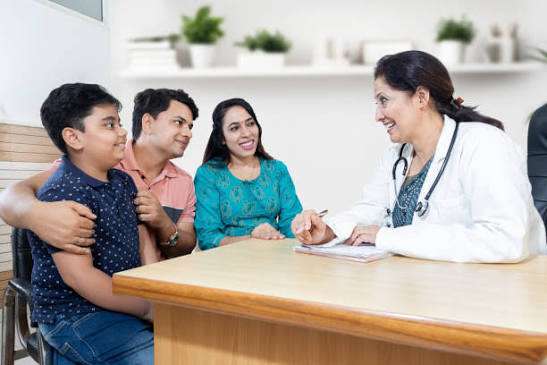
There was a time when a family had one doctor.
Not a cardiologist for the heart, a nephrologist for the kidney, a neurologist for the brain, a dermatologist for the skin and an orthopaedician for the knee. There was simply the family doctor.
He knew you.
He knew your blood pressure, your blood group, your recurring cough, your allergies and the medicines that did—or did not—suit you. He knew your wife’s blood pressure, your children’s childhood illnesses and, sometimes, more about your family’s health history than you remembered yourself.
He might even have known why the buffalo had suddenly stopped giving milk.
That was the old-fashioned family doctor.
You did not make an appointment with him because your “left knee” needed attention. You went because you were not feeling well. He listened, examined you, asked questions and tried to understand the person before deciding which part needed treatment.
Today, medicine has travelled an extraordinary distance—and for good reason.
We have specialists capable of performing procedures and treating diseases that earlier generations could scarcely imagine. Cardiology, nephrology, neurology, oncology, gastroenterology and countless other specialities have transformed survival and quality of life.
But somewhere along the way, the patient has sometimes become a collection of organs.
The heart has its doctor.
The kidney has its doctor.
The brain has its doctor.
The skin has its doctor.
The bones have their doctor.
But who is looking after the whole person?
Consider an ordinary patient.
He develops a persistent headache. He visits a doctor. A test is advised. Then another. Perhaps a specialist is recommended. The specialist refers him to another specialist because something else appears in the reports.
Soon, the patient has a folder thick enough to resemble his property documents.
One doctor is watching the heart. Another is watching the kidney. Someone else is checking the liver. Meanwhile, the stomach is protesting about the medicines prescribed for something else.
The cardiologist says, “We must protect the heart.”
The nephrologist says, “We must be careful about the kidneys.”
The gastroenterologist says, “The stomach is not happy.”
And the patient wonders: “Can somebody please tell me what is happening to me?”
There is, of course, nothing wrong with specialisation. Modern healthcare could not function without it. A complex cardiac condition requires a cardiologist. A serious kidney disorder may require a nephrologist. Cancer care often demands a multidisciplinary team.
The issue is not specialists.
The issue is coordination.
The old family doctor often served as the person who connected the dots. He knew the patient’s history, habits, family circumstances and previous treatments. He knew that the headache might not necessarily require a neurologist—or that a new medicine could be responsible for an apparently unrelated problem.
More importantly, the patient trusted him enough to say things that might never appear in a medical report.
That human relationship mattered.
Healthcare today can sometimes feel like visiting a mechanic with a sophisticated workshop where every technician specialises in one component. The engine specialist may be brilliant. The brake specialist may be brilliant. The transmission specialist may be brilliant.
But the owner still wants somebody to say: “I understand the car as a whole.”
Perhaps that is why the idea of a good family physician deserves to be rediscovered—not as a replacement for specialists, but as the first point of contact and the thread connecting the entire healthcare journey.
The old doctor may not have had today’s scanners, robotic surgery or artificial intelligence. But he had something equally valuable: continuity.
He knew the patient before the illness, not merely the illness before the appointment.
Perhaps modern healthcare does not need fewer specialists.
Perhaps it simply needs more doctors who remember that behind every heart, kidney, liver, brain or knee is a human being.
Because when healthcare becomes too focused on spare parts, the one part that must never be forgotten is the person who owns them.
Otherwise, we may have the world’s finest specialists—and still leave the patient asking the simplest question of all:
“Who is actually looking after me?”