Lakshmanrao Upadhyayulu
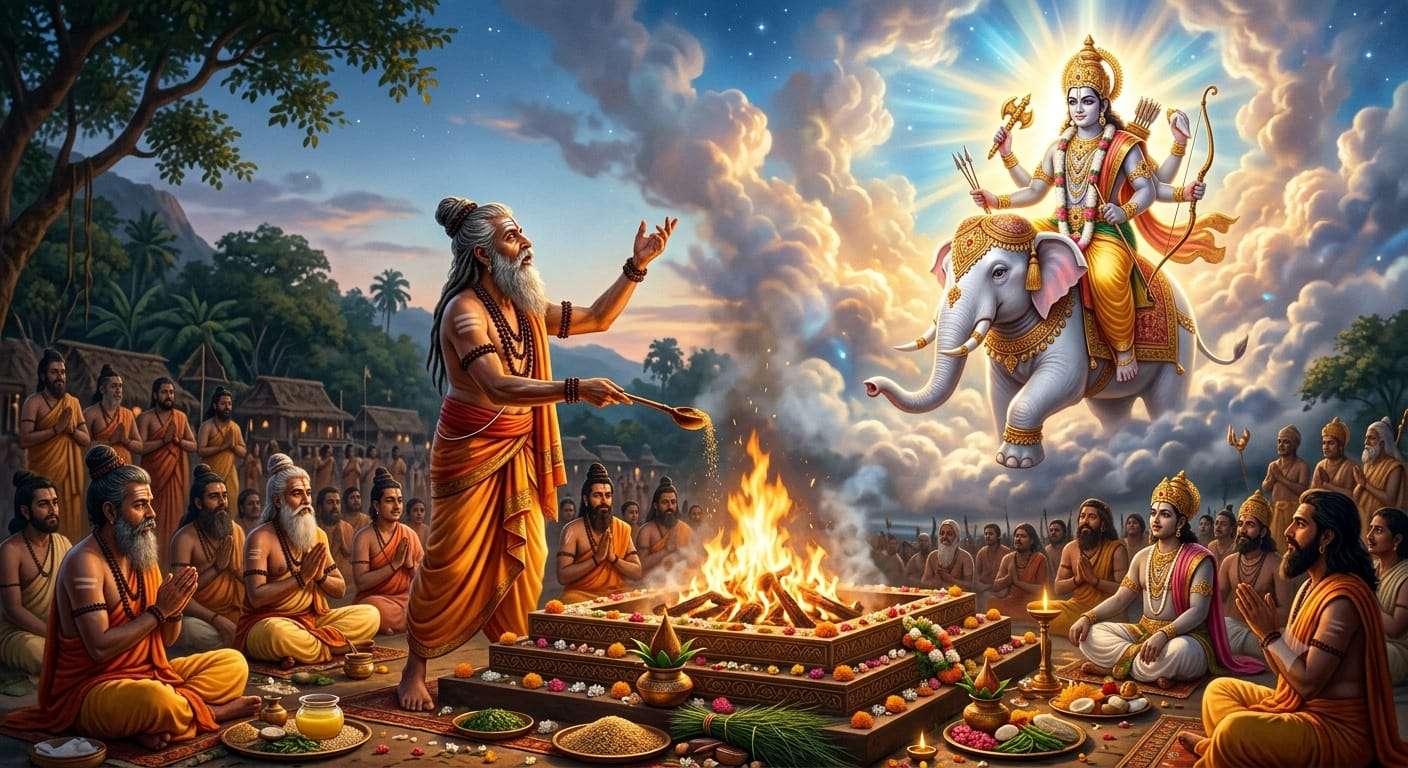
The sage Viśvāmitra, born in the lineage of Kuśika, offered his profound prayers to Indra through the sacred Anuṣṭubh metre of the Ṛgvedic hymns. These mantras reveal not merely devotion but a deep understanding of cosmic order, social responsibility, and spiritual truth. The Vedic seers perceived the universe as an interconnected reality where divine forces, natural phenomena, human duties, and sacred rituals functioned together under the eternal principle of Ṛta, the cosmic law that sustains existence.
Among the social principles reflected in these ancient teachings is the recognition of lineage and continuity. The hymns and associated traditions describe circumstances in which a father without a male heir could, according to established customs, honour his son-in-law and adopt his daughter’s son as his own successor. Such a grandson could perform ancestral rites, continue the family lineage, and inherit responsibilities and privileges associated with the household. The underlying principle was not merely inheritance of wealth but preservation of sacred obligations, remembrance of ancestors, and continuity of dharma. The father and mother were regarded as the primary causes of birth, while children, whether sons or daughters, were seen as precious extensions of the family and society, each possessing distinct duties and honours within the Vedic framework.
The hymns glorify Indra as the luminous lord of divine power. Agni, blazing brilliantly upon the sacrificial altar, carries offerings to the celestial realms. The radiant energies released through yajña are poetically described as transforming into life-giving waters that remain within the womb of creation. These waters nourish herbs, plants, and all forms of life. Such imagery demonstrates the remarkable Vedic insight that life depends upon an intricate cycle connecting fire, water, atmosphere, vegetation, and living beings. The seers expressed profound observations of nature through symbolic and spiritual language, uniting scientific perception with sacred vision.
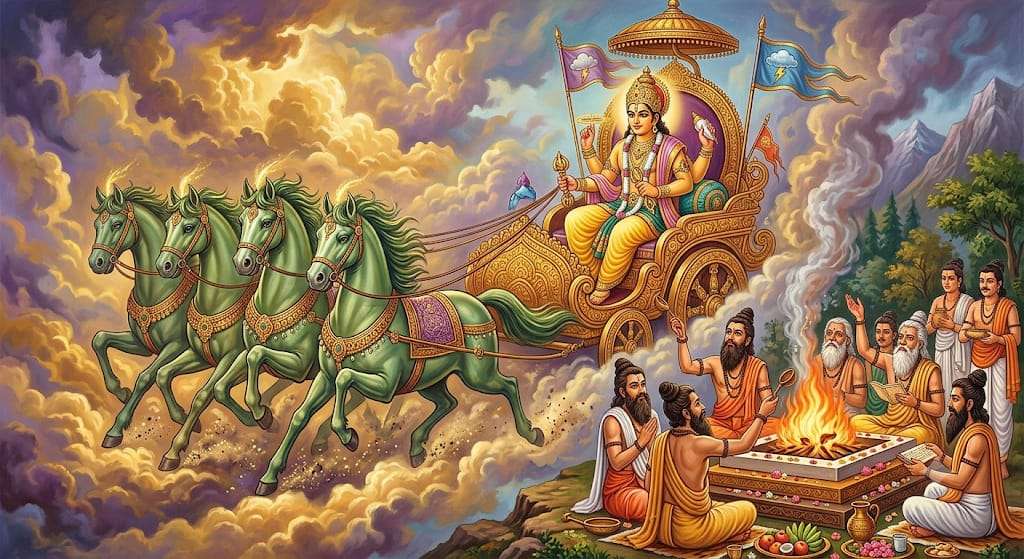
Indra, the possessor of the tawny Hari steeds, is praised as the receiver of Soma offerings whose power invigorates the cosmos. The Maruts, the dynamic storm deities, stood beside him during the mighty struggle against Vṛtra, the force that obstructed the flow of waters and prosperity. The victory of Indra signifies the triumph of order over chaos, movement over stagnation, and light over darkness. The brilliance of the Sun could never be permanently concealed by destructive powers. The Maruts witnessed this truth and celebrated the restoration of cosmic harmony. Uṣā, the radiant dawn, recognised the splendour of Indra and appeared before him as the herald of awakening and renewal.
The hymns further recount the celebrated achievement of the Angiras sages. Endowed with wisdom and spiritual insight, they stood upon the strong mountains seeking the hidden cows. In Vedic symbolism, cows often represent rays of light, divine knowledge, prosperity, and spiritual illumination. Through disciplined rituals, sacred chants, and unwavering determination, the sages discovered and liberated these hidden treasures. Indra, knowing their noble endeavour, honoured them and joined their sacred work. The recovery of the cows signifies the recovery of truth and wisdom concealed by ignorance.
Sarama, the divine hound of intuition and discovery, also appears in this sacred narrative. She reached the broken entrance where the hidden cows were concealed. Guided by divine purpose, she became the first to discover the path. Indra provided her with nourishment and protection. Her delicate feet, capable of perceiving subtle sounds and traces, symbolise the refined intuition that precedes revelation. Through Sarama’s guidance, the path to hidden knowledge was opened. The Vedic sages thus recognised that both reason and intuition are necessary instruments in the pursuit of truth.
The mountain itself is portrayed as a participant in the divine drama. It shelters the cows and provides a secure place for the birth of calves. Such descriptions reveal the Vedic appreciation of nature as a living partner in cosmic processes. Mountains, rivers, forests, animals, and celestial bodies were viewed not as inert objects but as sacred manifestations of the divine order. The liberation of the cows by Indra and the Maruts represents the release of life-sustaining abundance for the benefit of all beings.
The Angiras sages continually worshipped Indra as the lord of manifested existence. He was praised as the knower of all creation, the protector of herds, the giver of prosperity, and the destroyer of hostile forces. Their prayers sought not only material wealth but also protection from sin, ignorance, and disorder. The riches symbolised by cows were understood as both physical abundance and spiritual illumination. Every participant in the yajña was invited to share in these blessings through devotion and righteous conduct.
The sages carefully observed the cycles of time and sought to distinguish the months through sacrificial observances and celestial knowledge. Such references reveal the sophisticated astronomical awareness of the Vedic tradition. Rituals were harmonised with seasonal changes, lunar cycles, and solar movements. The nurturing of the firstborn child with milk and care symbolised the preservation of lineage and continuity. Their joy filled heaven and earth, demonstrating that family, society, and cosmic order were intimately connected.
The sacred cow occupies a position of exceptional reverence within these hymns. The cow provides nourishing milk, sustains life, supports rituals through offerings of clarified butter, and symbolises abundance and generosity. The Vedic sages viewed the cow as a benefactor whose gifts flowed continuously for the welfare of humanity. This reverence arose from practical, ecological, and spiritual considerations, reflecting a worldview that valued gratitude toward all life-sustaining beings.
The Angiras sages prepared a purified and radiant place for Indra. They established the sacrificial altar between heaven and earth, creating a symbolic bridge linking the human and divine realms. The altar became the mother of sacrifice, the sacred centre through which offerings, prayers, and blessings moved between worlds. As hymns were chanted and rituals performed with precision, the strength and presence of Indra were magnified within the consciousness of the worshippers. Through disciplined participation in sacred acts, human beings aligned themselves with higher realities.
Indra is repeatedly praised as the friend and protector of those who honour truth. He bestows fertile lands, golden wealth, thriving cattle, and enduring prosperity upon the righteous. Along with the Maruts, he is celebrated as a cosmic organiser who brings forth light, fire, waters, and the ordered movements of day and night. These descriptions reflect the Vedic understanding that natural processes operate within an intelligent and harmonious framework sustained by divine principles.
The movements of the Sun, the succession of day and night, the circulation of waters, and the rhythms of the seasons are all portrayed as manifestations of cosmic intelligence. The Vedic sages recognised regularity and order in nature and interpreted these observations through the concept of Ṛta. This understanding encouraged both spiritual reverence and scientific curiosity. Nature was studied carefully because it revealed the workings of divine wisdom.
The Maruts are depicted as companions who strengthen Indra in his victories. Their energetic force represents the dynamic powers of nature that assist in overcoming obstacles and restoring balance. Through their cooperation, the enemies of harmony are defeated and prosperity is established. The hymns therefore emphasise cooperation, unity, and collective effort as essential elements of success.
Indra is invoked as the ancient, imperishable lord who delights in righteous worship. The sages approach him with renewed devotion, demonstrating that spiritual traditions remain alive when each generation contributes fresh sincerity while preserving eternal truths. They pray for protection, shelter, prosperity, and the removal of forces hostile to righteousness. Their prayers express confidence that divine friendship supports human endeavour and sustains moral order.
The sacred waters flowing in all directions are celebrated as gifts of Indra. They fill rivers, lakes, ponds, and reservoirs, ensuring fertility and supporting rituals as well as daily life. Water is recognised as a foundation of existence, and its preservation is treated as a sacred responsibility. Such hymns reveal an ecological awareness deeply embedded within Vedic spirituality.
The concluding reflections of the sage preserve valuable social teachings. The daughter’s son could, under recognised circumstances, become the adopted heir and perform ancestral rites. The son traditionally carried primary responsibility for funeral ceremonies and ritual obligations, while daughters were honoured and protected within the social order. Brothers bore duties toward their sisters, including ensuring their welfare and marriage. These customs emerged within specific historical and cultural contexts and sought to maintain social stability and familial responsibility.
A remarkable feature of the narrative is the honour accorded even to Sarama, the divine dog. Her role demonstrates the expansive vision of the Vedic sages, who recognised value and purpose in every form of life. By granting dignity to animals, humans, and divine beings alike, the hymns reveal a philosophy of interconnected existence rooted in respect, gratitude, and harmony.
Thus, these sacred verses unite theology, ethics, social order, astronomy, ecology, psychology, and spirituality into a single vision of reality. They portray a universe governed by truth, sustained by sacrifice, illuminated by knowledge, and enriched through righteous action. The wisdom of the sages continues to inspire reflection on humanity’s relationship with nature, society, and the divine, reminding every generation that prosperity and enlightenment arise when life is aligned with the eternal principles of Ṛta and dharma.