
For decades, Bharat was conditioned to believe that certain technologies were simply beyond its reach. High-end precision manufacturing was one of them. Whenever the country aspired to build sophisticated machines, the conventional wisdom was predictable: Why take the risk when Germany, Japan, or other advanced manufacturing nations could supply them?
The result was not merely dependence on imported equipment. It created a mindset in which technological dependence was often presented as economic pragmatism.
That mindset is now being challenged.
The Narendra Modi era has brought a new vocabulary to Bharat’s development story—aspiration, self-reliance, innovation and scale. More significantly, it has encouraged entrepreneurs and engineers to enter technology-intensive sectors that were once considered the preserve of established global players.
The Bengaluru-based Ethereal Machines offers a compelling example.
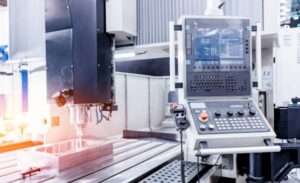
Computer Numerical Control, or CNC, machines are not ordinary industrial equipment. They are, quite literally, “machines behind the machines.” They cut, mill and shape aluminium, steel, titanium and difficult materials such as Inconel with extraordinary precision. The components they produce can eventually find applications in aircraft, rockets, satellites, automobiles, medical equipment and semiconductor manufacturing.
According to Ethereal Machines CEO Kaushik Mudda, Bharat consumes around $2.2 billion worth of CNC machines annually, with approximately $1.2 billion accounted for by imports. The more sophisticated four- and five-axis machines have traditionally been dominated by overseas manufacturers.
In 2014, Mudda and Navin Jain decided to challenge that equation.
Fresh out of college, the duo began their journey in Bengaluru without the ecosystem, capital or established supply chains available to global manufacturers. Developing a high-end multi-axis CNC machine involves far more than mechanical assembly. It requires precision engineering, sophisticated software, advanced control systems, and the ability to repeatedly achieve extremely tight tolerances.
The early days were anything but glamorous.
In 2019, when the fledgling company could not afford a power backup for its garage workshop, a power cut did not necessarily bring work to a halt. The founders reportedly pulled a car into the garage and continued working under its headlights.
From that modest beginning emerged a serious precision-manufacturing enterprise.
Ethereal developed indigenous CNC platforms, including its Nimbus five-axis machine, designed to machine materials ranging from aluminium and steel to titanium and Inconel. Its Aura platform claims positional accuracy of ±4 microns—a remarkable figure that illustrates the technological journey undertaken by the company.
International recognition followed. Its Halo, which combines five-axis CNC machining with 3D printing, won a CES Best of Innovation Award in 2018, making Ethereal the first Indian company to receive the honour.
Yet the company’s more consequential move was to look beyond simply selling machines.
Ethereal began using its own technology to manufacture high-precision components for other companies. Its Machining-as-a-Service model caters to sectors including aerospace, defence, healthcare and semiconductors, with nearly 70 per cent of its revenue reportedly coming from exports.
Its next ambition is even more strategically significant.
The company has raised $28.5 million to establish a 300,000-square-foot facility near Bengaluru and develop an indigenous multi-axis CNC controller—the electronic brain that directs the machine. Mastering the controller is important because it represents another layer of sophisticated technology that Bharat has historically had to source from abroad.
And this is where the Ethereal story transcends one company.
If Bharat intends to manufacture advanced aircraft, spacecraft, defence systems, semiconductor equipment and sophisticated medical devices at scale, it cannot remain permanently dependent on imported machines capable of producing those very products.
The true test of Atmanirbhar Bharat is therefore not simply whether the final product is assembled domestically. It is whether Bharat progressively masters the technologies, components, software and machines that make those products possible.
There is, of course, no room for complacency. Indigenous manufacturing must ultimately compete on precision, reliability, productivity, cost and global quality standards. An Indian label alone cannot guarantee technological leadership.
But the change in direction is significant.
The question that once dominated the conversation was: Can Bharat build these machines?
Increasingly, the question is becoming something else:
How far can Bharat take them—and can it emerge as a global manufacturer of the machines behind the machines?