Lakshmanrao Upadhyayula
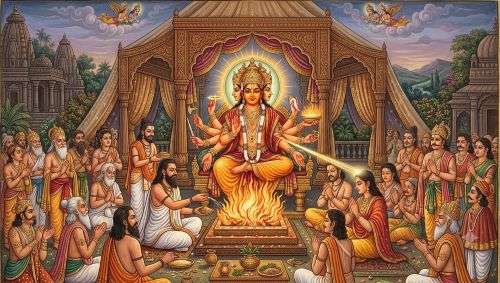
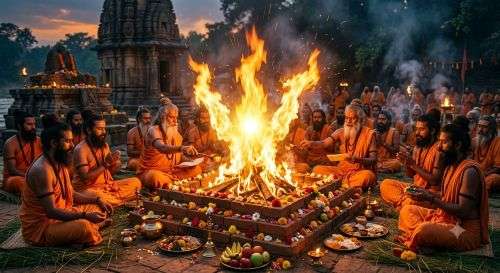
In the sacred traditions of Vedic civilization, the venerable sage Gādhi stood before the consecrated altar and invoked Agni through ancient Ṛgvedic hymns composed in revered metres such as Anuṣṭubh, Virāṭ, Sato-Bṛhatī, and other exalted chandas. These metres were not merely poetic structures but sacred vibrations believed to harmonize human consciousness with the cosmic rhythm of creation. The sage addressed Agni as the knower of all beings born upon the earth and within the celestial realms, the divine witness who perceives every movement of life. With profound devotion, he dedicated the yajña to the Supreme Powers that sustain the universe and prayed that Agni, the luminous messenger between humanity and the gods, would graciously accept the sacred offerings.
As the ritual progressed, purified drops of clarified butter and sanctified portions of sacrificial offerings were gently poured into the radiant flames. According to Vedic understanding, Agni is the first recipient of every oblation, for he transforms earthly substances into subtle energies capable of reaching the celestial realms. Seated symbolically upon the sacred kuśa grass spread around the altar, Agni was invoked to consume the offerings before any impurity could touch them. The flowing drops of clarified butter represented the surrender of human desires, ego, and attachment into the purifying fire of divine wisdom. Through this sacred act, the sacrificer sought harmony with the universal order known as Ṛta, the eternal law governing all existence.
The seers perceived Agni not merely as physical fire but as the purifier dwelling within every aspect of creation. He shines in the sun, flashes in lightning, glows within the earth, and burns as the fire of life within every living being. Therefore, the flawless performance of yajña, accompanied by prescribed rites and auxiliary observances, symbolized the alignment of human actions with divine principles. The offering of two sacred drops of clarified butter first to Agni and then to the other deities reflected the profound recognition that all divine blessings flow through the transformative power of sacred energy. The ritual thus became a living expression of gratitude, discipline, and spiritual aspiration.
The Vedic poets and enlightened scholars praised Agni in countless hymns, describing him as brilliant, majestic, wise, and ever-moving. Unlike static forces, Agni is dynamic, continuously transforming matter into energy and carrying prayers from the visible world to the invisible realms. The sages invited him to arrive with immense radiance and spiritual power, illuminating both the sacrificial ground and the hearts of the worshippers. The flowing oblations, rich with nourishment and vitality, symbolized the abundance of nature offered back to the cosmic powers from which all prosperity originates. In this reciprocal exchange, humanity acknowledged its dependence upon the divine forces sustaining life.
The spiritual significance of these rituals extends far beyond external worship. The Upanishadic sages later interpreted Agni as the inner flame of consciousness residing within the human heart. Just as physical fire transforms offerings into subtle essence, the fire of knowledge transforms ignorance into wisdom and selfishness into self-realization. Every oblation cast into the sacred flames represented an inward offering of lower tendencies into the fire of spiritual awakening. Thus, yajña became both an external ceremony and an inner discipline leading the seeker toward higher truth.
From a scientific perspective, the Vedic understanding of fire reveals remarkable insight into natural processes. Fire acts as a transformer of matter, converting physical substances into heat, light, and gaseous forms. The ancient seers observed this principle and recognized Agni as the visible manifestation of transformation itself. The use of purified substances such as clarified butter and carefully selected offerings reflected an understanding of cleanliness, preservation, and controlled combustion. The communal performance of yajña also encouraged social unity, disciplined conduct, environmental awareness, and collective responsibility, demonstrating a harmonious blend of spiritual vision and practical wisdom.
The prayer of Sage Gādhi ultimately expresses a timeless aspiration of humanity. He sought not merely material wealth but righteous prosperity, secure dwelling, spiritual illumination, and divine acceptance. Agni, the eternal mediator, was requested to receive the sacred drops distinctly and distribute them among the celestial powers, thereby maintaining the sacred connection between the human and divine worlds. Through the brilliance of Agni, the offerings became carriers of devotion, the ritual became a bridge between earth and heaven, and the participants became conscious contributors to the cosmic harmony that sustains all existence.
Thus, the Vedic invocation of Agni stands as a profound testament to the spiritual genius of ancient Bhārata, where ritual, philosophy, science, and devotion merged into a unified vision of life. The sacred fire symbolized transformation, purity, knowledge, and divine communication, reminding humanity that every noble action performed with sincerity becomes an offering to the eternal light that illumines the universe