U Lakshman Rao
The Sun is not merely a source of light; it is a gigantic, continuously evolving nuclear system whose radiation reaches Earth after passing through an extraordinarily complex chain of physical processes. Solar energy is produced primarily through nuclear fusion in the Sun’s core, where extreme temperature and pressure allow hydrogen nuclei to combine and ultimately form helium. The energy generated in the core does not travel directly to the surface. Photons undergo countless interactions with the dense solar plasma, being absorbed, re-emitted and scattered repeatedly. As a result, the energy produced in the core may take an estimated tens of thousands to hundreds of thousands of years, and in some simplified descriptions up to around a million years, to diffuse outward through the Sun. Once the radiation escapes the photosphere and travels through space, however, sunlight reaches Earth in approximately 8 minutes and 20 seconds.
This enormous difference in travel time illustrates an important principle: sunlight is the product of a naturally regulated physical system rather than a simple stream of rays that can be reproduced merely by generating intense illumination. The radiation arriving at Earth is also not perfectly constant. Solar output varies because of the Sun’s rotation, magnetic activity, sunspots, solar flares and the approximately 11-year solar activity cycle. Atmospheric conditions further modify the amount and spectral composition of radiation reaching the ground. Consequently, any technology attempting to reproduce sunlight artificially must address not only brightness, but also spectrum, intensity, direction, timing, heat and duration.
Photovoltaic technology remains the most mature and commercially practical method for converting solar radiation into electricity. Solar panels do not attempt to recreate sunlight; they directly capture a portion of the Sun’s electromagnetic energy and convert it into electrical energy through the photovoltaic effect. Their limitations are well understood: intermittent generation, dependence on weather and daylight, land requirements, degradation, storage requirements and the environmental costs associated with mining, manufacturing, transportation and recycling. Yet these limitations are technological challenges for which substantial solutions already exist, including improved silicon cells, tandem perovskite-silicon cells, bifacial modules, solar tracking, grid-scale batteries, pumped hydro storage and increasingly sophisticated power-management systems.
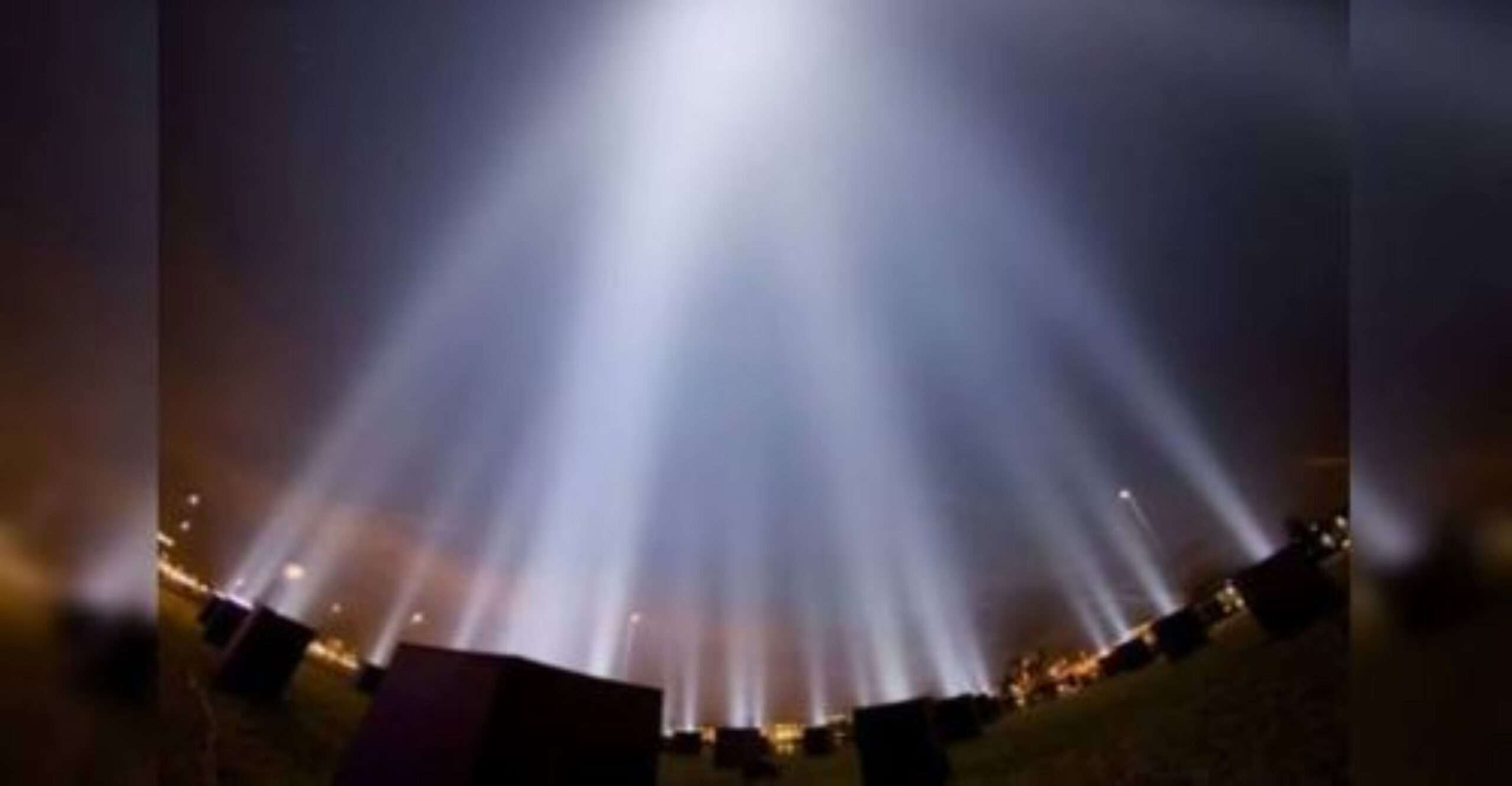
The proposition of producing artificial sunlight through enormous lighting systems is fundamentally different. Artificial illumination can certainly be created, and modern LEDs, lasers, plasma systems and high-intensity lamps can generate precisely controlled wavelengths and enormous quantities of light. Scientists can reproduce particular portions of the solar spectrum for agriculture, research, biotechnology and industrial applications. Controlled-environment agriculture already uses LEDs to provide plants with carefully selected wavelengths. However, producing illumination for a specific scientific or industrial purpose is vastly different from attempting to substitute artificial light for natural sunlight on a planetary scale.
The fundamental difficulty is energy economics. To illuminate a large region with sunlight-like intensity for an extended period would require an immense supply of electricity. Even highly efficient LEDs convert only part of electrical energy into useful optical radiation, while the remaining energy ultimately becomes heat. If the objective were to reproduce the full environmental effect of daylight, the problem would become still more demanding because sunlight supplies not only visible light but also ultraviolet and infrared radiation. Artificial systems would therefore require enormous electrical infrastructure, heat-management systems, power storage and continuous operation. At planetary scale, the cost would be extraordinary, and the resulting energy consumption could itself create significant environmental consequences unless the electricity came from extremely low-carbon sources.
Temperature makes the proposition even more complicated. Sunlight naturally delivers both radiation and heat according to a spectrum determined by the Sun’s surface temperature. Artificially producing comparable illumination in a controlled environment does not automatically reproduce the same thermal balance. If powerful artificial sources are used, waste heat must be removed. If the light is produced by electricity generated elsewhere, the entire energy chain must be considered—from primary energy production to electricity transmission, conversion losses, illumination and heat dissipation. A system that appears efficient at the lamp level may therefore be considerably less efficient when evaluated across its complete life cycle.
The most important hidden factor is consistency. Natural ecosystems evolved under the predictable astronomical relationship between the Earth, the Sun and the rotation of the planet. Day and night are not simply periods of illumination and darkness; they form part of biological timing systems. Plants regulate photosynthesis, flowering, growth and dormancy according to light intensity and duration. Animals respond to day length, darkness and seasonal changes. Circadian rhythms influence feeding, reproduction, migration, sleep and hormonal activity. Artificially altering the intensity, duration or spectral composition of environmental light could therefore produce ecological consequences even when the intention is technologically beneficial.
This is why artificial light at night is already recognized as an ecological concern. Excessive artificial illumination can alter insect behaviour, interfere with nocturnal species, disturb bird migration, affect predator-prey relationships and modify plant responses. Expanding such illumination from cities and agricultural facilities to much larger geographical areas would magnify these effects. The ecological question is therefore not whether humans can create artificial light—they unquestionably can—but whether artificial illumination can reproduce the complex temporal and spectral conditions under which terrestrial ecosystems developed. At present, there is no scientific basis for claiming that an artificial lighting system could safely replace the natural solar cycle across large ecosystems.
The concept sometimes described as an “artificial moon” raises a related but distinct question. A human-made satellite capable of producing visible illumination could theoretically brighten a region during nighttime, but it would not physically duplicate the Moon. The natural Moon is primarily a reflector of sunlight, and its illumination changes according to its orbital position and phase. An artificial orbital light source could be engineered to provide particular levels of illumination, but its effect would depend on orbital altitude, intensity, spectrum, geographic coverage and operating schedule. Such a system would not automatically alter Earth’s seasons, because seasons are governed primarily by the approximately 23.5-degree tilt of Earth’s rotational axis and its orbit around the Sun, not by the brightness of the Moon.
Nevertheless, a sufficiently powerful artificial orbital illumination system could have ecological and astronomical consequences if operated extensively. Artificial night illumination could interfere with species that depend on darkness, alter migration and reproductive behaviour, change insect populations and affect astronomical observations. The consequences would depend strongly on intensity, wavelength, geographic distribution and operating duration. Therefore, scientific evaluation would have to precede any large-scale deployment rather than assuming that additional illumination is environmentally neutral.
China and other technologically advanced nations are exploring ambitious concepts involving space-based illumination, advanced satellites and new forms of energy infrastructure. Such proposals should be distinguished carefully from established technologies and experimental demonstrations. A technological possibility is not necessarily a commercially viable technology, and commercial viability itself does not establish ecological sustainability. Every such concept must ultimately be assessed through energy efficiency, lifecycle emissions, material requirements, reliability, maintenance, economic cost, orbital safety and environmental impact.
The future of solar technology is more likely to emerge through integration rather than through the replacement of natural sunlight. High-efficiency photovoltaic cells, tandem architectures, better energy storage, smart grids, long-distance transmission, floating solar installations, agrivoltaics and improved recycling can substantially increase the usefulness of naturally available solar energy. Artificial lighting will continue to have an important role where controlled illumination is genuinely advantageous, particularly in laboratories, hospitals, manufacturing, vertical farming and specialized research. The scientifically sustainable approach is therefore to use artificial light where it solves a specific problem rather than attempting to recreate the Sun itself.
The deeper lesson is that nature possesses an extraordinary form of energy management that technology is still learning to understand. The Sun provides radiation continuously through nuclear fusion; Earth receives only a fraction of it; the atmosphere filters it; oceans and land absorb and redistribute the energy; plants convert a portion of it through photosynthesis; and ecosystems have evolved around its daily and seasonal rhythms. Reproducing one component of this system—light—does not reproduce the entire system. The complexity lies not simply in producing photons, but in reproducing the energy balance, spectrum, timing and biological relationships associated with natural solar radiation.
Future technological development will undoubtedly make artificial illumination cheaper, more efficient and more precisely controllable. But scientific progress should not be measured solely by whether something can be engineered. The more important question is whether it can be operated sustainably without creating greater energy consumption, ecological disruption or systemic risk than the problem it is intended to solve. Humanity’s most promising path is therefore not to compete with the Sun, but to understand it better, capture its energy more efficiently and integrate that energy into technologies that work in harmony with Earth’s natural cycles.