Lakshmanrao Upadhyayulu
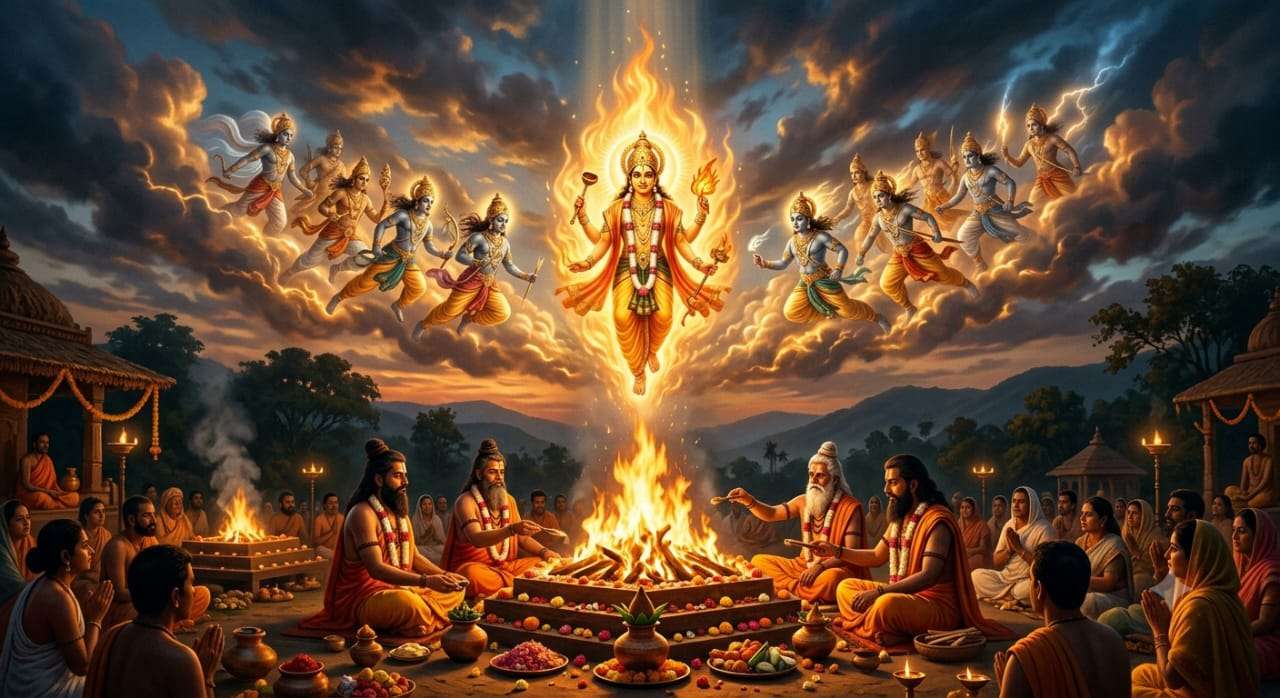
The sage Vishwamitra Katu, immersed in profound contemplation, offered his prayer to the divine Agni through the majestic cadence of Tristubh chandas found in the sacred hymns of the Rigveda. In the Vedic vision, Agni is not merely the physical fire kindled upon the sacrificial altar, but the eternal force that sustains righteousness, upholds cosmic order, and preserves the moral law that governs both heaven and earth. He stands as the radiant guardian of Dharma, supporting truth and sacred duty among gods and human beings alike. His blazing flames, described as flowing locks of luminous hair, symbolize irresistible energy, spiritual illumination, and the transforming power of divine knowledge. To all living beings he remains acceptable and benevolent, for Agni is the purifier who removes darkness and carries the aspirations of creation toward higher realms.
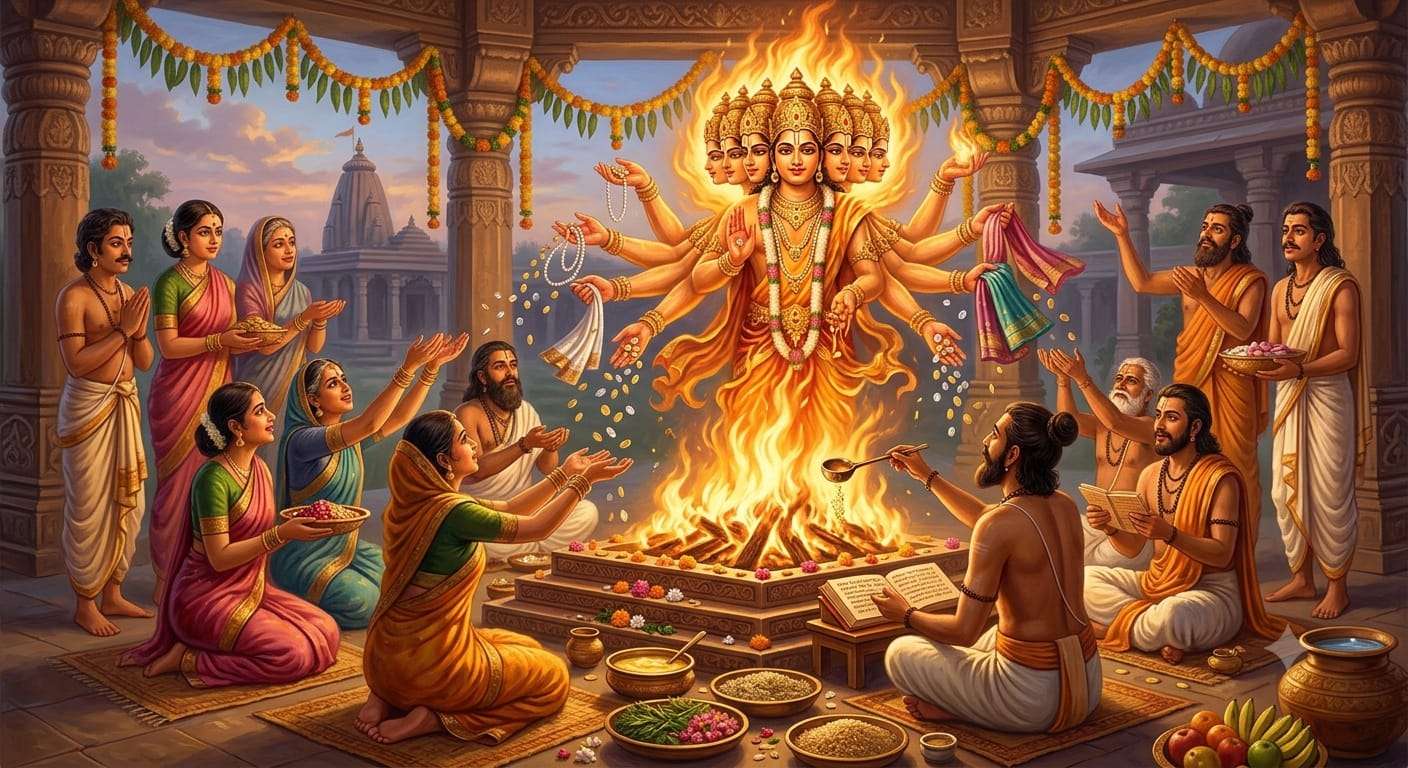
At the commencement of yajna, the sacred fire slowly rises from the altar like the awakening consciousness of the universe itself. The gentle blaze gradually flourishes, spreading brilliance in every direction while sanctifying the atmosphere through sacred sound, clarified butter, fragrant herbs, and Soma offerings. The Vedic seers perceived in this process not only spiritual symbolism but also a profound understanding of natural principles. The ascending flames, nourished by ghee and medicinal herbs, represent transformation through energy, where matter changes form and releases subtle essences into the environment. Thus yajna was regarded as both a spiritual communion and a disciplined scientific observance harmonizing nature, humanity, and divine forces. Through Agni, offerings made upon earth become refined into subtle energies that ascend toward the celestial realms.
The sage praises Agni as the omniscient knower of every being born in existence. Nothing in creation remains hidden from his divine perception. He witnesses the birth of creatures, the movements of the cosmos, and the silent intentions dwelling within the hearts of humanity. Agni receives the oblations dedicated to Mother Earth and conveys them toward the heavenly worlds, becoming the eternal messenger between mortals and the gods. The worshipper humbly prays that Agni may conduct the yajna flawlessly and carry the sacred offerings with purity and devotion. Just as the ancient progenitor Manu performed sacrifices with discipline and wisdom for the welfare of creation, so too may this yajna attain successful completion through Agni’s divine guidance and protection.
Agni is further described as the enjoyer of three sacred forms of nourishment—clarified butter, healing herbs, and the immortal Soma essence. These symbolize the three dimensions of existence: physical sustenance, medicinal vitality, and spiritual ecstasy. The Vedic thinkers understood that life depends upon the harmonious balance of nourishment, health, and elevated consciousness. Agni transforms these offerings into subtle divine energy, teaching that every element of nature possesses hidden spiritual significance when approached with reverence and knowledge. The three dawn forms known as Prakasha, Ahina, and Samagatha are poetically described as the mothers of Agni. These divine Ushas represent the gradual unfoldment of light, awareness, and sacred rhythm within the universe. Agni honors them together with the gods, illuminating the cosmic cycle of renewal that manifests with every dawn.
The hymn glorifies Agni as a learned scholar, wise in all sacred knowledge and the benefactor of patrons who seek prosperity, harmony, and auspiciousness. He is the very principle of life and consciousness dwelling within every creature. Filled with immeasurable radiance, beautiful in form and worthy of ceaseless prayer, Agni becomes the visible expression of invisible divinity. The gods themselves appointed him as the impartial carrier of oblations, for Agni never discriminates between those who approach with sincerity and devotion. By making him immortal, they established him as the eternal navel of yajna, the sacred center through which communication between worlds remains forever active. In Vedic understanding, this centrality of Agni also reflects the scientific recognition that energy remains fundamental to all processes of existence, linking transformation, continuity, and sustenance throughout creation.
Before the sacred fire, the great conductors of yajna and enlightened priests assembled according to their spiritual responsibilities and ranks, seated with discipline and reverence around the altar. Their purpose was not personal gain, but the establishment of Dharma and universal welfare. Through precise recitation, measured offerings, and disciplined ritual action, they sought to preserve harmony between humanity, nature, and the divine order. The yajna thus became a collective spiritual endeavor where sound, intention, knowledge, and cosmic law united in sacred cooperation. In later times, these rituals continued as acts of devotion meant to please the gods and sustain the welfare of society. Through Agni’s blazing presence, every offering symbolized humanity’s aspiration to rise beyond ignorance and attain divine illumination.
Thus the hymn presents Agni not only as the sacrificial fire upon the altar, but as the eternal principle of transformation, wisdom, purity, and cosmic harmony. His flames illuminate the path of righteousness, his brilliance awakens higher consciousness, and his sacred presence unites earthly existence with celestial reality. In the Vedic world, Agni is simultaneously physical energy, spiritual intelligence, and divine mediator. The hymn therefore stands as a profound testimony to the depth of Vedic spirituality, where scientific observation of natural forces and mystical realization of cosmic truth were woven together into a single vision of sacred existence.