



PRASHNA – I
Mantra 1.1
ॐ सुकेशा च भारद्वाजः शैब्यश्च सत्यकामः सौर्यायणी च गार्ग्यः
कौसल्यश्चाश्वलायनो भार्गवो वैदर्भिः कबन्धी कात्यायनस्ते हैते
ब्रह्मपरा ब्रह्मनिष्ठाः परं ब्रह्मान्वेषमाणा एष ह वै तत्सर्वं
वक्ष्यतीति ते ह समित्पाणयो भगवन्तं पिप्पलादमुपसन्नाः ॥ १.१॥
oṃ sukeśā ca bhāradvājaḥ śaibyaśca satyakāmaḥ sauryāyaṇī ca gārgyaḥ
kausalyaścāśvalāyano bhārgavo vaidarbhiḥ kabandhī kātyāyanaste haite
brahmaparā brahmaniṣṭhāḥ paraṃ brahmānveṣamāṇā eṣa ha vai tatsarvaṃ
vakṣyatīti te ha samitpāṇayo bhagavantaṃ pippalādamupasannāḥ .. 1.1..
Sukesa, son of Bharadvaja; Satyakama, son of Sibi, Gargya, the grandson of Surya, born in the Garga gotra; Kausalya, son of Asvala; Bhargava a scion of the line of Bhrgu, born in Vidarbha; and Kabandhi son of Katya — all of them devoted to the inferior Brahman and engaged in inferior Brahman approached the revered Pippalada with faggots in hand, thinking that the rsi would explain everything to them.
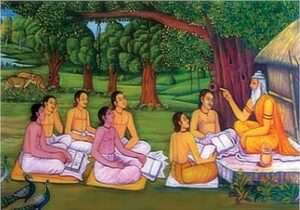
This mantra gives the names of six sishyas who approached the Guru Pippalada. These six students asking questions and the Guru answering them is the Prashna Upanishad (Prashnopanishad).
IMAGE 2
Traditionally, the Gurus adopted different means of communicating the philosophy. We can find four means of communication –
- Stuthi – Glorified noble values of life
- Ninda – Vehemently warned against false values
- Parakriti – Quotes great noble men who lived up to their ideals
- Purakalpam – ‘Once upon a time’ type of stories to encourage the seeker
This Upanishad establishes the essential qualities of a seeker and the perfect attributes a Guru is endowed. The general perception is that people who are desperate or not successful in life use Vedanta as a spiritual asylum. They need mental solace to console them and relieve the state of affairs in their life.
The mantra talks of six young disciples who lived a complete life and were not content with what life gave them. They did not continue their search for happiness in the same activity which they were pursuing in their life. They were in search of greater wisdom. All six students were committed and established in their practice of inferior Brahman. Inferior Brahman refers to Saguna Upasana, worship with qualities and attributes. The superior level is Nirguna Upasana – without guna qualities. Spiritual practice starts with saguna upasana and as the seeker evolves, he reaches a state of nirguna upasana. Saguna upasana has attributes and uses idols, forms, and rituals as a form of worship and is hence considered a lower form. It is not lowering, but with reference to the higher form, nirguna upasana, it is considered lower. Worshipping God without any qualities and attributes is to attune to the Parabrahma, which is Brahman, the formless reality. These six disciples were established in the lower form of worship and had reached a point of threshold. They knew that they could not get beyond it and so they turned their search to Parabrahma. They wanted a Guru to teach them nirguna upasana.
Upanishads are the authority teaching nirguna upasana, brahma vidya, which is the highest knowledge. They do not talk of idols, rituals, karma khanda. The disciples have gained the benefit of lower practices of Brahman and are well established in Brahmanishta. Lower knowledge can also be interpreted as these people were well established in secular subjects, worldly things.
Q: What makes the student seek a Guru?
A: A seeker approaches a Guru –
- When he is satiated with the current practices and becomes impatient with the lower practices. The seeker finds saturation and well established in all the following practices – pilgrimages, yajnas, sacrifices, bhakti practices, asanas, pranayama, tapas, seva to the Guru… All these practices take you to an end. They found a sense of suffocation in their practices.
- The seeker should have the burning desire to learn the higher wisdom, which cannot be satisfied through apara Para is the highest Brahma vidya is the concentrated knowledge in its purest and unfalsified form.
One has to test themselves to see how qualified they are. The more qualified you are, the more this knowledge and wisdom will serve you exceedingly well.
Having fulfilled apara vidya, the disciples have reached a guru to enquire para vidya. They approached the Guru with samitpani faggots in hand. In Vedic times faggots or firewood were the source of energy for light, yajna, cooking, fire for heat, fire to protect from animals, comfort in the dark, etc. A student takes that which will benefit the Guru. This is a prerequisite set by the shastras. Wood was everything for them, as the Gurus stayed in the forests. It is symbolic of the service you render to a Guru.
In Bhagavad Gita chapter 4, verse 34, the Lord talks of the qualities of a student.
तद्विद्धि प्रणिपातेन परिप्रश्नेन सेवया ।
उपदेक्ष्यन्ति ते ज्ञानं ज्ञानिनस्तत्त्वदर्शिनः
Tadviddhi pranipaatena pariprashnena sevayaa
Upadekshyanti te jnaanam jnaaninas tattwadarshinah
Know that by prostration, by questioning, and by service, the wise who have realized the Truth will instruct you in knowledge.
Three qualities are mentioned here:
- Prostration
- Questioning
- Service
A man of realisation will impart the knowledge only when the student has all of the above qualities. When you question, the dialogue must not get into a disputed argument. Question with prostration, devotion. At the emotional level you must be devoted to the guru and at physical level you must serve the guru.
The students did not know the guru and yet had unknown faith in the master.
The 1st mantra talks of the qualities of a student, and the 2nd mantra talks of the qualities of a Guru. A Guru must have two qualities which is traditionally spoken: Shrotriyam, well versed in scriptural knowledge and Brahmanishtam, established in the Brahman he is talking. The six students are Sukesa, Satyakama, Gargya, Kausalya, Bhargava, and Kabandhi.
1st chapter is a dialogue between Kabandhi and the Guru Pippalada.
Mantra 1.2
तान्ह स ऋषिरुवाच भूय एव तपसा ब्रह्मचर्येण श्रद्धया संवत्सरं संवत्स्यथ
यथाकामं प्रश्नान् पृच्छत यदि विज्ञास्यामः सर्वं ह वो वक्ष्याम इति ॥ १.२॥
tānha sa ṛṣiruvāca bhūya eva tapasā brahmacaryeṇa śraddhayā saṃvatsaraṃ saṃvatsyatha
yathākāmaṃ praśnān pṛcchata yadi vijñāsyāmaḥ sarvaṃ ha vo vakṣyāma iti .. 1.2..
To them the rsi said, “Stay here for one year with austerity, celibacy and faith; then you may ask as you please your questions; If I know I shall explain everything to you.”
The six students were asked to stay for a year and practise Tapas austerity, Brahmacharya celibacy, and Shraddha faith.
Tapas is conserving your energy by avoiding dissipation into unproductive channels and redirecting it into higher pursuits. It is mental discipline. Mentally keeping away from all activities that is sapping your energy.
Brahmacharya celibacy) is practising Brahmani charanti iti – you lead a life of renouncing worldly and sensual pleasures so that you revel in the thought of Brahman. It is a physical quality.
Shraddha – although translated as faith, it is an intellectual quality. Shraddha is way beyond faith. Shraddha is the consistency of the purpose. Shraddha is the capacity to pursue anything until you reach the goal.

