Lakshmanrao Upadhyayulu
The sage Utkeela, illumined by profound spiritual insight, invokes Agni through the majestic cadences of Jagathi and Bruhathi chandas found in the sacred hymns of the Rigveda. These metres, expansive and solemn in movement, are not merely poetic structures but rhythmic channels through which consciousness ascends toward the divine order. In the Vedic vision, sound itself possesses creative potency, and the carefully measured vibration of mantra harmonizes the human mind with the cosmic rhythm governing existence. Utkeela’s prayer arises not from personal desire alone, but from the collective aspiration of humanity seeking prosperity, protection, wisdom, and spiritual illumination through the radiance of Agni.
Agni is praised as the most competent among divine powers, the master of auspiciousness whose presence sanctifies all worlds. He is not merely the physical flame visible upon the sacrificial altar, but the universal principle of transformation operating throughout creation. The Vedic seers perceived fire in many dimensions: in the brilliance of the sun, in lightning moving through the heavens, in digestive warmth within living beings, and in the intellectual illumination that dispels ignorance. Thus Agni becomes the connecting force between matter and spirit, between visible existence and invisible truth. His possession of cows signifies abundance, nourishment, and the rays of spiritual knowledge, for in Vedic symbolism cows often represent luminous wisdom flowing through creation.
The sage extols Agni as the divine parent rich with offspring, resplendent with inexhaustible prosperity and lordship over the destroyers of Vruthra. In Vedic symbolism, Vruthra represents obstruction, stagnation, and the forces that imprison the waters of life and consciousness. Agni, allied with heroic powers, breaks these barriers and releases vitality into the worlds. This vision reveals the scientific temperament hidden within Vedic spirituality, where nature is understood through dynamic principles of energy, movement, and transformation. The ancient sages observed that all growth emerges through the overcoming of resistance, just as fire transforms inert matter into heat and light. Agni therefore becomes the cosmic force of evolution, carrying existence from darkness toward higher states of refinement.
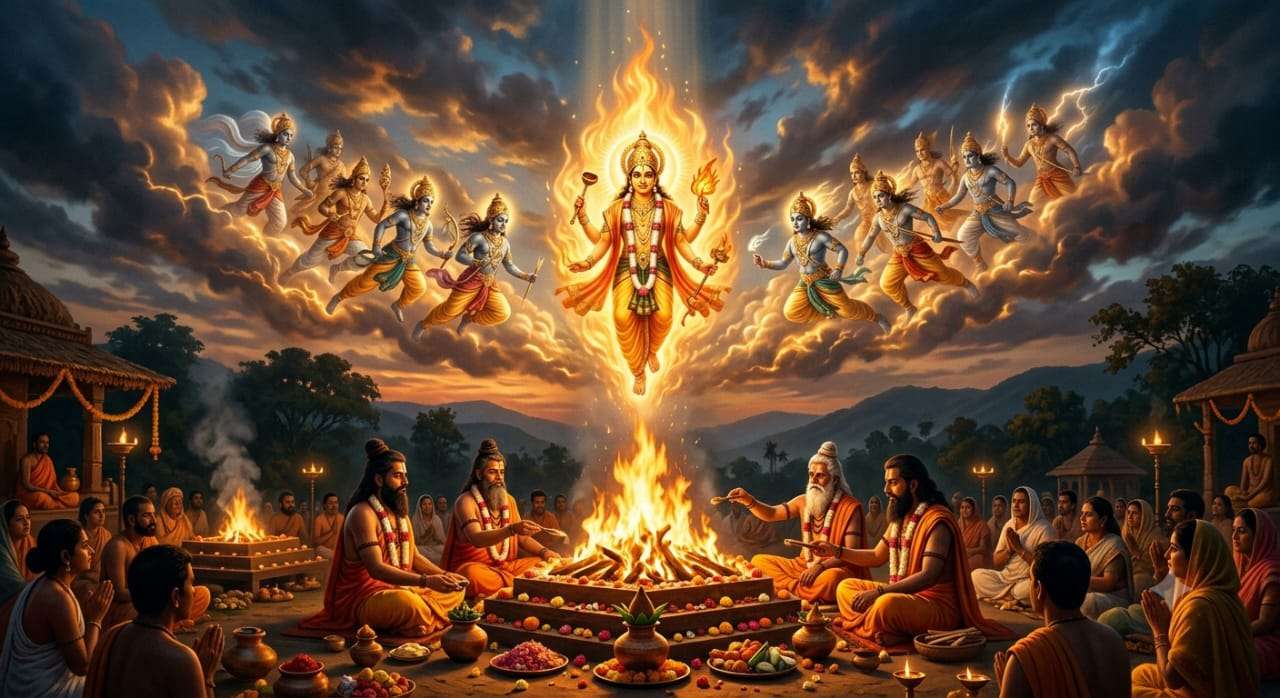
The Maruths, invoked alongside Agni, are described as radiant leaders moving with celestial vigor. These storm deities symbolize the tremendous energies of atmosphere and motion governing the universe. The Vedic sages perceived divine intelligence within natural phenomena and expressed it through sacred imagery. The Maruths, accompanied by their resounding hosts, represent the fierce but purifying powers of nature that dispel decay and inertia. When they unite with Agni, the hymn portrays a grand harmony of elemental forces: fire, wind, lightning, and atmospheric power acting together to preserve cosmic balance. Their triumph over enemies in battle signifies not merely physical conquest but the eternal victory of order over chaos, wisdom over ignorance, and harmony over destructive impulses.
Agni is celebrated as the possessor of immeasurable riches and the bestower of boons beneficial to humanity. The wealth attributed to him extends beyond material prosperity into the realms of health, vitality, courage, intellectual brilliance, and moral strength. Vedic civilization regarded true wealth as that which sustains both earthly welfare and spiritual advancement. Thus the sage prays for strong and reliable prosperity that nourishes life without corrupting the soul. Agni’s grace is described as life-enlivening because divine energy, when rightly invoked, awakens the dormant powers within human beings. The sacrificial fire becomes a symbol of disciplined aspiration through which humanity refines its lower tendencies and awakens higher consciousness.
The hymn further glorifies Agni as the creator present throughout all worlds. He is the unseen intelligence moving through every layer of existence, from the celestial realms to the innermost chambers of the human heart. In Vedic thought, the universe is sustained through yajna, the sacred principle of mutual offering and harmonious exchange. Agni serves as the carrier of oblations to the gods, symbolizing the transmission of human aspiration toward higher planes of consciousness. Scientifically interpreted, this reflects an understanding that energy is never static but continuously transferred and transformed throughout the cosmos. Every offering into fire becomes a profound metaphor for transformation, where gross matter is converted into subtle essence ascending toward the unseen.
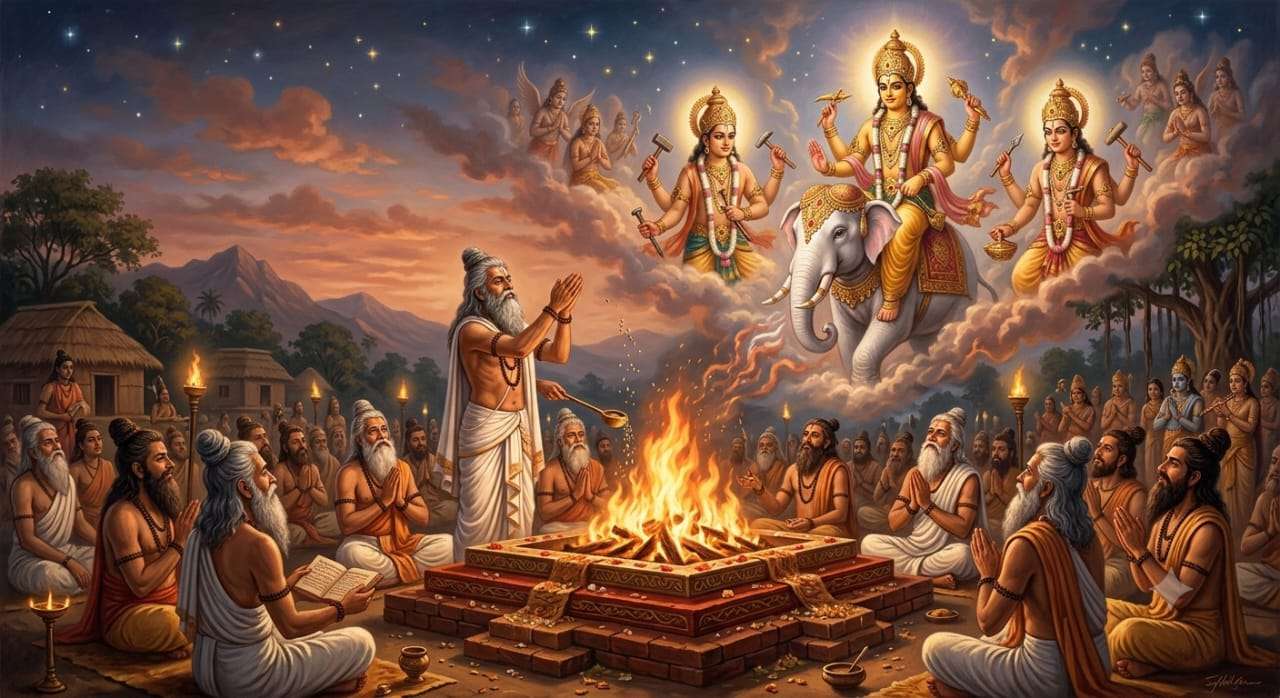
The sage describes Agni arriving wherever sacred hymns are chanted by learned priests and leaders of rituals. This reveals the Vedic conviction that divine presence manifests where truth, discipline, and sacred knowledge are upheld. Agni is not confined to temples or sacrificial grounds alone; he also accompanies human beings into the struggles of worldly existence. He enters the battles fought by humanity, symbolizing courage, righteous determination, and the inner fire that resists despair. The son of might becomes the sustaining force behind endurance and victory. In moments of uncertainty and conflict, the Vedic seers turned toward Agni as the guardian of moral strength and spiritual resilience.
The prayer concludes with deeply human supplications filled with humility and sincerity. The sage implores Agni not to abandon his devotees to hostile forces, not to deprive them of brave descendants, flourishing cattle, or honorable reputation. In Vedic society, cattle symbolized sustenance and prosperity, while valiant offspring represented continuity of virtue and social stability. The fear of accusation expressed in the hymn reflects the importance of truth and moral integrity within the Vedic order. The devotee seeks not only external protection but also freedom from discord, falsehood, and alienation from divine grace. Agni is requested to remain a compassionate ally rather than a distant cosmic power.
Through this hymn, the vision of the Vedic sages shines with remarkable depth, uniting spirituality, observation of nature, ethical aspiration, and philosophical reflection into a single luminous stream of wisdom. Agni emerges not merely as a deity of fire but as the eternal principle of transformation sustaining life, knowledge, civilization, and cosmic harmony. The hymn of Utkeela thus stands as a timeless testimony to humanity’s quest to understand the universe through reverence, disciplined inquiry, and inner illumination.