Lakshmanrao Upadhyayula
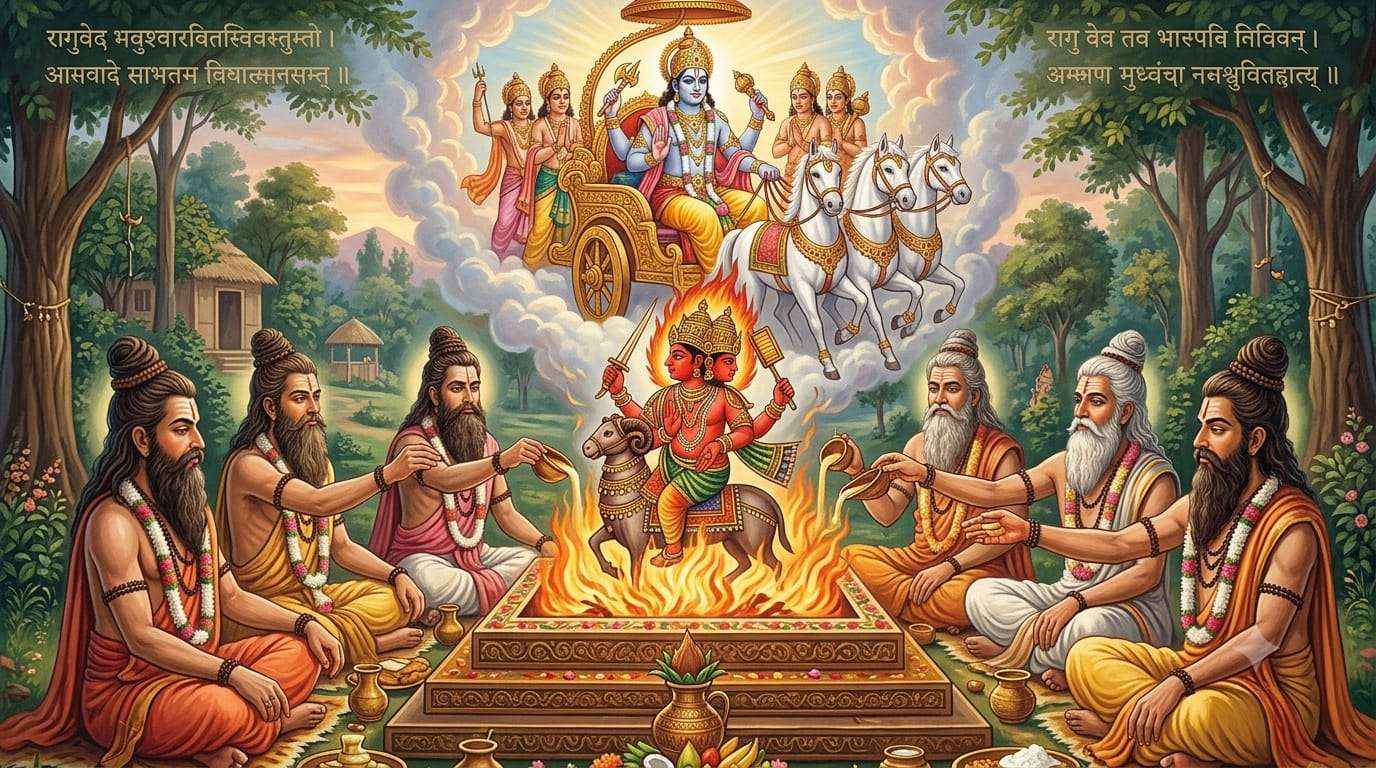
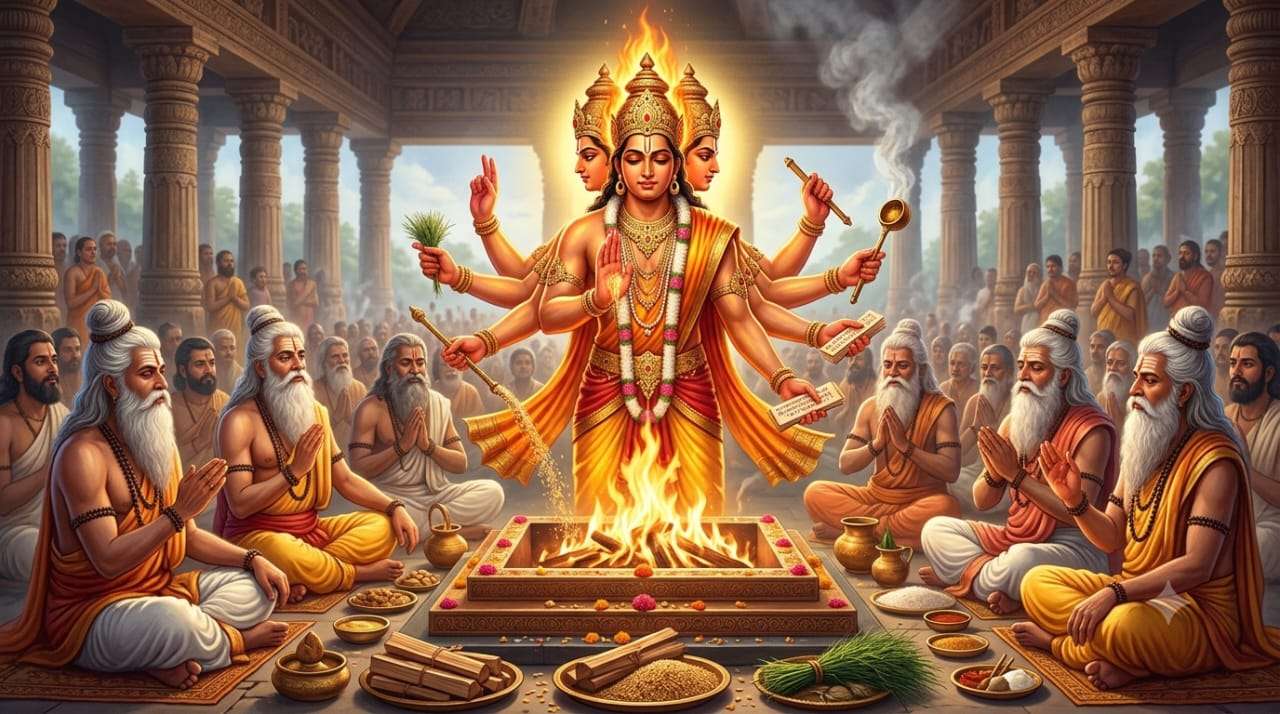
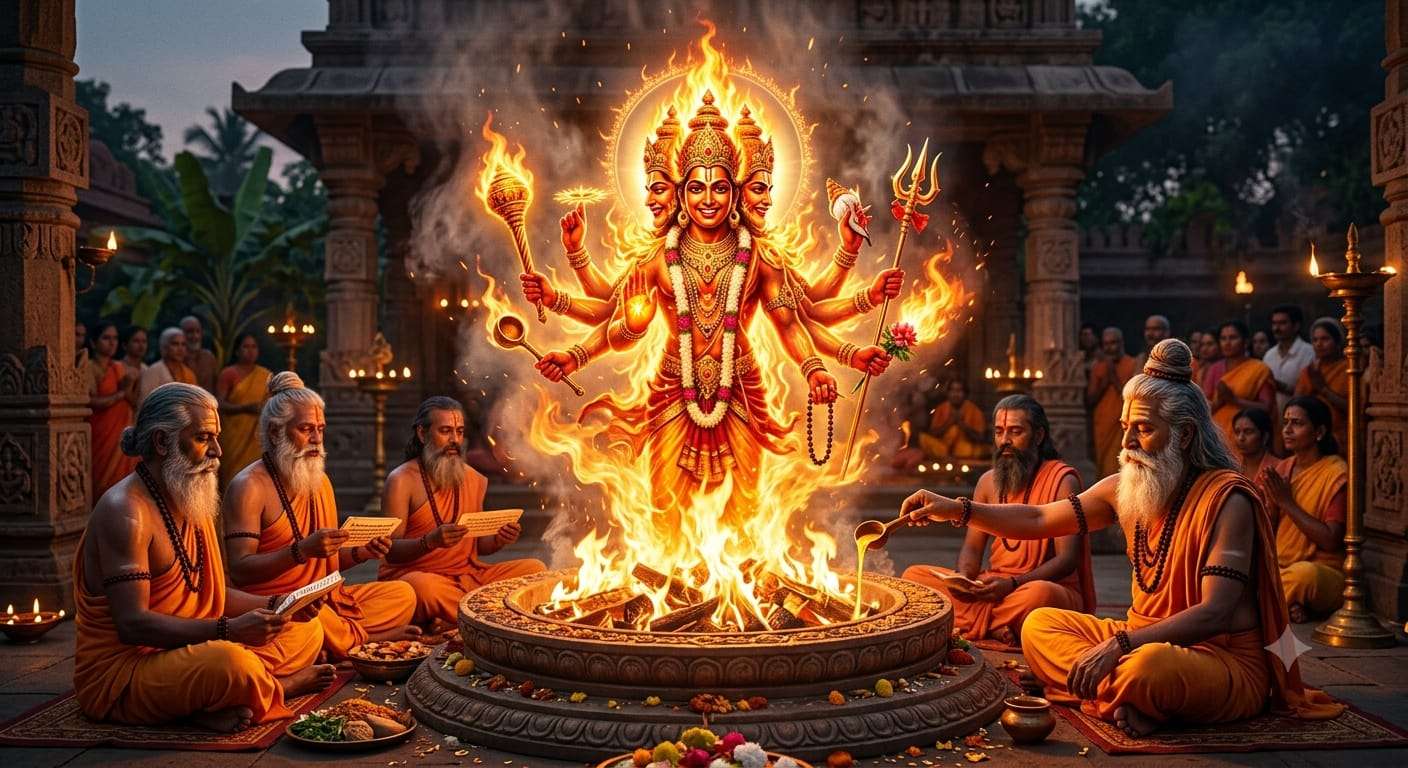
The sage Ṛṣabha, immersed in profound spiritual contemplation, invoked the sacred presence of Agni through the revered Anuṣṭup metre of the ancient Rigvedic hymns. In the Vedic vision, Agni is not merely the physical flame kindled upon the altar, but the luminous bridge between humanity and the celestial realms. The Athvaryu priests, disciplined custodians of sacrificial rites, prayed that Agni might approach unobstructed, accompanied by the radiant hosts of the gods. Their invocation arose from the understanding that divine communion becomes possible only through purity of intention, disciplined action, and the sacred fire that carries offerings from earth to heaven. The sanctified kuśa grass spread upon the sacrificial ground symbolised the purification of both environment and consciousness, preparing a worthy seat for the supreme priest among the gods.
The Vedic seers perceived the entire cosmos as governed by an eternal rhythm sustained through sacrifice, order, and reciprocal harmony. Agni was recognised as the central sustaining force within this universal order. Heaven and earth themselves were understood to function under his divine governance, for fire exists in every realm — within the sun that illumines the sky, within lightning that electrifies the atmosphere, within digestion that sustains life, and within consciousness that awakens intelligence. Even the gods were described as honouring Agni because he embodies transformative power. Nothing offered into Agni is lost; rather, it is refined and elevated into subtler existence. Thus, the intention of Agni can never become futile, for divine energy always moves toward fulfilment according to cosmic law.
Agni was extolled as brilliant, ever-awakened, and unfailing in discernment. He stood as the divine regulator of righteous conduct, guiding patrons and sacrificers toward disciplined living. In the spiritual sense, Agni represents the illuminating force of conscience that distinguishes truth from falsehood and duty from negligence. The yajña, therefore, was not merely an external ritual but a profound psychological and cosmic process. Every selfless action, every act of generosity, every pursuit of knowledge, and every restraint exercised for the welfare of others was regarded as an offering into the inner fire of Agni. In this manner, Agni became the sustainer of all meaningful action and the divine dispenser of the fruits arising from karma. Riches bestowed by Agni were not limited to material wealth alone, but included wisdom, vitality, social harmony, noble descendants, and inner serenity.
The sages prayed that Agni might grant secure dwellings and enduring prosperity for human society. In Vedic understanding, a comfortable home symbolised more than physical shelter; it represented a space where righteousness, hospitality, learning, and sacred duties flourished together. The vast riches of heaven and earth associated with Agni referred to the inexhaustible energies hidden within nature itself. The Vedic people observed that fire transforms raw matter into nourishment, ore into tools, darkness into visibility, and uncertainty into organised activity. This observation reflected an early scientific temperament, wherein natural forces were not worshipped through blind fear, but revered through careful understanding and disciplined utilisation. Fire became the foundation of cooking, metallurgy, medicine, protection, and ritual science, making Agni the very centre of civilisation and progress.
Agni was further praised as eternally fresh and radiant, continually inviting the gods into human consciousness. The priests inspired him through melodious recitations of Vedic hymns, recognising sound itself as a sacred vibration capable of harmonising the mind and environment. The chanting of mantras generated concentration, regulated breathing, refined memory, and cultivated collective unity among participants. In this sacred atmosphere, Agni became the ruler of the people not through domination, but through illumination and inspiration. He represented the disciplined energy that transforms communities from disorder into cultured existence. The flourishing of the Maruts, the dynamic deities associated with wind and atmospheric vitality, symbolised the harmonious interaction between fire and air, reflecting an intuitive awareness of natural principles governing energy and movement within the cosmos.
The worshippers humbly sought Agni’s protection while chanting the sacred mantras, acknowledging him as the foremost inviter of the gods and the guardian of spiritual endeavour. They prayed for abundant riches that would nourish future generations, strengthen society, and cultivate wisdom among humanity. In the Vedic worldview, prosperity devoid of wisdom was considered incomplete, while wisdom unsupported by material stability could not effectively sustain civilisation. Therefore, the blessings sought from Agni embraced both spiritual enlightenment and worldly welfare. Children flourishing under divine grace symbolised the continuity of culture, knowledge, ethics, and sacred tradition across generations.
Thus, the hymns to Agni reveal an extraordinary synthesis of spirituality, ethics, natural observation, and scientific insight. Fire was understood simultaneously as a divine principle, a psychological symbol, a cosmic energy, and a practical force sustaining human advancement. Through these hymns, the Vedic sages conveyed that true prosperity arises when humanity lives in harmony with cosmic law, disciplines the senses, purifies intention, and recognises the sacred intelligence permeating all existence. Agni therefore remains not only the flame upon the altar, but the eternal light of transformation dwelling within the universe and within the awakened human soul.