



Shri Mahalakshmi Temple nestled in the historic village of Keresanthe in Chikkamagaluru district, where Goddess Mahalakshmi is worshipped as Sri Keresanthe Lakkamma Devi. The temple is regarded by devotees as an important sacred centre of the Goddess and is associated with the traditional worship of Lakkamma Devi in this region.
Keresanthe has a strong connection with the Hoysala period and is known for the remains of an old temple settlement in its vicinity. Local tradition attributes the Mahalakshmi temple to the Hoysala period and specifically associates its construction with Queen Shantaladevi, wife of Hoysala ruler Vishnuvardhana, around 1117 CE. However, the exact date of the present temple is not firmly established by the surviving historical evidence, and the 1117 CE attribution should therefore be understood as a traditional account rather than a conclusively established date.
The presiding deity is Sri Mahalakshmi, worshipped locally as Keresanthe Lakkamma Devi. She is revered as an embodiment of Adi Shakti and is believed by devotees to bestow prosperity, protection and relief from difficulties. The deity is also known by names including Lakkamma and Ananda Lakkamma.
An important traditional belief associated with the shrine is that Keresanthe is the Moolasthana — the original sacred seat — of the Keresanthe Lakkamma tradition.
The present shrine has undergone changes over the centuries and does not retain all the architectural features of the old Hoysala structures that once existed in the area. Keresanthe, however, was historically an important settlement and its surrounding ruins contain remains of old temples displaying Hoysala architectural characteristics.
The nearby ruined temple complex includes shrines dedicated to Shiva, Vishnu and Surya, indicating that Keresanthe was once a significant religious centre. The surviving structures feature characteristic Hoysala workmanship, including intricately carved stone elements.
Keresanthe is one of the historically interesting but lesser-known Hoysala-period sites of Chikkamagaluru district. The name of Keresanthe also occurs among the places documented in the inscriptional studies of the old Kadur region, demonstrating that the village formed part of a historically significant landscape.
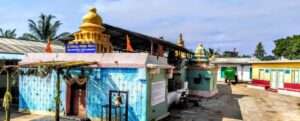
According to local tradition, the Mahalakshmi shrine has been associated with Queen Shantaladevi and the Hoysala royal period. Over generations, the Goddess came to be revered as Keresanthe Lakkamma, and the temple continues to remain an important centre of Devi worship.
Long ago, the sacred land of Keresanthe came to be regarded as a place blessed by the divine presence of Sri Mahalakshmi. Here, the Goddess was revered not merely as the consort of Lord Vishnu, but as Adi Shakti — the primordial divine power.
As generations passed, the people of Keresanthe experienced the divine presence of the Goddess in their midst and began worshipping her with deep devotion. She came to be lovingly known as Keresanthe Lakkamma, and her fame gradually spread beyond the village.
According to the traditional belief, the Goddess who had chosen Keresanthe as her sacred abode became the source of the Lakkamma tradition. Thus, Keresanthe came to be revered as the Moolasthana, or original sacred seat, of Keresanthe Lakkamma Devi. The shrine continues to be identified with both Sri Mahalakshmi and Sri Lakkamma Devi.
Devotees began approaching the Goddess with their prayers and difficulties, believing that Sri Lakkamma Devi, in her Mahalakshmi form, would listen to their sincere prayers and bless them with prosperity, protection, family welfare and well-being. Over generations, stories of the Goddess’s grace became part of the oral tradition of the region, strengthening the devotion of the people.
The most distinctive belief associated with Keresanthe is therefore its status as the Moolasthana of Keresanthe Lakkamma. For devotees, this makes the shrine more than simply a temple dedicated to Mahalakshmi—it is regarded as the sacred source of the Keresanthe Lakkamma tradition, where the divine presence of Adi Shakti has been worshipped through generations.
The major celebrations include Varalakshmi/Vara Mahalakshmi Puja, Shravana Masa special worship, Kartheeka Masa celebrations and the annual temple Jatra. These occasions attract devotees from Keresanthe and surrounding regions and are marked by special pujas and offerings to Sri Mahalakshmi Lakkamma Devi.


