



The other day, a friend called me to discuss the prevailing political climate in Telangana. His curiosity was straightforward: Does the Bharat Rashtra Samiti (BRS) still have a realistic chance of bouncing back to power?
My answer was equally straightforward: I remain doubtful.
He wanted to know why. I asked him a simple counter-question: What exactly will be the BRS’s electoral plank when it faces the people again? He had no convincing answer. And, to me, that itself explains much of the BRS’s present predicament.
I had expressed similar apprehensions even before the 2023 Assembly elections, when I argued that the BRS had perhaps reached the end of the road unless it reinvented itself. The irony is that the party’s biggest political mistake may have begun with its very reinvention.
Chandrashekar Rao founded the Telangana Rashtra Samithi (TRS), led the movement for separate statehood and ultimately achieved what generations of Telangana activists had fought for. He became the first Chief Minister of the new State. That was his historic political achievement.
But the moment the TRS was renamed the Bharat Rashtra Samiti, KCR effectively stepped outside the political comfort zone that had made him successful. The new name signalled a national ambition: the dream of transforming himself from Telangana’s undisputed regional leader into a national political player and, potentially, a kingmaker.
He held meetings with several regional leaders, including M.K. Stalin, Mamata Banerjee, Naveen Patnaik, H.D. Kumaraswamy, Uddhav Thackeray and Sharad Pawar. There was considerable talk of a Third Front as an alternative to both the BJP and Congress. But politics is not built on meetings and photographs. It requires numbers, organisation, ideological coherence and a leader whom disparate parties are willing to accept.
The Third Front never materialised.
Instead, the Congress succeeded in occupying much of the Opposition space through the INDIA alliance. The BRS consequently found itself in the unenviable position of having surrendered its regional identity without acquiring a meaningful national identity.
The electoral consequences were brutal.
The BRS lost power in Telangana in 2023 and subsequently performed poorly in the 2024 Lok Sabha elections. The message from the electorate was difficult to misunderstand: the people were not prepared to reward a party merely because it had changed its name and enlarged its ambitions.
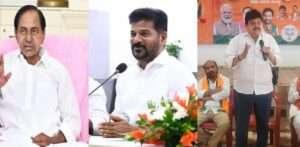
The BRS also appears to have underestimated another political reality. The emotional force of the Telangana statehood movement could not remain an electoral asset forever.
In 2014, the TRS benefited enormously from the sentiment surrounding the creation of Telangana. But once the State was born, the electorate naturally moved from sentiment to performance. Voters began asking questions about jobs, development, irrigation, welfare, infrastructure, corruption, accessibility and governance.
Statehood was an achievement. It was not a perpetual electoral certificate.
The BRS’s subsequent dependence on welfare politics, political symbolism and a highly personalised leadership model could not indefinitely substitute for a fresh political narrative.
And then came Revanth Reddy.
The Congress returned to power in 2023 by successfully converting anti-incumbency against the BRS into a political opportunity. Revanth Reddy, once associated with the Telugu Desam Party, crossed the political divide and eventually became the Congress’s Telangana chief and Chief Minister. His aggressive campaign style helped Congress project itself as the alternative to KCR.
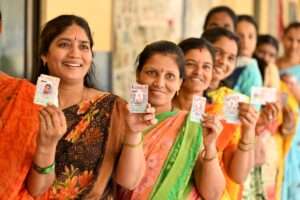
But Revanth now faces precisely the problem that eventually consumed KCR: expectations created during the campaign are colliding with the realities of governance.
Electoral promises create political liabilities when delivery falls short. And no Chief Minister, however powerful, can afford to forget that voters ultimately judge governments by results.
There is another lesson Revanth should learn from KCR. Do not mistake criticism for conspiracy and do not mistake difficult questions for hostility.
KCR’s increasingly combative relationship with sections of the media became symbolic of his later political isolation. Revanth should be careful not to travel down the same road. A government that becomes intolerant of scrutiny begins losing touch with public sentiment.
This is precisely where the BJP enters the picture.
The BJP’s performance in Telangana is no longer an experiment. Winning eight of the State’s 17 Lok Sabha seats in 2024 demonstrated that the party has acquired a formidable electoral base. More importantly, the BJP has shown that it can convert national issues, organisational strength and the Narendra Modi factor into votes even in a State with a powerful regional political history.
The change of leadership immediately before the Lok Sabha elections—from the combative Bandi Sanjay Kumar to G. Kishan Reddy—did not prevent the BJP from delivering a strong performance. That itself is significant. It demonstrates that the BJP’s strength is increasingly institutional rather than dependent entirely on one individual.
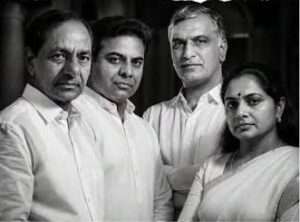
The BJP’s next challenge is obvious: convert parliamentary strength into Assembly power.
If it succeeds in building a broader social coalition, strengthening its grassroots organisation and putting forward a distinctly Telangana-focused development agenda, the State could gradually move towards a direct Congress-BJP contest.
That would be disastrous for the BRS.
For a party that once dominated Telangana politics, merely retaining a substantial number of seats is no longer enough. It must first convince voters that it has a reason to exist beyond KCR’s political legacy.
The BJP, meanwhile, has a fundamentally different proposition to offer: a national government led by Narendra Modi combined with a State government aligned with the Centre could, it can argue, give Telangana greater leverage in attracting investment, infrastructure projects, national institutions and development assistance.
This is not to suggest that voters automatically vote for a party because it is aligned with Delhi. They don’t. But the BJP has a powerful political argument to make: why maintain a confrontationist State-Centre relationship when Telangana can seek to maximise the benefits of cooperative federalism?
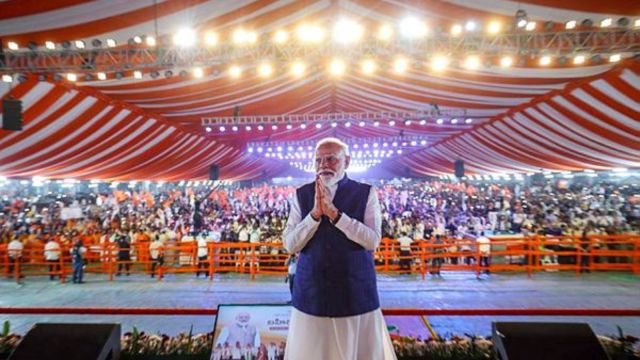
The political arithmetic could become even more interesting if major national reforms relating to delimitation and women’s representation move forward. Every such development has the potential to alter the political calculations of the States and parties.
And nationally, if the BJP strengthens its position in forthcoming Assembly contests, particularly in politically crucial States, the psychological advantage could become significant. Politics is as much about perception and momentum as it is about arithmetic.
That is why I told my friend that my assessment is not prophecy.
It is hard political analysis based on the direction in which Telangana politics is moving.
The BRS has to answer a painfully simple question: What is its new political proposition?
The Congress has to answer another: Can it deliver on the promises that brought it to power?
And the BJP has to answer the most important one: Can it convert its impressive Lok Sabha performance into a credible Assembly-level movement?
If the Congress disappoints, the BRS fails to reinvent itself and the BJP successfully consolidates its expanding base, Telangana could witness a dramatic political realignment.
The electorate may then have only two serious national alternatives before it.
And if forced to choose between a Congress struggling to fulfil its promises and a BJP offering the prospect of closer integration with a strong national government, I assess that the BJP will have the advantage.
That is not a prediction plucked from thin air.
It is what the political trends, electoral verdicts and changing voter preferences appear to be telling us.
My friend, who is himself nurturing political ambitions and contemplating entering electoral politics, may or may not agree.
But before entering politics, every aspirant should understand one immutable truth:
Political parties do not decide their destiny. Voters do.
And Telangana’s voters have already shown that they are perfectly capable of changing their minds—and changing governments.



Mostly agreeable. But something behind the curtain to which we are are not privy might be happening. This is the gut feeling of hardcore supporters of the BRS party. Or is BRS prepared to happily remain in Opposition for ever like communist parties which are almost obsolete. Is it heading towards that is surely a doubt time will give the answer.