



History has repeatedly demonstrated that power is never permanent. Those who believed themselves invincible, indispensable or above public scrutiny have invariably been humbled by the electorate. Democracies have a remarkable way of reminding political leaders that governments are temporary, but reputations endure. People may forget speeches, slogans and election rhetoric, but they rarely forget arrogance.
Telangana appears to be witnessing this political cycle all over again.
Not long ago, Bharat Rashtra Samithi (BRS) founder and former Chief Minister K. Chandrasekhar Rao was widely perceived as the undisputed political strongman of the state. Having played a pivotal role in the Telangana movement, he gradually began projecting himself as the sole architect of statehood. Over time, the perception gained ground that governance was becoming increasingly centralised around one family, while criticism was brushed aside with an air of political invincibility.
The result was visible in the 2023 Assembly elections.
The electorate demonstrated that even the tallest political leaders are accountable to public sentiment. The BRS not only lost power but also found itself struggling to reconnect with the very people who had once overwhelmingly backed it. Its transformation from the Telangana Rashtra Samithi (TRS) into the Bharat Rashtra Samithi (BRS), with national ambitions, arguably diluted its regional identity at a time when voters expected greater focus on state governance.
Yet, if the Congress believed the people’s verdict was an endorsement of its governance model rather than a rejection of the incumbent, it may have misunderstood the electorate.
The Congress government led by Chief Minister A. Revanth Reddy is approaching the halfway mark of its tenure. However, instead of governance dominating the public discourse, Telangana finds itself consumed by relentless political confrontation between the ruling Congress and the opposition BRS.
Every passing day appears to bring another exchange of accusations, another press conference, another political challenge, another social media campaign.
Meanwhile, governance increasingly appears to have slipped into the background.
The irrigation sector has become the latest battlefield.
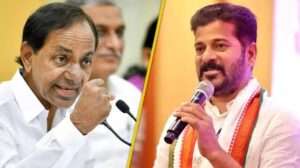
The Congress government has declined to store water in the Medigadda, Annaram and Sundilla barrages, citing safety concerns and recommendations of the National Dam Safety Authority (NDSA) following structural damage. The BRS, on the other hand, accuses the government of deliberately keeping critical pump houses such as Kannepalli non-operational merely to politically discredit projects executed during its tenure.
The Congress blames the BRS for constructing defective infrastructure.
The BRS blames the Congress for weaponising governance for political vendetta.
Lost in this political slugfest are the farmers.
As politicians exchange accusations over engineering failures and administrative responsibility, cultivators complain that standing crops are drying up, irrigation remains uncertain, financial assistance under Rythu Bharosa has been delayed, paddy procurement issues continue to haunt them and loan waiver promises remain only partially fulfilled.
The political class appears engrossed in PowerPoint presentations, counter-presentations, media briefings and statewide protest tours.
The farmer, however, continues to wait for water rather than words.
Equally disturbing is the declining quality of political discourse.
Recent remarks made by the Chief Minister against BRS leaders over the irrigation crisis generated widespread controversy, inviting criticism even beyond political circles. Strong political disagreement is integral to democracy. Personal invective and inflammatory rhetoric are not. Such exchanges lower the dignity of constitutional offices and further distract the administration from addressing pressing public concerns.
Ironically, the Congress now finds itself displaying some of the very traits it once accused the BRS of exhibiting—political arrogance, excessive centralisation of messaging and the impression that electoral victory amounts to a permanent mandate.
Reports that the Congress high command has advised Telangana ministers to spend less time attacking political opponents and more time attending to their respective portfolios only reinforce the growing perception that governance risks taking a back seat to perpetual political campaigning.
Politics is inevitable in a democracy.
But governance is non-negotiable.
Governments are elected to solve problems—not merely to win arguments.
The electorate that voted out one government over perceived arrogance is unlikely to indefinitely tolerate similar tendencies in its successor. Telangana’s voters have already demonstrated that no political party enjoys permanent ownership over public trust.
Power belongs to the people.
Governments merely hold it in trust for five years.
The sooner Telangana’s political establishment—both the ruling Congress and the opposition BRS—rediscovers that fundamental democratic principle, the sooner governance may once again reclaim centre stage.


An article of significant value