Special Correspondent
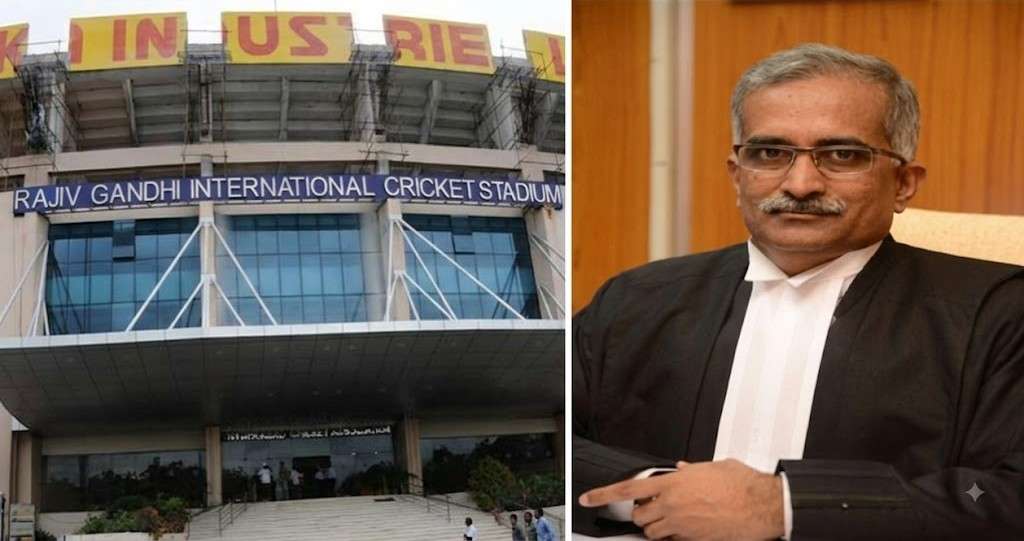
For an association that has spent more time inside courtrooms than on cricket grounds over the past decade, the Hyderabad Cricket Association (HCA) has once again found itself at the centre of yet another avoidable controversy.
An official circular, accessed by this e-paper, has triggered fresh concern among affiliated clubs and cricket administrators, raising uncomfortable questions about transparency, decision-making and whether stakeholders are being consulted before major policy changes are introduced.
The circular for the 2026-27 season proposes that HCA’s A, B and C Division League Championships be conducted across one-day, two-day and three-day formats. It also directs eight District Cricket Associations (DCAs) to participate in the C Division League Championship after completing player registrations in accordance with HCA rules.
At first glance, the move appears aimed at strengthening competitive cricket. But a closer look raises several fundamental questions.
Why was such a significant structural change introduced without consulting affiliated clubs? Was the proposal discussed threadbare and approved by the elected Apex Council, or was it merely issued as an administrative directive? If objections were indeed raised later, forcing the proposal to be kept on hold, it only reinforces the perception that adequate due diligence may not have preceded the circular.
Club representatives point out that HCA presently maintains separate fee structures for one-day, two-day and three-day competitions. Combining formats has implications for registrations, scheduling, venues, umpiring, finances and player availability. Such far-reaching changes deserve discussion with the clubs that organise and participate in these competitions, not simply a circular announcing them.
Equally puzzling is the decision to include only eight District Cricket Associations—Adilabad, Mahabubnagar, Nalgonda, Medak, Nizamabad, Karimnagar, Warangal and Khammam.
Telangana today has far more districts than those recognised by HCA. If only eight districts continue to enjoy affiliation, what is the basis for excluding the others? Have the HCA bye-laws been amended to reflect the State’s present administrative reality? If not, why has this anomaly continued for years?
The functioning of district cricket administration also deserves closer scrutiny. Are district associations regularly audited? Is the financial assistance they receive monitored to ensure it promotes grassroots cricket? How are office-bearers continuing in some district bodies for years together, and do they conform to the governance principles that HCA itself is expected to follow? Most importantly, are these district associations conducting sufficient intra-district and inter-district tournaments to genuinely develop cricket outside Hyderabad?
These are legitimate governance questions that deserve transparent answers.
The issue assumes greater significance because district cricket administration has remained one of HCA’s most contentious subjects. Former office-bearers have repeatedly questioned the manner in which certain district associations were granted recognition and the criteria adopted for extending annual financial assistance. Such issues cannot remain matters of speculation indefinitely; they require institutional transparency.
Adding another layer to the controversy are documents relating to representations reportedly made before the Bombay High Court concerning district cricket within HCA. If those submissions influenced subsequent administrative decisions, stakeholders are entitled to know whether they reflected duly authorised resolutions and accurately represented HCA’s official position.
The larger concern extends well beyond one circular.
The HCA continues to battle allegations of factionalism, repeated litigation, governance disputes and administrative uncertainty. Every fresh controversy further erodes confidence among clubs, players, coaches and parents. Instead of debating talent identification, infrastructure, women’s cricket and grassroots development, Hyderabad cricket repeatedly finds itself consumed by questions of governance.
The Board of Control for Cricket in India (BCCI) too cannot remain an indifferent spectator forever. While the autonomy of state associations deserves respect, recurring administrative controversies inevitably raise questions about whether stronger institutional oversight has become necessary to safeguard the game’s interests.
Cricket administration cannot function through circulars alone. It requires consultation, transparency and accountability.
Unless HCA begins explaining not only what decisions are taken but also how and why they are taken, governance will continue to overshadow the game itself.
If Hyderabad cricket is to regain its credibility, governance must become as transparent as the game itself. Circulars cannot substitute consultation, nor can administrative opacity inspire confidence. Until HCA embraces accountability at every level, every reform—however well-intentioned—will continue to invite suspicion rather than support.