


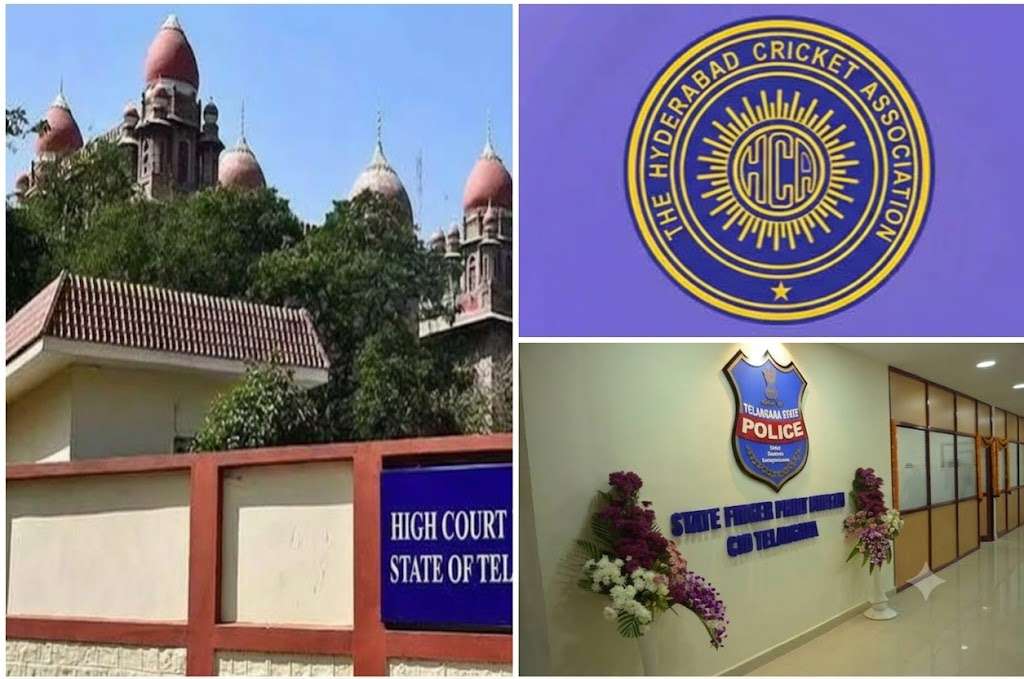
Nine years, five committees, endless allegations — and accountability still missing
Special Correspondent
There comes a point when “governance failure” becomes too polite a description. Hyderabad Cricket Association has crossed that point a long time ago.
What is unfolding at the HCA is no longer merely an unpleasant internal dispute between rival factions, competing office-bearers or disgruntled clubs. It is a deeply disturbing institutional saga in which judicial interventions, committees headed by retired judges, criminal investigations, anti-corruption proceedings, allegations of financial irregularities and even a money-laundering investigation have accumulated over the years — while accountability continues to move at a glacial pace.
And now the Telangana High Court has effectively said what Hyderabad cricket’s followers have been watching for years: the association is in a mess.
That is not the description of a disgruntled club member. It is the observation of the High Court.
In its April 24, 2026 judgment in the Safilguda Cricket Club case, Justice Nagesh Bheemapaka recorded a long and troubled history of judicial intervention, repeated appointments of administrators and supervisory authorities, reports by eminent retired judges and the continuing resurfacing of disputes over governance, transparency and financial discipline. The Court went further, referring to the “pathetic circumstances” surrounding the administration and activities of the HCA and the “kind of the mess” in which the association finds itself.
One would imagine that after such an indictment, somebody would have to answer.
But that is precisely where the HCA story becomes almost surreal.
Nine years. Five committees. Multiple investigations. And accountability still seems to be waiting in the pavilion.
Since 2017, Hyderabad cricket has repeatedly been subjected to judicial supervision. Justice Anil R. Dave and Justice G.V. Seethapathy were appointed administrators by the Telangana High Court. The Supreme Court later appointed the Justice Nisar Ahmad Kakru Committee and subsequently the Justice L. Nageswara Rao Single Member Committee. The Telangana High Court then brought in Justice P. Naveen Rao to supervise the association.
Reports were produced. Irregularities were flagged. Complaints multiplied. Disputes continued. Allegations of financial impropriety, election manipulation, selection-related wrongdoing, lack of transparency and administrative misconduct kept returning.
Yet the cycle never seems to end.
A committee comes.
A committee reports.
A controversy erupts.
A case is filed.
Another committee is appointed.
And the game continues.
Except it is not really the game that is being protected. It is the system around the game.
That is the scandal.

The High Court’s latest intervention makes the point brutally clear. The Court said the continued resort by stakeholders to judicial forums itself reflected a deficit of confidence that routine assurances had failed to bridge. It found that reports of Justice Naveen Rao reflected a disorganised administrative system, obstruction in his functioning and a non-cooperative approach by sections of the Apex Council. The Court also observed that certain vested interests were affecting the functioning of the association.
This is not a minor administrative disagreement. This is an institution repeatedly requiring judicial handholding simply to perform functions that a properly governed cricket association should perform on its own.
Five interventions. Still no institutional cure.
What does that tell us?
Either every committee appointed over these years was spectacularly incapable of identifying the problem — which is difficult to believe given the calibre of the people involved — or the problem is not the absence of reports.
The problem is the absence of consequences.
That distinction is crucial.
Reports are meaningless if they become historical documents rather than instruments of accountability. Investigations are meaningless if they never reach their logical conclusion. Committees are meaningless if their findings can be buried beneath another round of litigation, factional warfare and procedural manoeuvring.
A cricket association cannot be run on the principle that everyone is innocent forever because every investigation is still “ongoing”.
Nor can it claim reform merely because another committee has been appointed.
The real scoreboard is not on the cricket field. It is the accountability scoreboard. And it reads: nine years, countless allegations, remarkably little finality.
The latest High Court order is particularly damning because the Court did not merely wash its hands of the matter. It refused to leave the association to its own devices.
Instead, it directed the Telangana Director General of Police to constitute a Special Investigation Team of the CB-CID, headed by an Additional Commissioner-rank IPS officer, to investigate the administrative, managerial and financial affairs of the HCA. The SIT has been empowered to examine material contained in earlier reports and collect further evidence.
Think about that for a moment.
After years of committees, the High Court has had to call in another investigating mechanism to examine what earlier mechanisms had already examined.
That is not reform.
That is institutional exhaustion.
And the financial questions are not trivial.
Earlier forensic scrutiny had identified irregularities, including a reported ₹2.68 crore discrepancy in a sample review covering 2015-17. The court record also refers to financial concerns of considerable magnitude raised by earlier administrators and reports.
There have also been investigations into alleged corruption in player selection, including the widely reported allegation involving a ₹9 lakh bribe demand in connection with selection of a player for a state team. That allegation remains a matter for the investigating authorities and courts to establish, but the very existence of such cases should have been enough to trigger an institutional reckoning.
Instead, Hyderabad cricket has perfected another art altogether: surviving scandal.
And then there is the money trail.
The High Court record notes that the Enforcement Directorate had initiated proceedings under the Prevention of Money Laundering Act on the basis of FIRs and investigation reports relating to alleged irregularities in the utilisation of HCA funds.
That should make every serious cricket administrator sit up.
A money-laundering investigation is not a neighbourhood quarrel. It is a statutory investigation into the suspected proceeds and movement of crime-related funds. Whether anyone is ultimately guilty is for the competent agencies and courts to establish. But once such an investigation exists, pretending that the HCA’s problems are merely “internal issues” becomes laughable.
The association cannot demand autonomy when autonomy is convenient and judicial protection when its administration collapses.
Nor can the BCCI continue to behave as though an affiliated state association is somebody else’s headache. The HCA may be administratively autonomous, but it operates within Indian cricket’s institutional ecosystem and its failures inevitably damage the credibility of the game.
The BCCI’s responsibility cannot end with sending observers, withholding funds, appointing committees or waiting for another court order.
If an affiliated association repeatedly reaches the High Court, repeatedly attracts allegations of financial and administrative wrongdoing and repeatedly requires judicial supervision, the parent body has a responsibility to ask the most uncomfortable question of all:
Why has this been allowed to continue for so long?
And the HCA’s own office-bearers must answer an even more uncomfortable question:
Why should anyone trust an administration that apparently requires a retired judge to supervise it before it can function properly?
The Court has now continued Justice P. Naveen Rao’s supervision precisely because, in the words of the judgment, the association is in a “mess” and there is excessive involvement of vested interests. The Court has empowered the Single Member Committee to oversee cricketing affairs, administration and structural reforms while the criminal investigation proceeds.
That is an extraordinary indictment of an elected cricket administration.
An elected body is supposed to demonstrate that it can govern.
The HCA has instead demonstrated that it needs to be governed.
There is an even bigger tragedy here.
While administrators fight over positions, clubs fight over legitimacy and office-bearers fight over control, it is the young cricketer who gets forgotten.
The player who spends years training for a place in the state team does not care which faction controls the Apex Council. He wants a transparent selection process.
The parent who spends money on coaching does not care which committee wins the latest legal battle. He wants to know that talent, not influence, determines selection.
The club that invests in developing players does not want another circular. It wants a credible system.
The people of Telangana do not need another committee.
They need consequences.
And that is where the HCA’s record becomes impossible to defend.
You cannot repeatedly claim that everything is under control when the High Court repeatedly has to intervene.
You cannot boast of reforms when earlier reports remain unresolved.
You cannot invoke autonomy while depending on judicial supervision.
You cannot invoke cricket’s prestige while allowing governance controversies to repeatedly overshadow the sport.
And you certainly cannot expect people to believe that everything is normal when the state’s highest court has described the administration in such extraordinarily harsh terms.
Enough of committees. Enough of excuses. Enough of factional theatrics.
The time has come for every investigating agency involved to demonstrate that these investigations actually mean something.
If allegations are false, establish that conclusively.
If allegations are substantiated, prosecute those responsible.
If office-bearers have violated the law, let the law take its course.
If financial wrongdoing is established, recover the money.
If selection was manipulated, punish those responsible.
If conflicts of interest existed, expose them.
If records were suppressed or governance obstructed, establish responsibility.
And if nobody is guilty, say so publicly and close the cases.
What is unacceptable is the endless grey zone in which allegations remain alive for years, investigations remain “underway”, committees keep changing and the same institutional ecosystem continues to function.
That is not justice.
That is not governance.
And it certainly is not cricket administration.
The Telangana High Court has done what it can within the law. It has ordered a fresh investigation, continued judicial supervision and demanded structural reform. It has explicitly stated that the investigation must determine guilt or innocence in accordance with law.
Now the ball is firmly in the court of the investigating agencies, the HCA leadership and the BCCI.
They cannot keep passing it around.
Hyderabad cricket has spent nearly a decade producing committees, reports, allegations, counter-allegations and litigation.
It is time it produced something far more important: accountability.
Because the most embarrassing statistic in Hyderabad cricket today is not a batting average, a bowling figure or a championship record.
It is this:
Nine years of scrutiny — and still no convincing end to the story.
That is not a governance crisis anymore.
That is a governance failure.
And everyone who has held a position of authority while this mess has continued — the office-bearers, the administrators, the regulators and the institutions that repeatedly watched from the sidelines — needs to stop pretending that this is somebody else’s problem.
The players deserve better.
Hyderabad cricket deserves better.
And frankly, after nine years, the public deserves answers.
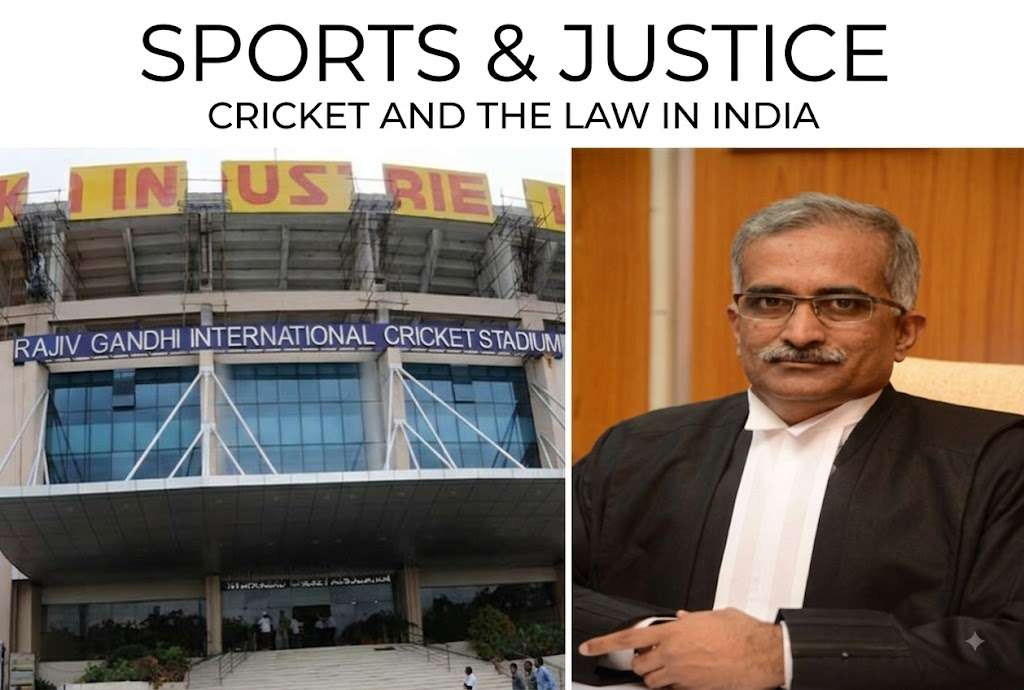



HCA Administration – A Case of Governance Failure
The situation in HCA today is nothing short of a governance failure as you have rightly mentioned.
A few questions that need answers:
1. Why is BCCI not taking strong action against HCA for repeated wrongdoings? Why are funds, except for BCCI matches, still being released to HCA? Restricting funds would at least prevent further scope for manipulation and financial irregularities.
2. Why can’t the Hon’ble Court suggest to BCCI that qualified cricket administrators be appointed to run HCA, instead of appointing retired judges who have no background in sports administration or cricket?
3. Has HCA’s mismanagement turned into an opportunity to rehabilitate retired judges with huge salary packages?
4. Are these court-appointed officials actually following the bye-laws of the association? Even Justice L. Nageshwar Rao in his final report flagged the excess staff in HCA. Yet the court-appointed committee is bringing in its own people instead of utilizing existing staff, thereby adding to the liability.
5. This is the core issue. We cannot have both an Elected Apex Council and a Court-appointed Committee running HCA simultaneously. This dual structure is the root cause of conflict, ego clashes, and administrative paralysis.
HCA has become everyone’s “baby” to take advantage of. It’s time the members decide what course we want if HCA has to get back on track.
Either restore full powers to an elected Apex Council that is accountable to members,
OR
Let a single, empowered Court-appointed Committee run it with a clear mandate and timeline.
This hybrid model is killing HCA.
The members deserve clarity. Cricket deserves better.
1. On BCCI stepping in
BCCI has already told the Court, in as many words, that it cannot take over administration of a state association — do that once and every troubled association in the country lines up for the same intervention, and BCCI stops being a cricket board and becomes a full-time crisis-management agency for 38 units. What BCCI can do, and has signalled it will consider, is restricting funds and withholding recognition. But think through what that actually means on the ground: it doesn’t punish the twelve families running clubs, it punishes the Under-19 boy waiting for his match fee, the groundstaff whose salary depends on that fund flow, the district player who finally has a pathway because of the academy plan. Nobody serious about Telangana cricket should be asking for a funding freeze as the answer. The problem isn’t that BCCI is too passive — it’s that we want the consequences to land on the people responsible, not on the sport.
2. On appointing “qualified cricket administrators” instead of retired judges
We’ve tried that. HCA has been run by international cricketers before, and by most honest accounts it was one of the most disastrous periods in the association’s history — not because former players lack cricketing knowledge, but because cricketing credibility and administrative integrity are two entirely different skills, and HCA’s problem has never been a shortage of cricket knowledge in the room. The retired judges brought in since have, on balance, done a reasonably competent job of the actual administration. The real question isn’t whether a judge understands off-spin — it’s why decisions the members themselves passed at the AGM never got implemented by their own elected Apex Council. Members voted for reforms and then let their own representatives quietly shelve them, year after year. Before we ask for a different kind of outsider, we should ask why insiders couldn’t be trusted to execute what the membership itself approved.
3. On judges “rehabilitating” through HCA salaries
No one can read minds, and this deserves to be said plainly rather than insinuated. What can be said with confidence is that these are people with reputations to protect, and the results on the ground back that up — TG20 running successfully, something the membership itself was never able to get off the ground in years of trying; leagues and selections happening on a reasonably transparent basis after years of disruption. If the motive were simply a comfortable posting, cricket wouldn’t actually be functioning better than it was.
4. On staff and bye-laws
This is a fair and specific criticism, and it deserves a direct answer rather than deflection. Every administrator brings people he trusts — that’s not unique to this SMC, and most of the existing team hasn’t been swept aside. But the sharper question is: after Justice Nageswara Rao’s report explicitly flagged excess staff, what did the Apex Council that followed actually do about it? What happened to the other points the membership unanimously passed at the 86th AGM? Nothing. The bye-laws are incomplete and overdue for a full overhaul — ideally brought in line with the BCCI constitution — but that overhaul has to start with the members demanding it of their own body first. We don’t get to hold outside administrators to a standard we’ve never held our own elected leadership to.
5. On the “dual structure”
This is the point worth reading most carefully, because the premise is wrong. There is no dual structure. Read the order: the Apex Council is required to work under the guidance and approval of the SMC. That is not two authorities competing — it is one clear chain of command, and the office-bearers currently treating it as optional are the ones inviting contempt, not the Court. If they genuinely believed the SMC’s continuation was wrong, the honest path was to resign in protest and make that case publicly. Instead, the pattern has been to draw IPL privileges and every benefit of office while quietly obstructing the very body they’re required to answer to.
And it’s worth asking who actually asked for this arrangement in the first place. The courts didn’t wake up one day and decide to run Telangana cricket — they stepped in because grievances about corruption, fixed elections and financial irregularity kept landing on their desk, filed by members of this very association. If cricket is now undisturbed, selections are reasonable, and we’re not back to the days of a 40-player Ranji rotation and leagues suspended mid-season, that is a direct result of the SMC structure the membership itself set in motion by repeatedly approaching the courts. We don’t get to invite that intervention and then call it the problem.
Where this actually leaves us
The real diagnosis isn’t a governance model — it’s selective outrage. The AGM has functioned for years as a breakfast-and-lunch formality where an agenda set by someone else gets nodded through, and the same membership that stays silent through ten years of drift is quick to demand structural change the moment enforcement starts to bite. HCA doesn’t need a members-versus-committee referendum. It needs its own members to start showing up, asking hard questions of their own representatives, and holding them accountable at the ballot box — not just when a judge is watching. Until that happens, no administrative model, elected or appointed, will fix what is fundamentally a culture of convenience.
From the response of Mr Naidu, it looks like he hasn’t understood my comments fully and his response seems to have been dictated by someone who is holding a key position in HCA now. ..it doesn’t matter