



Hoysaleshwara and Shantaleshwara Temples are located at Halebidu in Hassan district, Karnataka. Halebidu, formerly known as Dwarasamudra, was the illustrious capital of the Hoysala Empire and is one of the finest centres of medieval Indian temple architecture. Today, the temple forms part of the UNESCO World Heritage Site “Sacred Ensembles of the Hoysalas.”
The temple was commissioned in 1121 CE during the reign of Hoysala King Vishnuvardhana by his trusted commander and wealthy officer, Ketamalla. Construction continued for several decades, making the temple approximately 900 years old. It is regarded as one of the largest and most magnificent Shiva temples built by the Hoysalas.
The temple is dedicated to Lord Shiva and consists of two sanctums. The southern sanctum enshrines Lord Hoysaleshwara, while the northern sanctum houses Lord Shantaleshwara. Each sanctum contains a sacred Shiva Linga with a large monolithic Nandi seated directly opposite. The temple also has a shrine dedicated to Surya, the Sun God, and its sculptural panels depict Lord Ganesha, Lord Vishnu in various forms, Goddess Durga, Lord Narasimha, Lord Krishna, Lord Brahma and many other deities from the Hindu tradition.
Built entirely from chloritic schist (soapstone), the temple is an outstanding masterpiece of Hoysala architecture. It stands on a raised star-shaped platform and is covered with thousands of intricate carvings. The exterior walls depict scenes from the Ramayana, Mahabharata, Bhagavata Purana and Shiva Purana, along with celestial beings, animals, dancers and decorative floral motifs. The exquisitely carved pillars, ceilings, doorways and the two massive Nandi sculptures reflect the extraordinary craftsmanship of Hoysala artisans, making the temple one of the greatest achievements of medieval Indian stone architecture.
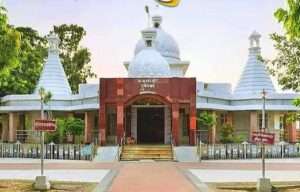
During the 12th century, Dwarasamudra flourished as the capital of the Hoysala Empire under King Vishnuvardhana. The temple was commissioned by Ketamalla as an offering of devotion to Lord Shiva and as a symbol of the empire’s prosperity and artistic excellence. In the early 14th century, the city faced repeated invasions by the armies of the Delhi Sultanate, resulting in widespread destruction. Although the temple suffered damage and its original towers no longer survive, its richly carved walls and sanctums remain remarkably well preserved, standing today as a testament to the glory of the Hoysala dynasty.
During the glorious reign of the Hoysala Empire, King Vishnuvardhana and his queen, the renowned dancer and devoted Shaiva, Queen Shantala Devi, dedicated their lives to the service of Dharma and the worship of Lord Shiva. Wishing to create a temple that would inspire generations of devotees, they envisioned a shrine unlike any other in their kingdom.
Instead of commemorating a miraculous event, they chose to express their devotion through sacred art and architecture. Two sanctums were built side by side, one dedicated to Lord Hoysaleshwara and the other to Lord Shantaleshwara, symbolising the king and queen offering themselves, their kingdom and their unwavering faith at the feet of Lord Shiva.
Master sculptors then transformed blocks of soapstone into a divine scripture in stone. Every wall became a living canvas portraying stories from the Ramayana, Mahabharata, Bhagavata Purana, Shiva Purana and other sacred texts, enabling devotees to experience the teachings of Sanatana Dharma simply by circumambulating the temple. Because of this, the temple is often revered as a “Stone Purana,” where every sculpture narrates a spiritual lesson.
Though Dwarasamudra was devastated during the invasions of the 14th century, the temple withstood the test of time. Even today, devotees believe that sincere worship of Lord Hoysaleshwara and Lord Shantaleshwara bestows inner strength, harmony, wisdom and the divine grace of Lord Shiva.
Maha Shivaratri is the most important festival celebrated with special Abhishekams, Rudrabhishekam, night-long prayers and devotional programmes. Pradosham is observed twice every month with special worship of Lord Shiva. Kartika Deepotsava and Mondays during the holy month of Shravana are also celebrated with great devotion, drawing pilgrims from across Karnataka and other parts of India.


