Upadhyayula Lakshman Rao
In the resonant cadence of the Tristubh meter, the sage Agastya raises a solemn invocation to Indra, the supreme lord among the gods and the sovereign ruler of the cosmic expanse. Indra is extolled as the guardian of humankind, the sustainer of the virtuous, and the majestic king whose authority pervades heaven and earth alike. His presence embodies both regal splendor and benevolent strength, as he uplifts those who seek refuge and bestows prosperity upon the deserving. He is the granter of true wealth—not merely material abundance, but the deeper riches of vitality, courage, and divine favor—and his radiance surpasses all other lights, illuminating the pathways of existence with celestial brilliance.
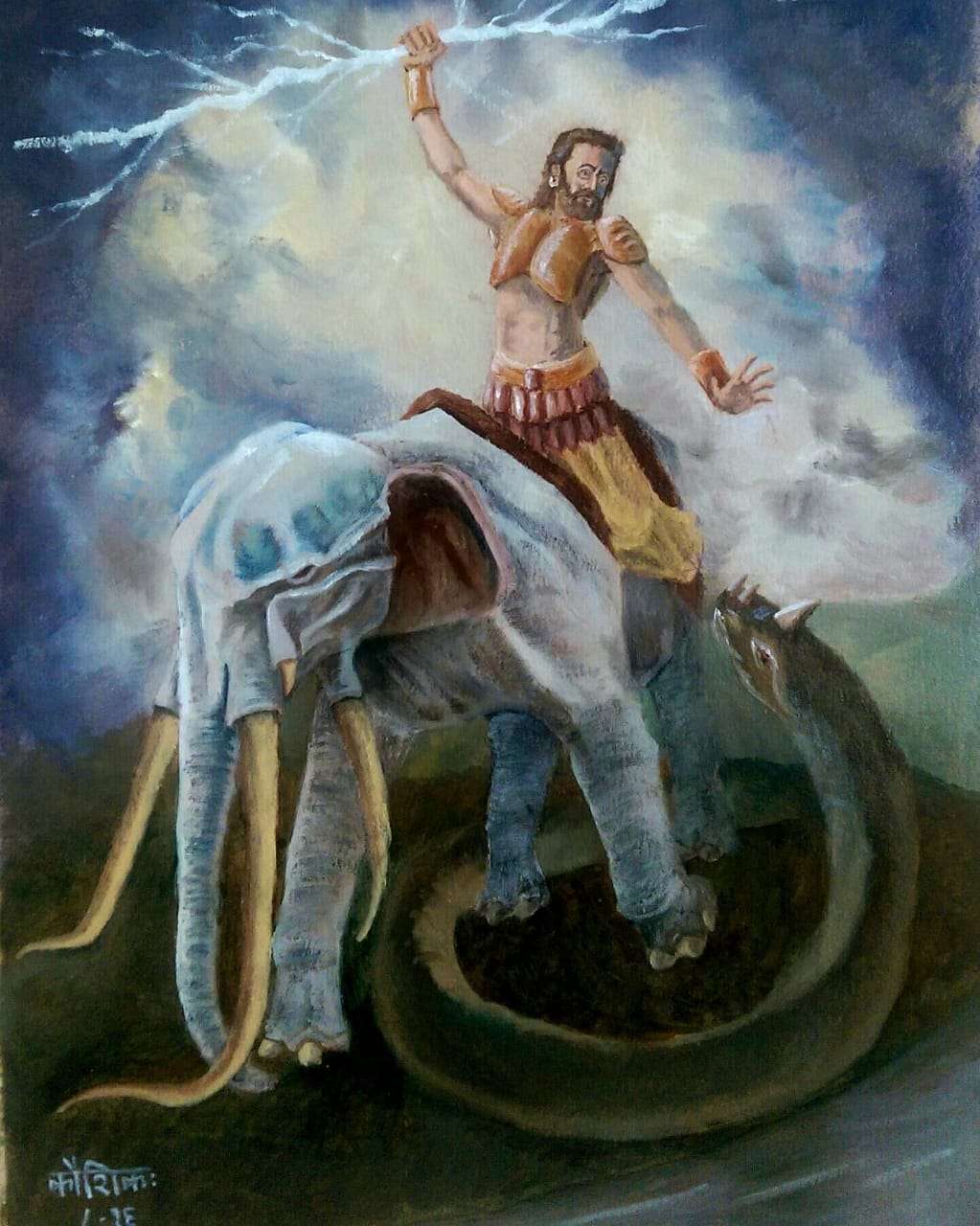
The hymn recalls the formidable power of Indra, who in the span of a single cycle shattered seven fortified dwellings of darkness, symbolizing the destruction of ignorance and obstruction. At moments of peril, when fear gripped the hearts of beings, he offered solace through words of assurance and restored harmony by releasing the life-giving waters. In one of his most celebrated deeds, he slew the mighty serpent-demon Vritra for the sake of the youthful king Purukutsa, thereby liberating the rivers and reestablishing the rhythm of nature. This act signifies the eternal triumph of order over chaos, a central motif in Vedic thought.
Indra is envisioned as the tireless warrior who ventures into the realms of demonic forces, intent on restoring balance through conquest. Surrounded by his divine retinue, he ascends to the celestial regions, safeguarding the sacred fire, Agni, ensuring that ritual order is maintained within the homes of the faithful. His vigilance preserves the continuity of sacred rites, linking the mortal and divine realms through offerings and devotion.
The wielder of the thunderbolt, the formidable Vajra, inspires awe even among his adversaries. The enemies, struck with fear, come to acknowledge his supremacy. Under his command, the clouds gather in harmonious formation, and with the Vajra raised in his hand, he releases the rains that nourish the earth. His chariot, drawn by the swift steeds known as the Hari horses, moves with the speed of the wind, carrying his might across the skies. At such moments, even the sun aligns its course, as if in reverence, directing its chariot toward the unfolding of Indra’s divine action.
In his grace, Indra attends to the devotion of sages such as Kutsa, responding to their hymns with acts of protection and strength. He destroys those who oppose the sacred rites and withholds his favor from those who refuse to give or honor the divine order. Yet to those who offer oblations with sincerity and seek refuge under his protection, he grants blessings of progeny, sustenance, and enduring well-being. His justice is thus both discerning and compassionate, rooted in the principle of reciprocity between gods and mortals.
The hymn further celebrates Indra as the sustainer of nourishment and the liberator of the earth from the afflictions imposed by demonic forces. By awakening the world from the inertia of prolonged darkness, he establishes habitable realms and bestows lands and settlements upon humanity, acts that evoke wonder and gratitude. His slaying of hostile beings such as Kuyavachu for the protection of kings like Duryoni reflects his role as a divine ally of righteous leadership.
The gathered sages continually recount his ancient heroic deeds, praising his destruction of the fortified cities of adversaries and his decisive victories over those who oppose the gods. His power causes the enemies of truth to tremble, and his presence ensures that the forces aligned against cosmic harmony are subdued. Like a mighty and ever-flowing river, Indra releases streams of abundance upon the earth, filling the oceans and nurturing all life. In his wisdom, he extends his protection to tribes such as Yadu and Turvasu, guiding them under his sovereign rule.
Thus, Indra stands eternally at the summit of divine authority, the vigilant protector of the people and the source of strength for their armies. He grants food, vitality, and long life, ensuring the continuity of existence and the flourishing of society. This hymn, rich in devotion and reverence, portrays him not merely as a warrior god, but as the sustaining force behind cosmic order, the bridge between the human and the divine, and the ever-watchful guardian of righteousness.