Upadhyayula Lakshman Rao
In the solemn cadence of the Trishtubh metre, the sage invokes the sovereign of the luminous realms, shaping sound into a bridge between the human and the divine. The chant arises not merely as utterance but as vibration, carried upon the disciplined breath of the priest who, like the udgātṛ, releases melodious strains akin to Sāman harmonies. These tones ascend through the layered expanse of the atmosphere, diffusing across the vault of the sky, embodying both devotion and intention. In this act, prayer becomes a dynamic force—one that nurtures growth, refines consciousness, and aspires toward the attainment of celestial dwelling. Thus, the hymns themselves are revered as living currents of sacred energy.
Indra, lord of the heavens, is contemplated through symbols drawn from the natural world. Like the cow that yields sustaining milk without awareness of sin, he nourishes existence with impartial grace. Even when resting upon dry grass, the cow remains a source of life; likewise, Indra sustains the worlds through unseen abundance. The ritualist, the patron, and the priest together form a triadic unity, each contributing to the sacred order. Oblations, chants, and intention converge, affirming that worship is not a solitary act but a coordinated harmony of roles aligned toward the divine.
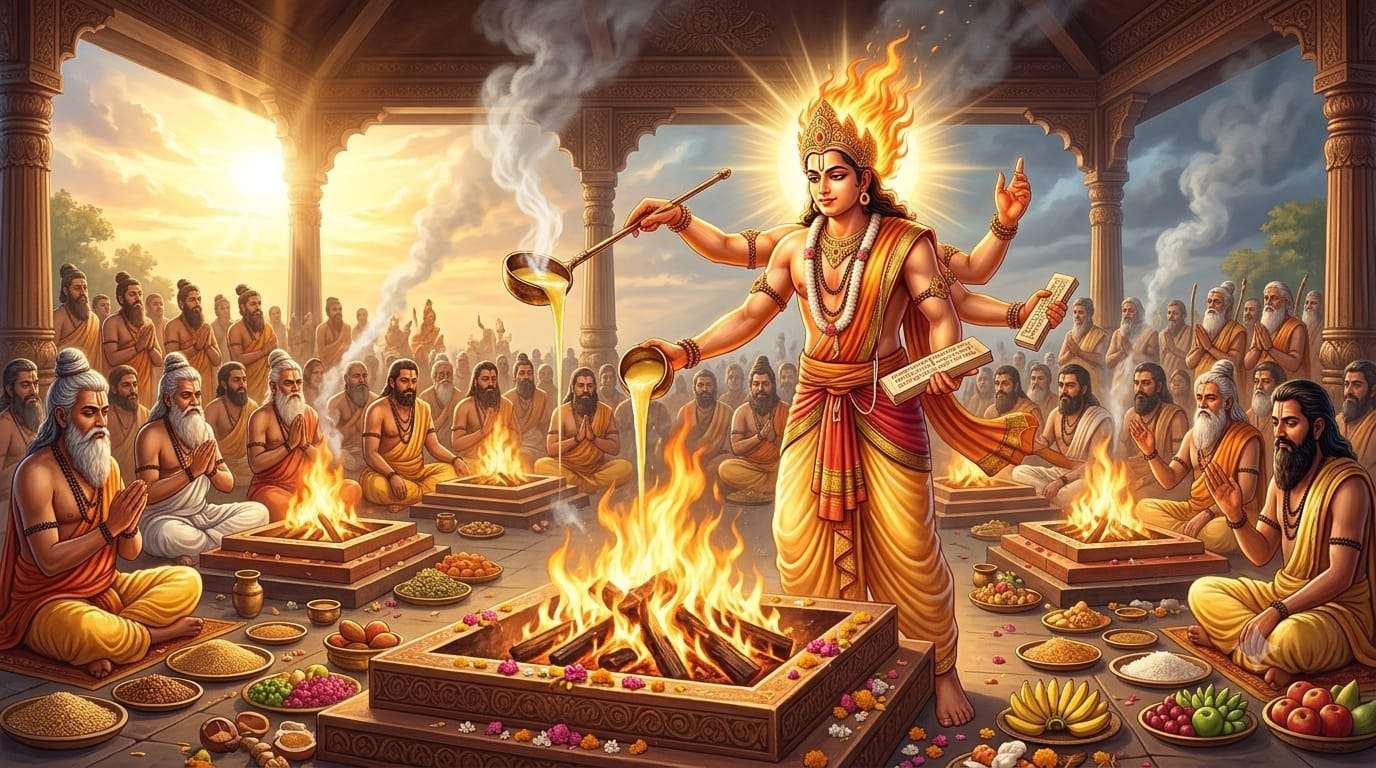
The sacrificial ground becomes a microcosm of the cosmos, where Agni, the sacred fire, occupies the central axis. Established in the domestic hearth and radiating outward, Agni functions as the carrier of offerings and the interpreter of human aspiration. His presence, likened to the vigorous sounds of horse and ox, signifies motion, strength, and continuity between heaven and earth. Emerging with renewed vitality after the rains, he draws nourishment from the depths of the earth, symbolizing the cyclical transformation of energy. In scientific temperament, this reflects the principle of conservation and transformation—matter and energy ceaselessly shifting forms while retaining essence.
The invocation calls upon Indra to arrive with the swiftness of a thirsty being seeking sustenance, emphasizing urgency and intimacy in divine communion. The ritual is not abstract but participatory, where women, priests, and patrons collectively uphold the sacred process. The Asvins, masters of knowledge and movement, are evoked as exemplars of swift response, suggesting that divine forces respond to disciplined and sincere invocation. The chariot imagery conveys motion through space, an early poetic intuition of dynamic systems operating within the cosmos.
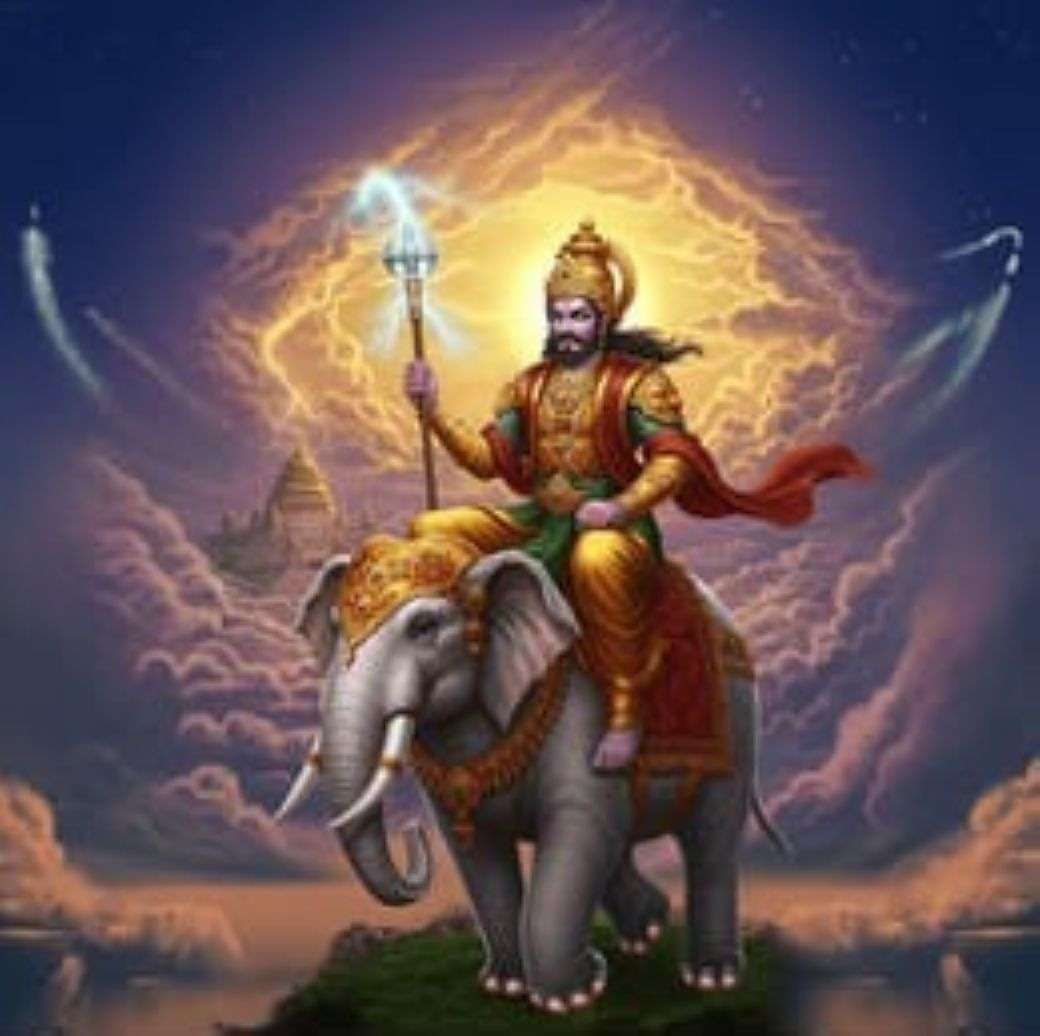
Indra is exalted as the wielder of the thunderbolt, the regulator of atmospheric forces, and the mover of clouds. His might is not merely martial but cosmological, representing control over natural phenomena such as rain, pressure, and electrical discharge. The hymns acknowledge his expansive presence, declaring that neither space nor earth can confine his influence. Just as space envelops the earth, Indra’s power encompasses the three realms, suggesting an understanding of layered existence—physical, atmospheric, and celestial—interconnected through unseen forces.
His companionship with the Maruts, the storm deities, reflects a coordinated system of natural energies. The Maruts, vibrant and dynamic, operate as attendants who amplify Indra’s function, much like subsidiary forces within a larger system. Their delight in him signifies resonance, where aligned energies enhance one another. This poetic depiction mirrors scientific insight into synergistic interactions within nature, where multiple forces converge to produce observable phenomena such as storms and rainfall.
The waters suspended in the atmosphere are described as radiant, awaiting release for the benefit of living beings. Rain becomes both a physical necessity and a sacred blessing, linking ecological cycles with divine will. The completion of the ritual depends upon this fulfillment, indicating an early recognition of interdependence between human action and environmental response. The yajña, therefore, is not merely symbolic but reflects a proto-scientific awareness of cause, effect, and sustainability.
The devotees approach Indra as companions and subjects, blending reverence with familiarity. Their praise is not flattery but an alignment of thought and expression, acknowledging that order and integrity in leadership inspire devotion. The ritual performers, through disciplined action, seek to harmonize with cosmic order, finding joy akin to the sight of a clear lake amidst harsh terrain. In contrast, those driven by cunning and insincerity experience inner barrenness, like one who beholds distant water yet remains unquenched—an allegory for psychological and moral dissonance.
Indra’s inseparability from the Maruts in times of conflict illustrates unity in strength and purpose. His designated share of offerings underscores the principle of rightful distribution within the ritual system. The prayers, sustained by intention and clarity, become effective instruments, invoking not only divine presence but also the subtle traces of cosmic intelligence perceived through disciplined awareness. The closing appeal invites Indra to the sanctified altar with ease and grace, affirming that the sacred space, purified by thought and action, is ever prepared to receive the divine.
Thus, the hymn stands as a convergence of spirituality and early scientific sensibility, where observation of nature, disciplined ritual, and refined language unite to express a profound vision of interconnected existence.