MS Sparsha
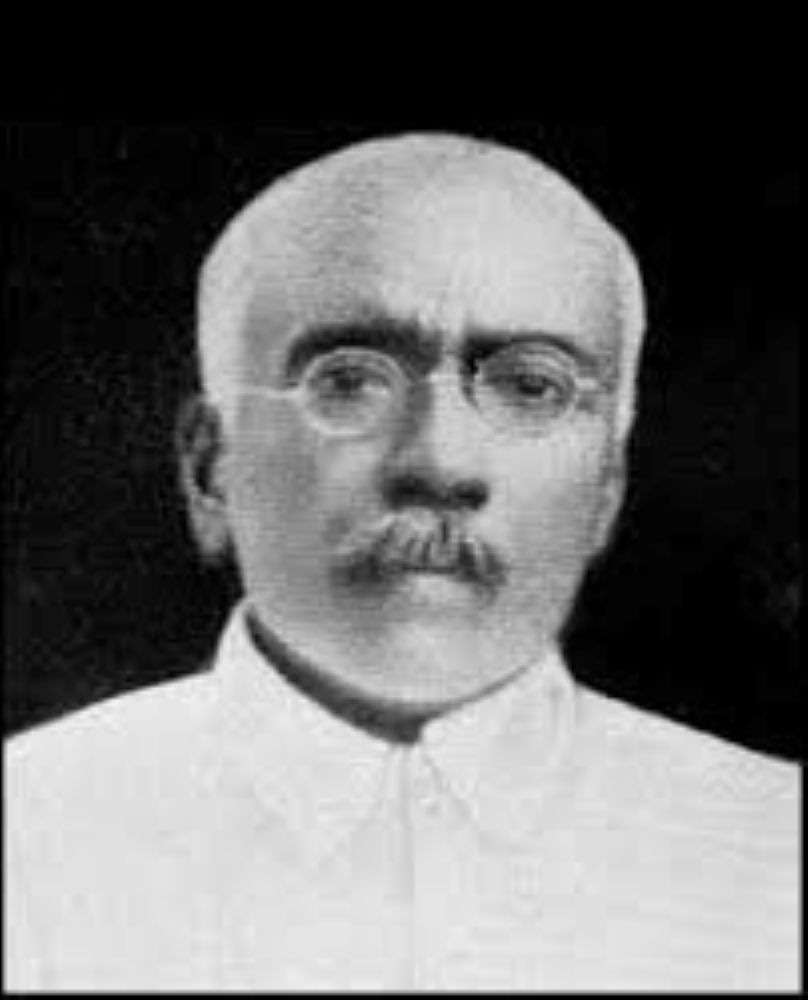
History often remembers political leaders, kings and warriors. Yet some of India’s greatest nation-builders worked quietly in classrooms and laboratories, shaping the country’s future without seeking recognition. One such forgotten giant was Ganesh Prasad, a pioneering mathematician whose contributions laid the foundations of higher mathematical research in India.
Born in 1876 in Ballia, Uttar Pradesh, Ganesh Prasad displayed extraordinary academic brilliance from an early age. After excelling at Muir Central College in Allahabad, he earned a prestigious government scholarship that took him to England and Germany for advanced studies.
At the turn of the twentieth century, Germany’s University of Göttingen was the epicentre of mathematical research. It was here that Ganesh Prasad worked under some of the greatest minds of the era, including Felix Klein and David Hilbert. His research in potential theory, Fourier series and mathematical analysis earned widespread respect among European scholars. His work challenged existing assumptions and expanded understanding in fields that today underpin modern physics, engineering and technology.
The doors to an illustrious international career were wide open. Europe offered prestige, financial security and global recognition. But Ganesh Prasad made a choice that defined his life. He returned to colonial India.
What awaited him was not a thriving scientific ecosystem but an academic landscape starved of resources and opportunities. Under British rule, advanced scientific research by Indians received little encouragement. Yet Prasad refused to accept this reality.
Determined to build a culture of mathematical excellence, he devoted himself to teaching and institution-building. He served as the Hardinge Professor of Higher Mathematics at Calcutta University and later headed the mathematics department at Banaras Hindu University. He was also instrumental in strengthening the Calcutta Mathematical Society and promoting research publications that gave Indian mathematicians an international platform.
His greatest contribution, however, extended far beyond equations and classrooms.
Ganesh Prasad believed that talent existed in every corner of India, including its poorest villages. Convinced that poverty was preventing countless young minds from flourishing, he dedicated much of his income to education. Scholarships, rural schools and research fellowships benefited from his generosity. While many of his students went on to build successful careers, Prasad himself lived with remarkable simplicity, caring little for personal wealth or comfort.
Even as his academic reputation grew, his passion for mathematics never diminished. His later research explored highly abstract areas of analysis, including the theory of real variables and complex mathematical functions. To him, mathematics was not merely a profession but a lifelong calling.
On March 9, 1935, while attending a meeting of Agra University, tragedy struck. He suffered a massive cerebral haemorrhage and collapsed. The scholar who had devoted every ounce of his energy to learning, teaching and nation-building passed away while still actively engaged in academic work.
His death marked the end of an extraordinary journey, but his legacy lives on in the institutions he helped build and the generations of students he inspired.
Today, when India celebrates its achievements in science, technology and higher education, it is worth remembering pioneers like Ganesh Prasad. Long before India emerged as a global knowledge power, he dared to believe that Indian intellect could stand shoulder to shoulder with the best in the world. He rejected personal glory abroad to nurture excellence at home.
Ganesh Prasad may not be a household name, but modern Indian mathematics owes much to his vision, sacrifice and unwavering faith in the potential of India’s youth. In an age that often celebrates fame, his life reminds us that the greatest nation-builders are sometimes those history forgets, but whose contributions continue to shape generations.