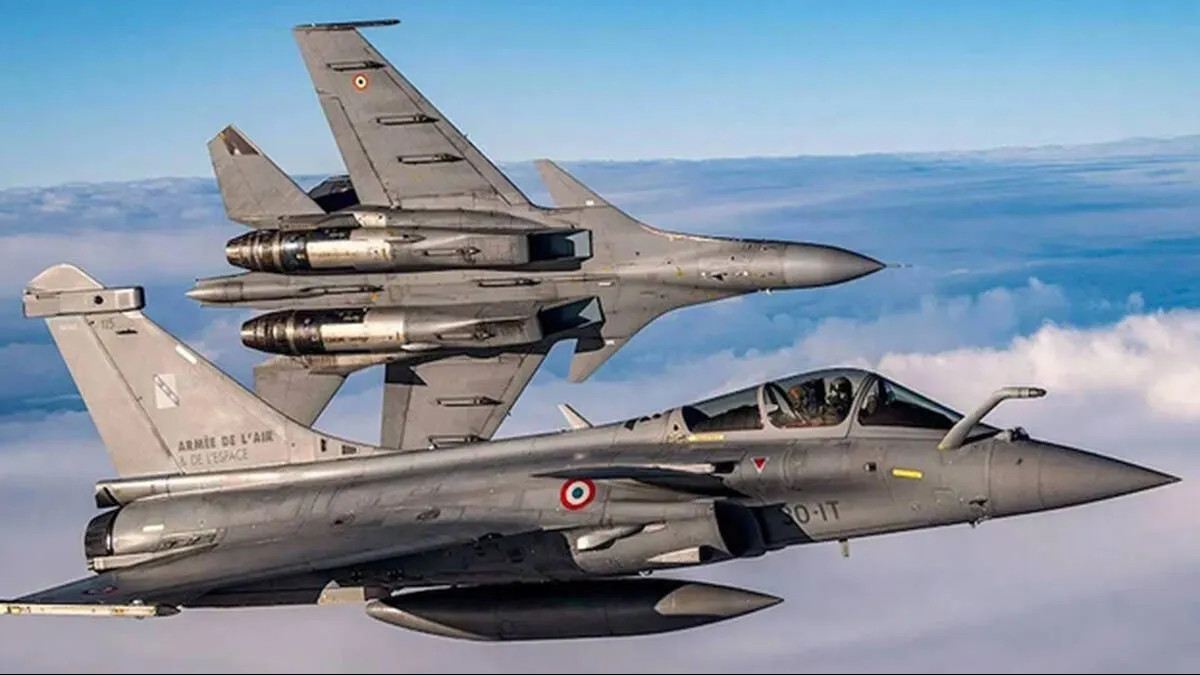
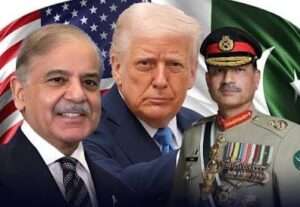
Truth has finally delivered a tight slap — not merely to Pakistan’s propaganda machinery, but also to sections of Bharat’s Opposition and even to US President Donald Trump, who chose to amplify falsehoods rather than facts. The Indian Air Force’s latest Request for Proposal (RFP) seeking bridge maintenance support for all 36 Rafale fighter aircraft has completely demolished the narrative that Bharat lost multiple Rafale jets during Operation Sindoor. The document is unambiguous. Every one of the 36 aircraft remains intact, operational and part of the IAF’s active fleet. That single document has exposed an elaborate web of lies spun by Pakistan’s Prime Minister Shehbaz Sharif and his self-styled Field Marshal Asim Munir, who desperately attempted to project a humiliating defeat for Bharat after Operation Sindoor. But the bigger disappointment lies elsewhere. It is one thing for a rogue neighbour with a long history of manufacturing falsehoods to indulge in propaganda. It is quite another for the President of the United States to repeatedly echo those claims before a global audience. Donald Trump did not make the assertion once. He repeated on multiple occasions that he had personally “stopped” the three-day Bharat-Pakistan conflict. He also entertained narratives that Bharat had suffered severe losses, including claims about Rafale fighter jets. Bharat has consistently and categorically rejected these assertions. New Delhi has maintained that Operation Sindoor was a calibrated military response to the barbaric killing of 25 innocent tourists at Pahalgam in Jammu and Kashmir. The operation successfully targeted terrorist infrastructure across the border. Bharat has also asserted that it inflicted significant damage on Pakistan’s military capabilities, including bringing down several Pakistan-operated aircraft and drones, some of which were American, Chinese and Turkish-origin platforms. This naturally raises uncomfortable questions. Why was President Trump so eager to amplify Islamabad’s version? Was it inconvenient to acknowledge that Bharat’s air defence systems and indigenous military planning had successfully neutralised sophisticated military assets deployed by Pakistan? These are questions that deserve answers. However, if Trump’s statements were disappointing, the conduct of sections of Bharat’s Opposition was downright irresponsible. In every mature democracy, political parties may question governments, scrutinise policies, and demand accountability. But there is a red line that cannot be crossed. National security and the integrity of the armed forces cannot become tools for petty political point-scoring.
Unfortunately, some Opposition leaders repeatedly chose to trust Pakistani social media handles, anonymous foreign commentators and politically motivated narratives over the word of their own Air Force and military establishment. Leader of the Opposition Rahul Gandhi and several others attempted to cast doubts on Operation Sindoor, insinuating that the armed forces were constrained or that political leadership had compromised operational effectiveness. Nothing could be farther from the truth. IAF Chief Air Marshal A.P. Singh has already dismissed these allegations as baseless. He made it abundantly clear that the armed forces had full operational freedom to execute their mission and successfully destroy terror infrastructure threatening Bharat’s security. Even Dassault Aviation, the French manufacturer of Rafale aircraft, had earlier rejected claims that any Rafale had been shot down. Now the IAF’s own maintenance proposal has delivered the final blow to the propaganda campaign. The episode offers an important lesson. Pakistan’s greatest weapon today is no longer conventional warfare; it is misinformation warfare. Unfortunately, this campaign becomes far more dangerous when influential global figures and sections of Bharat’s own political class willingly become its amplifiers. The Rafale document is more than an administrative paper. It is a mirror. And what it reflects is deeply embarrassing for those who chose propaganda over patriotism, politics over national interest and foreign narratives over the word of Bharat’s own armed forces. Pakistan can perhaps be expected to spread lies; after all, disinformation has long become an instrument of its statecraft. But what excuse do influential global leaders and Bharat’s own Opposition have for amplifying those lies? Democracies survive on debate, not on the systematic erosion of trust in their own institutions. Criticising the government is a constitutional right. Questioning policies is a democratic obligation. But undermining the credibility of the armed forces by parroting enemy propaganda crosses a dangerous line. The Indian (Bharat) Air Force has now spoken through facts, documents and operational evidence. The Rafale fleet stands intact. Operation Sindoor achieved its stated objectives. Pakistan’s carefully crafted propaganda campaign lies in ruins. The real question that will endure is not who won a three-day conflict. It is this: when history records this episode, who stood with Bharat’s soldiers and who chose to stand with Pakistan’s narrative? When Bharat’s enemies spread lies, it is expected. But when elected representatives inside Bharat lend credibility to those lies, it ceases to be politics and begins to resemble a dangerous abdication of national responsibility. That, indeed, is the tightest slap of all.