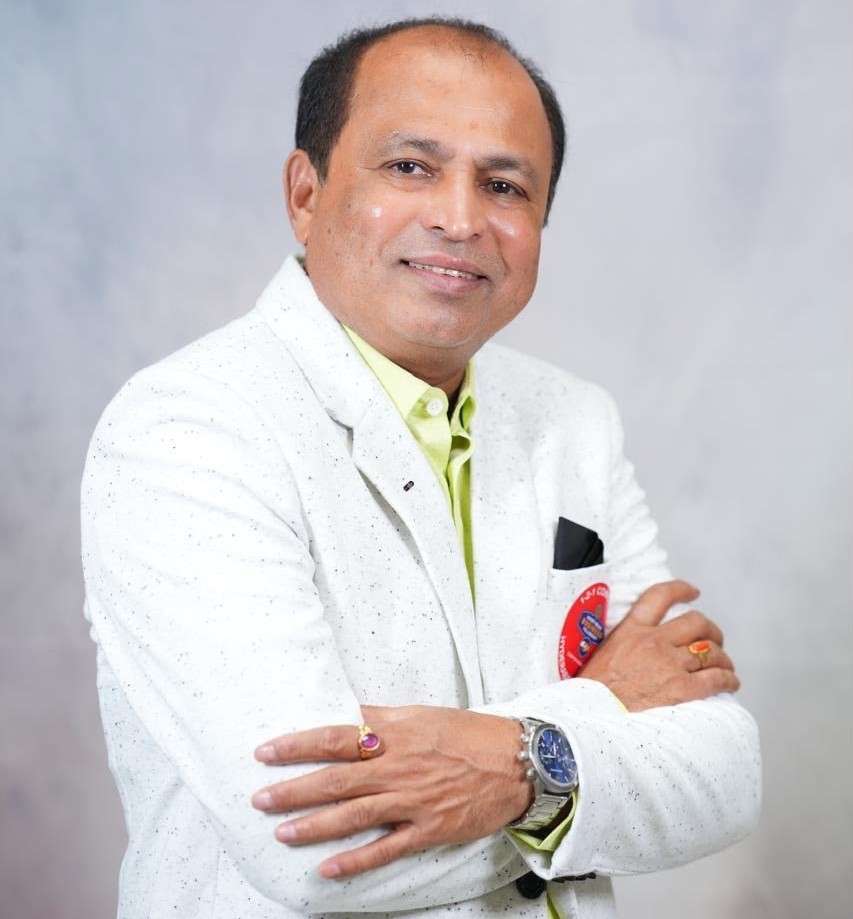

Dr. Asha Chadha
For decades, every generation has questioned the one that followed. Parents worried about their children, grandparents lamented the loss of old values, and society coined a phrase for this recurring phenomenon—the “generation gap.”
But perhaps that expression no longer captures today’s reality. We are no longer witnessing a generation gap; we are witnessing a generation leap.
Earlier, differences between generations were measured in decades. Today, they seem to emerge every three to five years. Such is the speed of technological progress that it would not be surprising if, someday, a new “generation” is identified every year or two.
We are living in an era where the Time Machine is moving faster than ever before.
Clayton M. Christensen, in The Innovator’s Dilemma, explained how even innovators struggle to keep pace with relentless change. Products become obsolete within months, ideas are replaced overnight, and creators themselves are often left wondering whether they can keep up with the very systems they built.
In this whirlwind, one is reminded of the longing expressed in Savage Garden’s famous lyric, “I want to live like animals, careless and free.” It reflects a growing desire to escape the burdens of an increasingly complex and hyper-connected world.
But is the future truly frightening? Or are we simply overwhelmed by its speed?
A look back at our own lives offers perspective. As children, we desperately wanted to grow up. We could not wait to move from school to college, build careers, and establish ourselves. Yet, once we reach those milestones, we often yearn to return to childhood and relive the simplicity of our adolescent years.
The past invariably appears calmer and more comforting.
Every generation’s elders speak fondly of the “good old days”, while younger generations embrace change with enthusiasm and urgency.
Popular books across different eras have mirrored this reality. Who Moved My Cheese? encouraged us to adapt or risk irrelevance. The Monk Who Sold His Ferrari invited introspection, while Paulo Coelho’s The Alchemist inspired millions, including young readers, to seek purpose and meaning.
Yet, centuries earlier, Jean-Jacques Rousseau had already warned humanity about a profound paradox. Human beings are born free, he argued, but gradually become prisoners of their own creations. We imagine ourselves to be masters, yet often become slaves to the systems we build.
Material progress, if left unchecked, can come at the expense of emotional and moral well-being.
And therein lies humanity’s greatest contradiction: we recognise the problem, but we are unwilling to reverse course.
This is where Gen Z stands apart.
Unlike earlier generations that must constantly adapt to emerging technologies, Gen Z was born into the digital ecosystem. They are not merely users of technology; they are its natural inhabitants.
The rest of us have become perpetual learners, increasingly dependent on younger generations to navigate a world that changes by the day. Freshers no longer enter only college campuses every year; they enter and reshape everyday life itself.
The real debate, therefore, is not whether Gen Z is right or wrong, disciplined or distracted, empowered or confused.
The real question is whether society can harness the benefits of technological progress without sacrificing human values, mental well-being and genuine human connection.
Gen Z may well become the architects of tomorrow’s world. But if speed overtakes wisdom, they also risk becoming victims of a civilisation permanently trapped in fast forward.
Ultimately, this debate is not about Gen Z alone. It is about all of us—and whether humanity can preserve its soul while racing towards its future.