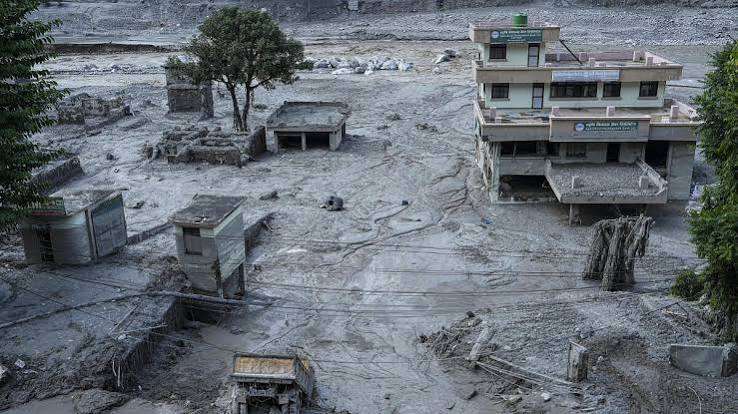
Beijing: Chinese officials on Sunday said 261 foreign nationals, including 49 Indians, remained unaccounted for after a catastrophic flash flood struck Gyirong Port, one of the main border crossings between Nepal and Tibet, on August 26.
The 261 foreigners are from 23 countries, Chinese officials told a media briefing at Gyirong, state-run Xinhua news agency reported.
The media briefing was held after a joint search and cross-checking of information by foreign affairs, public security, culture and tourism, and emergency management authorities.
Chinese state media is reporting that there are six Australians among the 261 foreign nationals identified as missing on the Chinese side of the border between Nepal and Tibet.
I am trying to establish whether the Australian government believes that those six are among the total of 41 citizens unaccounted for (the national broadcaster the ABC says it understands this has risen to 42 but I have not yet verified this).
One of those missing is Sumi Adhikari from Sydney. This morning I’ve been in touch with her husband Nava Pandey, who has travelled to Nepal to try and help locate her.
He is asking for “close coordination between the Nepalese and Chinese authorities”.
“We respectfully call upon the Chinese government and local authorities to release all available verified information, provide regular updates about the search efforts and establish direct communication with the affected families,” Pandey says.
Nepalese authorities have already reported that 33 British nationals are missing. Several of them are thought to have been making their way across the border to Tibet, so it is unclear how many of the 15 British nationals reported as missing by Chinese authorities are included in the figure reported by Nepal.
Here is a further breakdown of missing foreigners on the Tibet side, according to Chinese state media: three Malaysians, 104 Nepalis, 49 Indians, four South Africans, two Irish nationals, two Estonians, three Germans, three Russians, two French nationals, one Finn, two Dutch nationals, 33 Latvians, one Lithuanian, one Portuguese national, one Ukrainian, one Spaniard, one Hungarian, six Canadians, 18 Americans, six Australians and two New Zealanders.
The information on the missing people came from a joint investigation and collaboration with multiple agencies including foreign affairs, public security, culture and tourism and emergency management.
“Families should not be left without answers during such a critical time.”