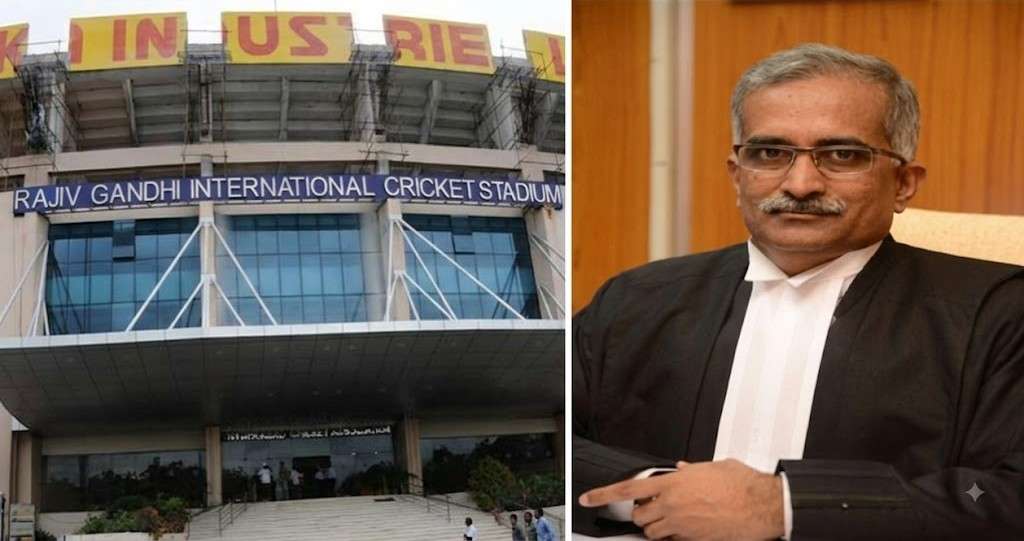

Vinay Rao
Not a eulogy. Not a complaint. A mirror — held up to the people who have the most to lose, and the most power to change things.
Somewhere in this city, a club secretary is paying for his team’s kits from his own pocket. Not because the rules require it, but because no one else will — and because he loves the game too much to let his players walk onto the field in shame.
That one fact tells you everything about where Hyderabad cricket stands today. An institution that commands fierce loyalty from thousands of players, coaches, officials, and fans, yet returns very little of that loyalty in kind.
For over a decade, the Hyderabad Cricket Association has lurched from one crisis to another. Court-appointed committees have come and gone. Elected bodies have assumed office with promises and departed in silence. Each incoming Apex Council seems to inherit a building without keys — no proper files, no reliable record of agreements, no map of liabilities, no clear trail of what was decided, by whom, and why. Institutional memory is not erased. It simply disappears.
“Every time the courts permit elections, people arrive not to repair what is broken — but to enjoy what remains.”
And so the damage compounds. Courts do not intervene to harass HCA. They intervene because HCA has repeatedly failed to govern itself. That is not an allegation. It is part of the public record of the last decade.
But here is the question that is rarely asked: where are the secretaries while all this happens?
The clubs are the foundation of Hyderabad cricket. Their secretaries see everything — questionable selections, delayed payments, decisions made in rooms they were never invited into. They carry the weight of the game on the ground, season after season. Yet, when elections arrive, that weight is often set aside. A few passes. A list. A quiet accommodation. And the cycle begins again.
If secretaries are funding team expenses from their own savings while elected officials continue to enjoy the privileges of office, that is an injustice. But injustice accepted in silence — and then ratified at the ballot box — is not merely grievance. It becomes complicity. Not necessarily out of malice, but out of exhaustion, habit, and the quiet belief that nothing will ever truly change.
“The intelligent people within HCA do not disappear. They simply decide, year after year, that engagement is not worth the cost. That decision itself becomes the cost.”
That belief must be challenged — and challenged from within. No outside intervention, however well-intentioned, can substitute for an electorate that demands accountability before granting authority. Courts can impose structure. They cannot install Spine.
Here is what is also true: this moment feels different. Reform efforts are underway — imperfect, incomplete, but real. People are attempting to clean up affiliation records, improve selection processes, restore financial discipline, and build the kind of institutional infrastructure that should have existed twenty years ago. These efforts require support, scrutiny, and participation — not from a distance, but from within the system itself.
The question for every secretary, every club official, and every former player who has watched this institution decay is simple: are you part of the problem, or part of something larger?
Larger does not mean dramatic. It means consistent. It means asking questions at the right time, not merely during moments of crisis. It means holding elected representatives accountable between elections, not just resenting them afterward. It means understanding that reform — if it is truly needed — does not require chaos. It requires organised, informed, persistent individuals who refuse to be managed with a pass and a list.
“Hyderabad has produced some of India’s finest cricketers. It deserves an administration worthy of that legacy. That administration will not arrive from outside. It has to be demanded from within.”
The talent has never been the problem. The infrastructure exists. The passion is undeniable. What has been missing — for far too long, and at far too great a cost — is collective will: the willingness of people who know better to act like it.
This is not an attack on any individual or institution. It is an appeal to everyone who has ever loved Hyderabad cricket — and quietly felt that it deserved far better than what it has been given. That feeling is not helplessness. It is the beginning.