

History remembers Sultan Muhammad bin Tughlaq not merely as a ruler of immense ambition, but as one whose abrupt decisions often left his subjects bewildered. Centuries later, as the world watches the second presidency of Donald Trump, one cannot help but wonder whether Washington has found its own version of political unpredictability. The comparison is not perfect, nor should history be stretched beyond reason. Yet there is a striking similarity in the manner both men have come to be perceived: leaders capable of announcing one thing in the morning and appearing to embrace its opposite by evening. Donald Trump has always prided himself on being unconventional. His supporters call it strategic flexibility. His critics call it inconsistency. Whatever label one prefers, there is little doubt that unpredictability has become the defining feature of his political and diplomatic style. Take India, for instance. At various times, Trump has showered praise on Prime Minister Narendra Modi, describing him as a great friend and celebrating the strong ties between the two democracies. On other occasions, he has launched sharp criticism, particularly over trade, tariffs, or immigration-related matters. The oscillation is so frequent that observers often struggle to determine whether they are hearing from a strategic ally or an aggrieved rival. The same pattern extends beyond India. Pakistan has experienced both ends of the Trump spectrum. At one moment, Islamabad is praised for cooperation or peace initiatives. At another, it is accused of failing to act against forces that threaten regional stability. Friends become skeptics; skeptics become friends. The diplomatic weather changes faster than forecasts can keep up. Then there is the Middle East. Few regions have witnessed more dramatic shifts in rhetoric. Tough warnings, threats of overwhelming retaliation, declarations of decisive action, and subsequent calls for restraint have often emerged from the same administration within remarkably short periods. Allies and adversaries alike are left wondering whether the latest statement represents enduring policy or merely the mood of the moment. Supporters argue that this is precisely the point. They contend that Trump keeps opponents guessing, refuses to be bound by conventional diplomatic scripts, and uses uncertainty as a negotiating tool. In business, unpredictability can sometimes create leverage. In politics, they say, it can force rivals to remain cautious.
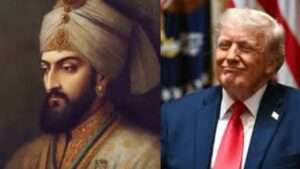
Yet diplomacy is not a real-estate negotiation. Nations make decisions involving military deployments, trade investments, intelligence cooperation, and long-term strategic planning. Such decisions require clarity and credibility. When statements change rapidly or appear contradictory, uncertainty becomes a cost. Allies begin to hedge their bets. Adversaries test boundaries. Markets react nervously. Strategic partners find themselves decoding tweets, speeches, interviews, and off-the-cuff remarks like ancient scholars interpreting cryptic manuscripts. This is where the comparison with Muhammad bin Tughlaq becomes politically relevant. The Delhi Sultan was not remembered because he lacked ideas. On the contrary, historians acknowledge his intelligence and vision. His problem was that grand announcements often outpaced practical execution, creating confusion rather than confidence. Similarly, Trump is not accused of lacking boldness. Few modern leaders have dominated headlines with such consistency. The question is whether constant reversals and shifting narratives strengthen American leadership or weaken it. Great powers are respected not merely because they possess military might or economic strength. They are respected because their word carries weight. Predictability, consistency, and strategic clarity are often more powerful than dramatic declarations. The world can adapt to a tough America. It can adapt to a conciliatory America. What it struggles to adapt to is an America that appears to change direction every few news cycles. Perhaps that is why the Tughlaq comparison continues to surface in political conversations. Not because Trump and the medieval Sultan are identical, but because both came to symbolize a style of leadership that keeps everyone guessing. And while uncertainty may make for compelling headlines, it is not always the foundation upon which enduring diplomacy is built.